6 ways Bonx makes shop-floor data capture easier
An operator leaves the workstation with a paper sheet, finds an ERP screen, and types in what they have just made. That takes time away from production. During a busy shift, the entry can wait, leaving managers to ask what has actually been made, and increasing the chance of errors in data entry later.
Legacy ERPs often add to that burden with screens organized around administrative records. What the person making the product really needs is:
Searching through menus adds work before they can even start entering data.
Bonx is the AI-native manufacturing ERP that has prioritized the operator experience, optimizing for the fewest number of clicks or taps as possible while also ensuring the right information and data is making it into the system. In this article, we’ll look at 6 ways that Bonx was built for the shop floor.
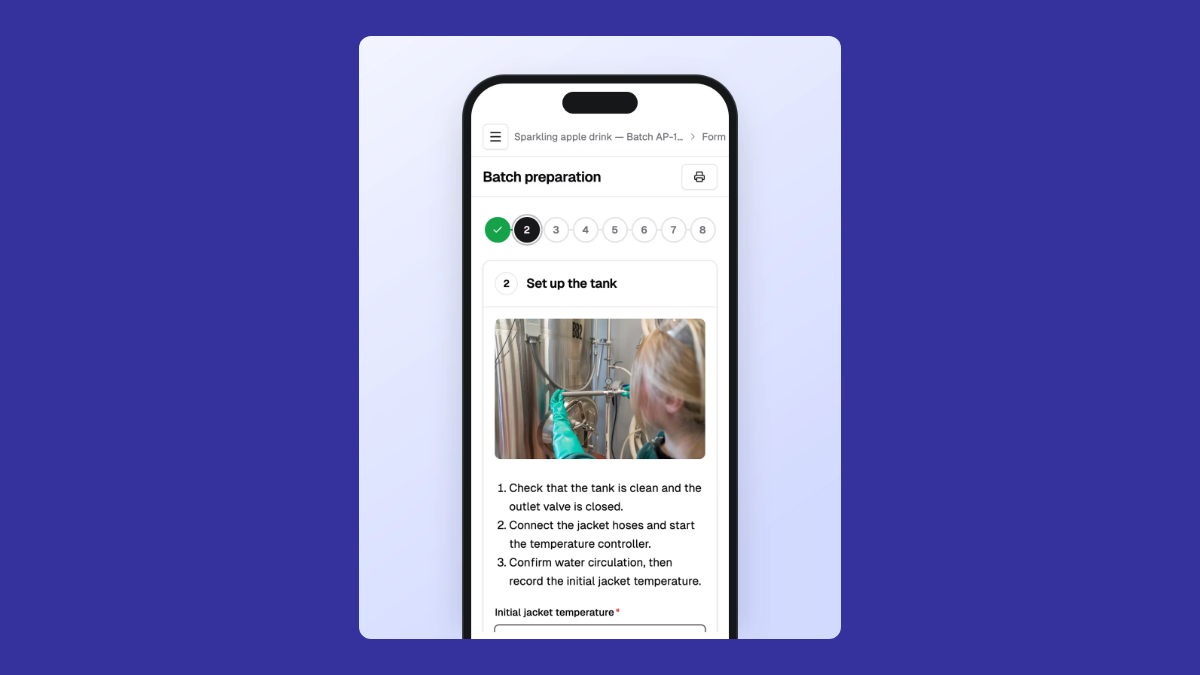
When an operator covers an unfamiliar station, they can open the work order on a phone or tablet and see the instructions one step at a time. In the Bonx production module, your team decides which instructions, tasks and fields appear at each step. Someone setting up a mixing tank can see the setup instructions and a photo of the equipment right in the work order.
An operator can scan an ingredient lot with an industrial handheld terminal. Bonx reads the barcode and finds the lot in the Bonx inventory module, saving the operator from typing the code on the label. When a line should draw only from a designated staging area, you can restrict the picking step to that stock location. Bonx applies the same restriction whether the operator scans a lot or picks it from the list.
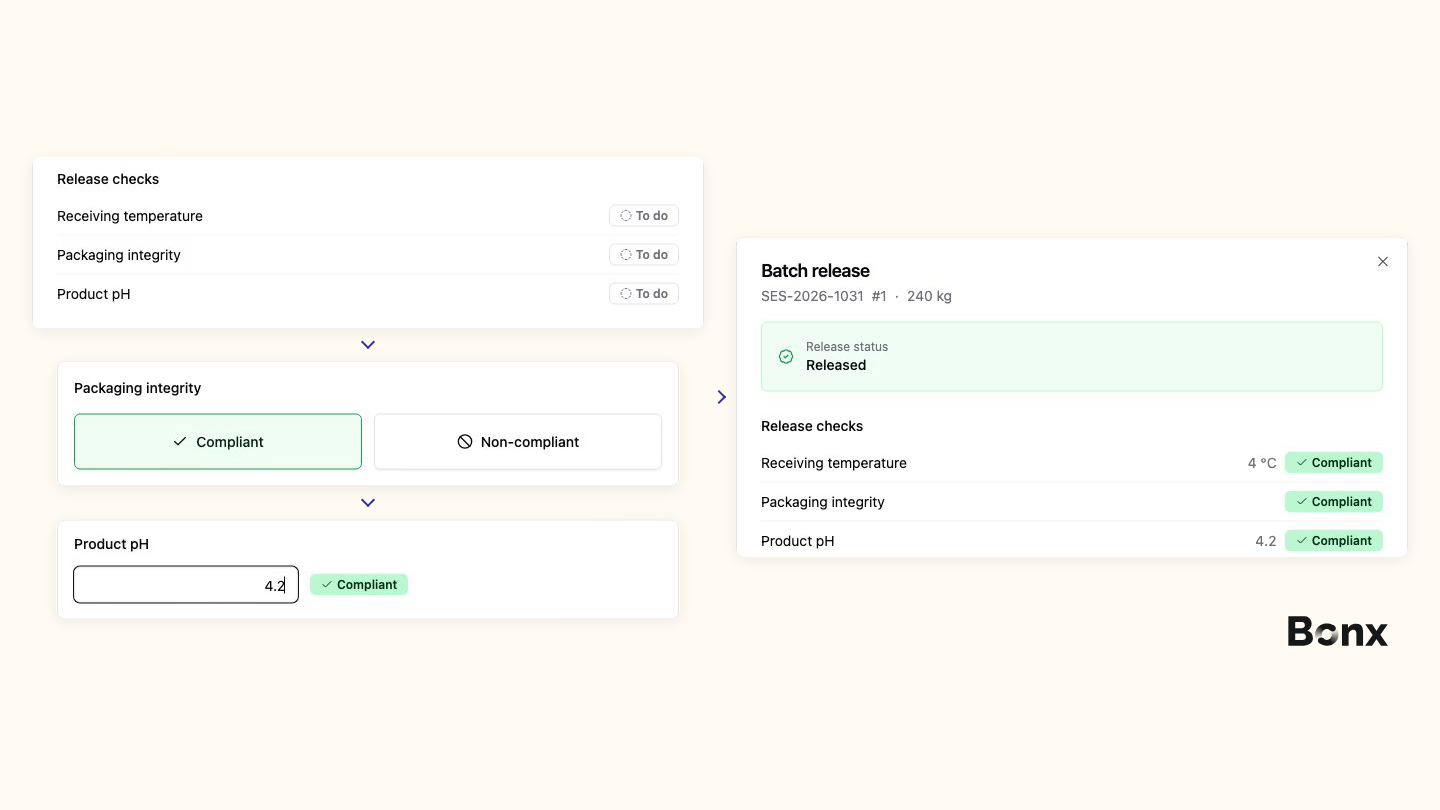
At the mixing tank, the operator reads the setup instructions, measures the temperature and enters it in a required field on the same form. For that step, the team can configure an acceptable range so the operator sees whether the reading is within it. The Bonx quality module keeps the result with the work order and lot, so quality can look up the reading without asking someone to find the shift’s paperwork.
At La Maillecotech, the team added photos and tappable choices to quality screens that used to require more typing. “The idea was really to get away from keyboards,” said plant director Romaric Duretz.
When an operator reports the quantity produced and confirms the materials used, Bonx applies the stock movements configured for that step. At the end of a filling run, for example, the same report can deduct the ingredients consumed and add the finished bottles to inventory. The operator records what happened once, and the next shift can see the updated stock without waiting for someone to enter it on a second screen.
At Something Added, Bonx connects to the company’s HP 3D printers. When a printer reports the results of a job, Bonx records the counts of successful and failed parts and the reasons for failures. Operators make zero clicks to enter those results. Production planners can use them as soon as the machine reports them.
At Recyc Matelas, trucks carrying mattresses for recycling are weighed on an Adémi Pesage weighbridge at intake. The weight goes straight into the receipt in Bonx, so operators can move on without typing the tonnage into the ERP. As William Avignon put it, “Bonx structured our multi-site operations, and our operators love it.”
Jewelry workshops have also connected precision scales to Bonx to capture the weight of gold. The operator weighs the metal at the bench and the scale supplies the reading. On a machining line, a connected CNC machine can report job progress through the Bonx integration engine so the work order reflects what the machine has completed.
The connection can work in both directions. At one customer who makes dry-cured sausages where the weight of each individual sausage is important, the operator selects the product and lot in Bonx, and Bonx sends the label details to a DIGI scale, which prints the label right at the weighing station.
“We didn't want to impose a rigid process, but rather to co-create something operational,” said Romaric Duretz, plant director at La Maillecotech. When operators asked to track the consumables they used on their machines, Duretz took the request to Bonx. The team had a working solution two days later. Across its rollout, La Maillecotech reports cutting daily production data entry from about an hour to a few minutes.
At pizza maker 450°C, the kitchen team uses a tablet app the company built to prep for the next day. The app calculates how much ham to slice based on the number of pizzas planned. As they prep, operators select the batch of ham they’re using from a list on the tablet, and the app records it in Bonx for traceability. The founders used to handle production entries themselves, but now the team can do it, and maintain precise traceability at the same time.
In Bonx, your team can revise a step’s fields and instructions as operators spot things to improve. For a station that needs a dedicated interface, you can even build a custom mobile or tablet app that works with the same orders, lots, and inventory as the ERP.
Want a system your operators actually like to use? Get a personalized Bonx demo.

Contact us
So were we. That's why we built Bonx, the AI-native manufacturing ERP.