Electronics manufacturing ERP for EMS & contract manufacturers

Bonx is the AI-native manufacturing ERP that learns how you work and takes on more autonomy over time. When your system nets next month's build plan against stock and open orders, prices the board at what the components cost today, tracks component lots to the finished unit, and flags obsolescence risk before the line is set up, your people have more time for what matters most.
Built for how electronics manufacturing actually runs

PURCHASING: Ask what next month’s build plan needs

One component sitting in twenty bills of materials, netted against stock and open purchase orders in a single pass.

COSTING: Know the board's cost before you build it

The bill of materials priced at what the components actually cost now, so a semiconductor swing lands in the quote instead of the year-end.

PLANNING: See the shortage at kitting, not at the feeder

Missing references flagged per order before the line is set up, with the purchase suggestion already grouped by supplier.

STOCK: Track the reel, not just the reference

Lots per reel and date code, with shelf life on moisture-sensitive parts and paste.

TRACEABILITY: Answer "which boards had that lot?"

Component lot to finished board to customer, in both directions, when a supplier issues a notice.

QUALITY: Keep the test result on the unit

Functional test and defect recorded against the board that failed, with the rework declared on it.

Explore Bonx, the AI-native electronics contract manufacturing software

Core modules

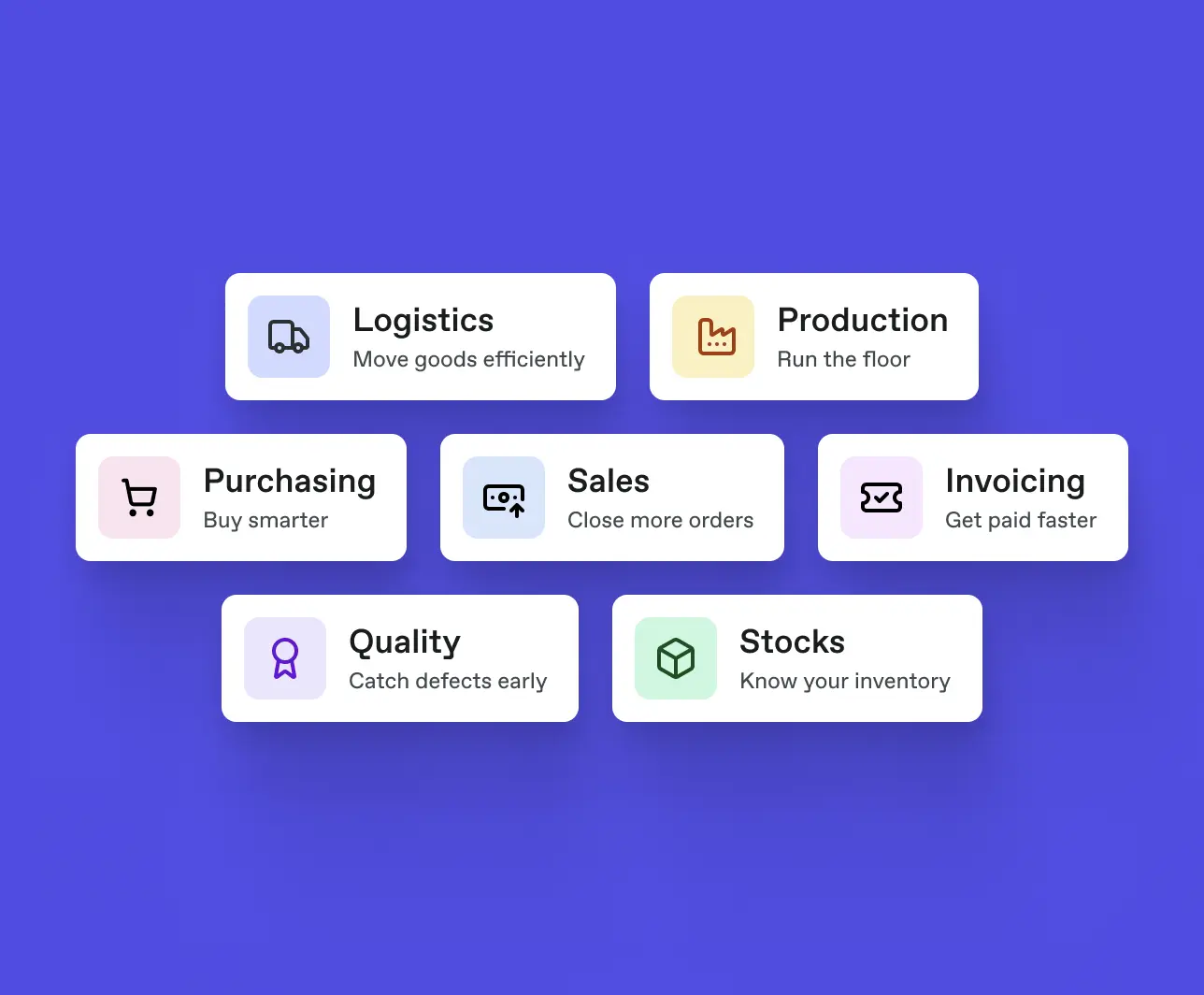
Everything an electronics manufacturer needs to run operations, from the quote to the shipment

Integration engine

Connect to your accounting tool, shop-floor data sources & anything else in your stack

Bonx intelligence

Let AI handle the routine

Discover why operators love Bonx
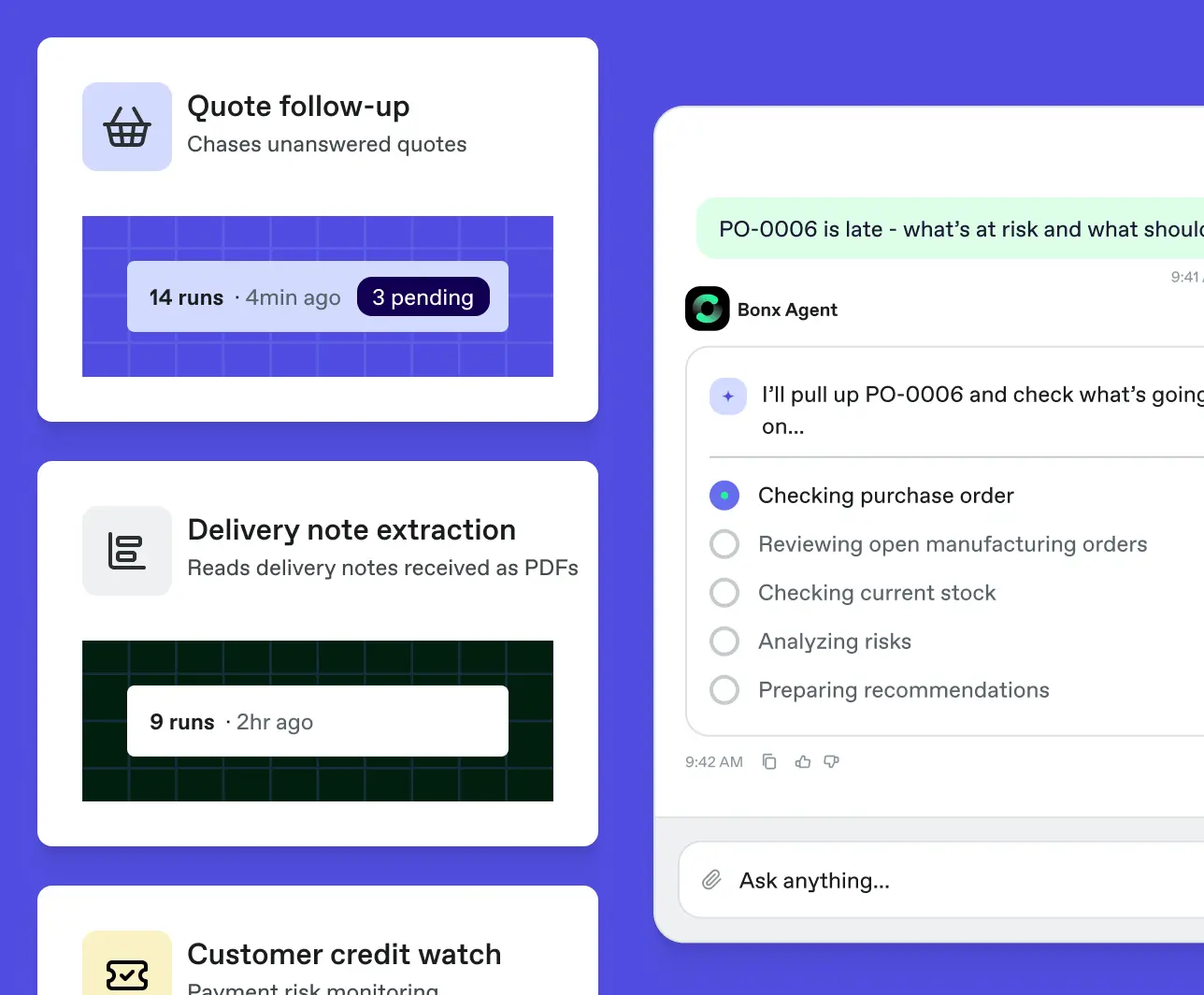
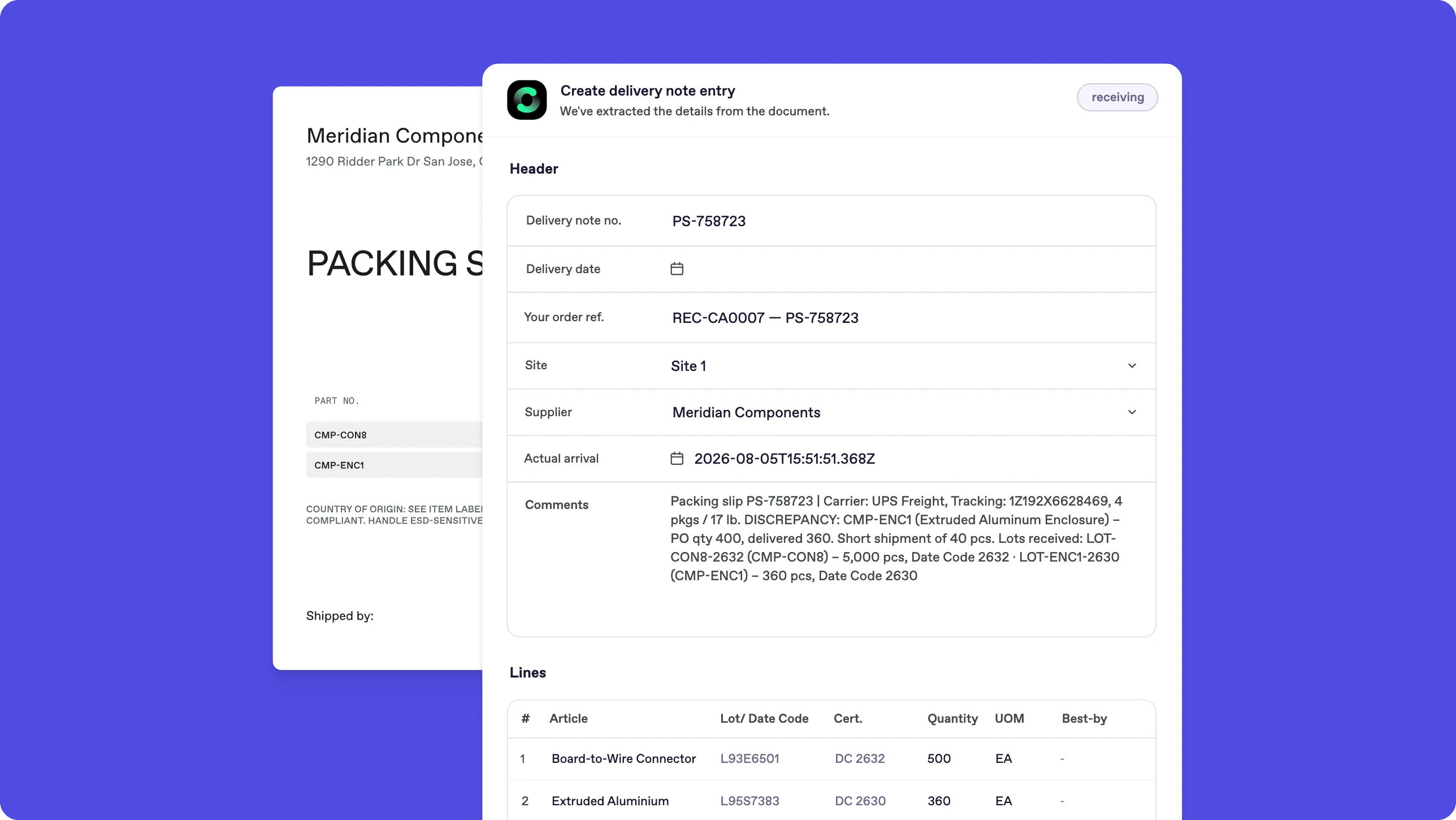
Bonx Agent cards for quote follow up and delivery note extraction beside a chat window.

FAQ

Yes. Bonx is EMS ERP software when the contract manufacturer needs quoting, orders, bills of materials, purchasing, inventory, production, quality, traceability, and invoicing in one operating system. The point is to connect the customer's build plan to the components, lots, work orders, and shipment, instead of running each layer in a separate spreadsheet.

Bonx is a strong fit for printed circuit board assembly (PCBA) operations, especially when component purchasing, kitting, production tracking, test results, and traceability need to sit together. It is not computer-aided manufacturing (CAM) software for bare printed circuit board (PCB) fabrication. If a PCB manufacturing software workflow owns the board design or fabrication process, Bonx connects around it rather than replacing it.

Yes, in one pass. A component sitting in twenty bills of materials gets netted against what's in stock and what's already on order, so the answer is a purchase suggestion grouped by supplier rather than a spreadsheet someone rebuilds each month.

Yes. Bonx contains the bill of materials with the components, quantities, variants, and production context the order depends on. That matters in electronics because one resistor, connector, or microcontroller can sit in many products, and one change can affect purchasing, cost, availability, and open orders at the same time.

Yes. The bill of materials is priced at what the components cost now, not at a standard set last year, so a swing in semiconductor prices shows up in the quote you're about to send rather than in the year-end review.

Yes, at lot level per reel. Date codes are held, and shelf life applies to moisture-sensitive parts and to paste, so material that has aged out doesn't quietly stay available.

Yes. Bonx answers traceability questions in both directions. From the component lot, it returns every board built with it and every customer who received one. From a returned board, it returns the lots that went into it. The record assembles as operators declare production, not afterward.

Yes, for the operational side. When a supplier issues an end-of-life notice or a part becomes hard to source, Bonx can show the bills of materials and open orders that depend on it. Engineering still owns the approved replacement; Bonx removes the manual search for where the risk lands.

No. Surface mount technology (SMT) line software usually controls or monitors the line itself. Bonx owns the operational flow around it: the order, the bill of materials, the kit, the component lots, the test result, the quality record, and the shipment. Where useful shop-floor data is available, Bonx can connect to it.

Yes, on the unit rather than on the batch. A functional test result and any defect attach to the board that failed, and the rework is declared against the same board, so its history stays with it.

10 weeks on average. What it needs from you is one internal owner who knows how the line runs, not a project team, and your own people can change the system afterward without a consultant.

Bonx invoices natively, including legal gap-free numbering, line-level tax, the PDF, and e-invoicing where it's legally required.

That said, Bonx is not a finance ERP. We think manufacturing ERP and finance ERP should stay separate, and Bonx is built that way on purpose. There is no general ledger, no accounts payable or receivable, no bank reconciliation, and no financial close. The coded invoice goes to your accounting tool, which posts it and keeps the books.