The ERP built for custom furniture, cabinet & millwork shops
Transforming Manufacturing

Christophe Dullin
General Manager at Structa
Dimensions, materials, and finishes drive the bill of materials and the cut list, so a one-off doesn't need someone to invent an article for it.
Long-lead upholstery, veneer, and hardware planned against the delivery date rather than the day the workshop needs them.
What's left of a panel or a hide stays usable and findable, instead of leaning against a wall until someone throws it out.
What's finished, what's still in finishing, and what's waiting on a supplier, against the day the van is booked.
Materials, bought-in items, and hours landed on the job as it ran, not reconstructed when the invoice goes out.
A made-to-measure fit-out and a weekly product run move through the same system, with the same stock behind them.
Core modules
Integration engine
Yes. Materials, finishes and options are attributes on the product, and the bill of materials resolves from what's chosen. A rule can swap a component and change its quantity, so picking oak instead of laminate pulls the right panel at the right quantity without anyone hand-building an article.
Dimensions ride on the order line and drive what's ordered and made. A configurator only earns its place if what comes out of it is manufacturable, which is why it sits in the same system as the stock and the routing.
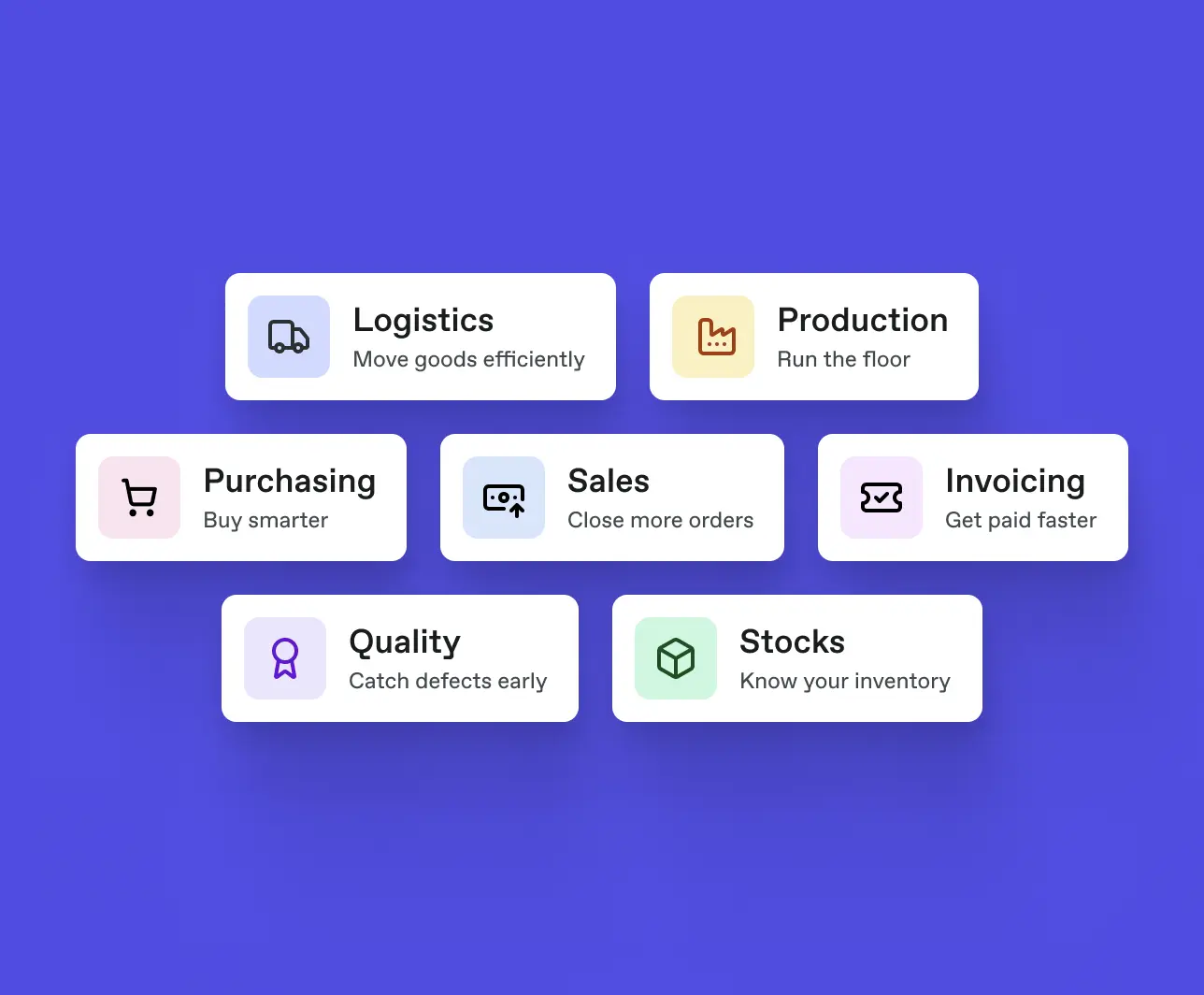
A full ERP. Most furniture manufacturing software is either project management built for fit-out or a production system built for a standard range, and a shop doing both ends up with one of each. Bonx covers quoting, orders, materials, purchasing, planning, production, and delivery in one system.
Yes, and the difference from furniture is mostly vocabulary. A run of carcases, a fitted kitchen, and an architectural millwork package come down to the same three things: dimensions driving the bill of materials, panels and hardware on different lead times, and a date on site. Cabinet manufacturing software and millwork software tend to be built for one of those; Bonx runs all three.
No, and you probably don't want your ERP doing it. Nesting is specialist work and the tools that do it well are built for nothing else. Bonx holds the cut list and what the panel actually yielded, and connects to the tool that optimizes it, so the offcut comes back as stock instead of disappearing between two systems.
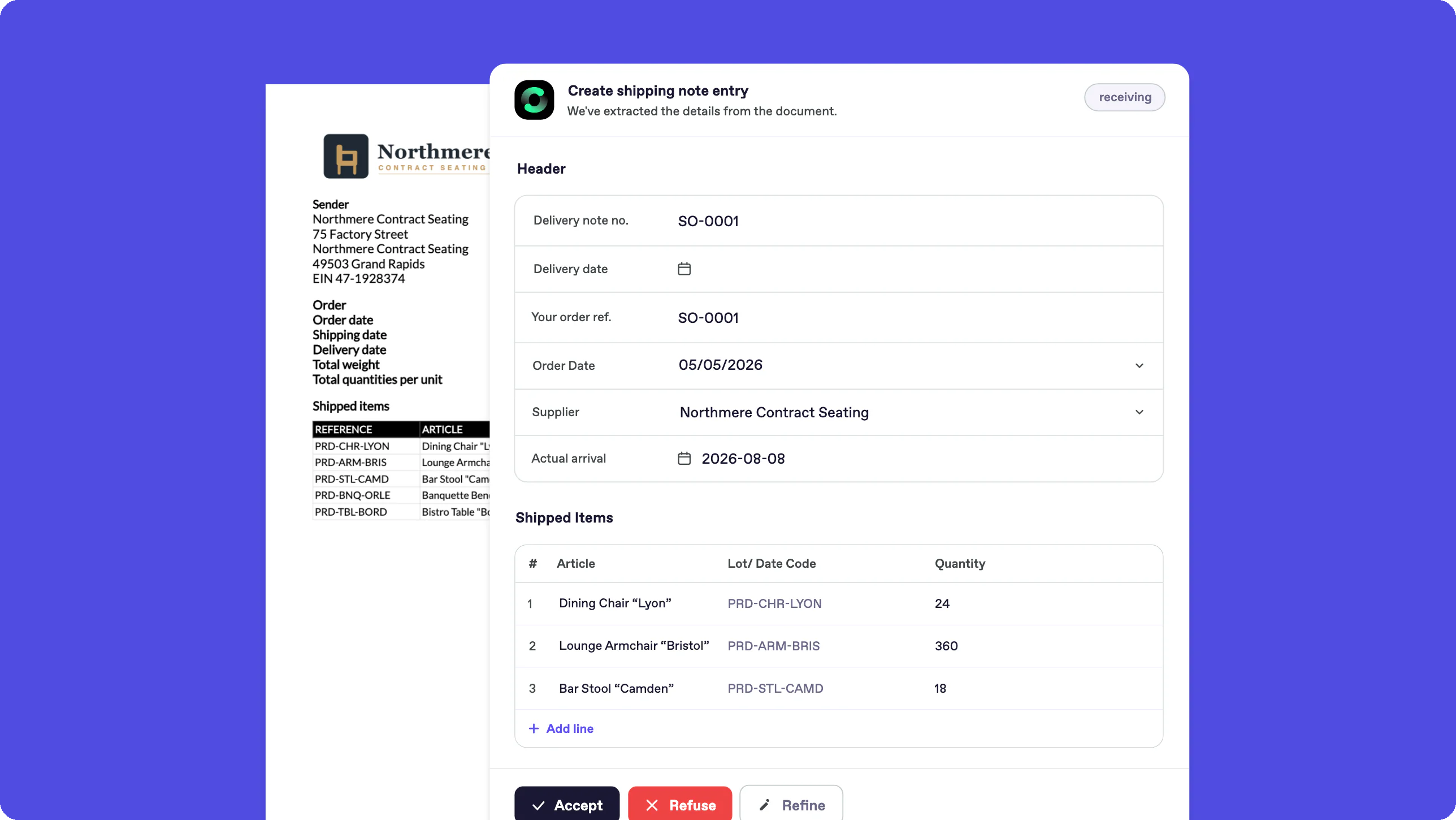
Planned against the delivery date rather than the day the workshop reaches that step. Upholstery and specialist hardware are usually the longest thing in the job, so they get ordered from the promise you made the customer, not from the production schedule.
In Bonx, you see everything the date rests on: what's finished, what's in finishing, and what's still waiting on a supplier, all on the order. Material for that job can be reserved so another order can't take it. And when a supplier slips, the jobs and the install dates behind it are flagged early enough to call the client.
Bonx invoices natively, including legal gap-free numbering, line-level tax, the PDF, and e-invoicing where it's legally required. A project can invoice in stages, so a deposit at order and a balance on delivery reconcile against the same job.
That said, Bonx is not a finance ERP. We think manufacturing ERP and finance ERP should stay separate, and Bonx is built that way on purpose. There is no general ledger, no accounts payable or receivable, no bank reconciliation, and no financial close. The coded invoice goes to your accounting tool, which posts it and keeps the books.