BONX ANSWERS
What is Bonx?
Bonx is the AI-native manufacturing ERP for small and mid-market industrial companies. Here are straight answers to the questions manufacturers ask us most.
Received
Thank you!

100,000+ BOTTLES TRACKED
from fermentation to cold storage
42 DAYS TO DEPLOY
without interrupting operations


0 DATA RE-ENTRY
between sales, production, and finance

2 MONTHS TO DEPLOY
with a native integration to HP 3D printers


15% INCREASE IN SALES
after deployment
About Bonx
Bonx is the AI-native manufacturing ERP designed primarily for small and mid-market manufacturers. It covers the operational core of the factory in one system, bringing together sales and order management, purchasing and procurement, planning and scheduling, production, quality, inventory management, logistics, and invoicing.
Because it's AI-native, Bonx brings a unique flexibility: it adapts deeply to each factory, and it can be updated easily without a lengthy IT or consulting project. Bonx was also built to use AI to take on routine, repetitive work, which frees up your people for more important tasks.
Bonx is built for small- to mid-market manufacturers who have outgrown spreadsheets and don't want the cost or the 12- to 24-month timeline of enterprise or legacy ERP. See who uses Bonx.
More than 80 manufacturers run their operations on Bonx, from food and beverage producers, cosmetics makers, and jewelers to textile manufacturers, recyclers, and 3D printing farms. Customers typically reach a first go-live in 10 weeks, get 2 to 4 times more done with the same team, and cut paperwork and production errors by up to 95%. Read customer stories.
Bonx wasn't made for any one industry. Today, manufacturers in food and beverage, chemicals, cosmetics, jewelry and watchmaking, textile, machining and precision manufacturing, recycling, electronics, appliances, aerospace, additive manufacturing, and furniture use Bonx. What our customers have in common is variability: batches, short series, custom orders, and processes that keep changing as the business grows and shifts.
Bonx doesn't offer a different product per industry. Instead, it's an ERP so adaptable, thanks to its AI-native architecture, that it feels completely custom, without the heavy custom code and costs of legacy ERP.
Bonx is built to be used by the operators themselves, not only by the office. Operators declare production, run quality checks, pick orders, and count stock in a few taps or scans. Heads of operations and planners run the day-to-day in Bonx, and founders and business leaders use it for a live view of the business.
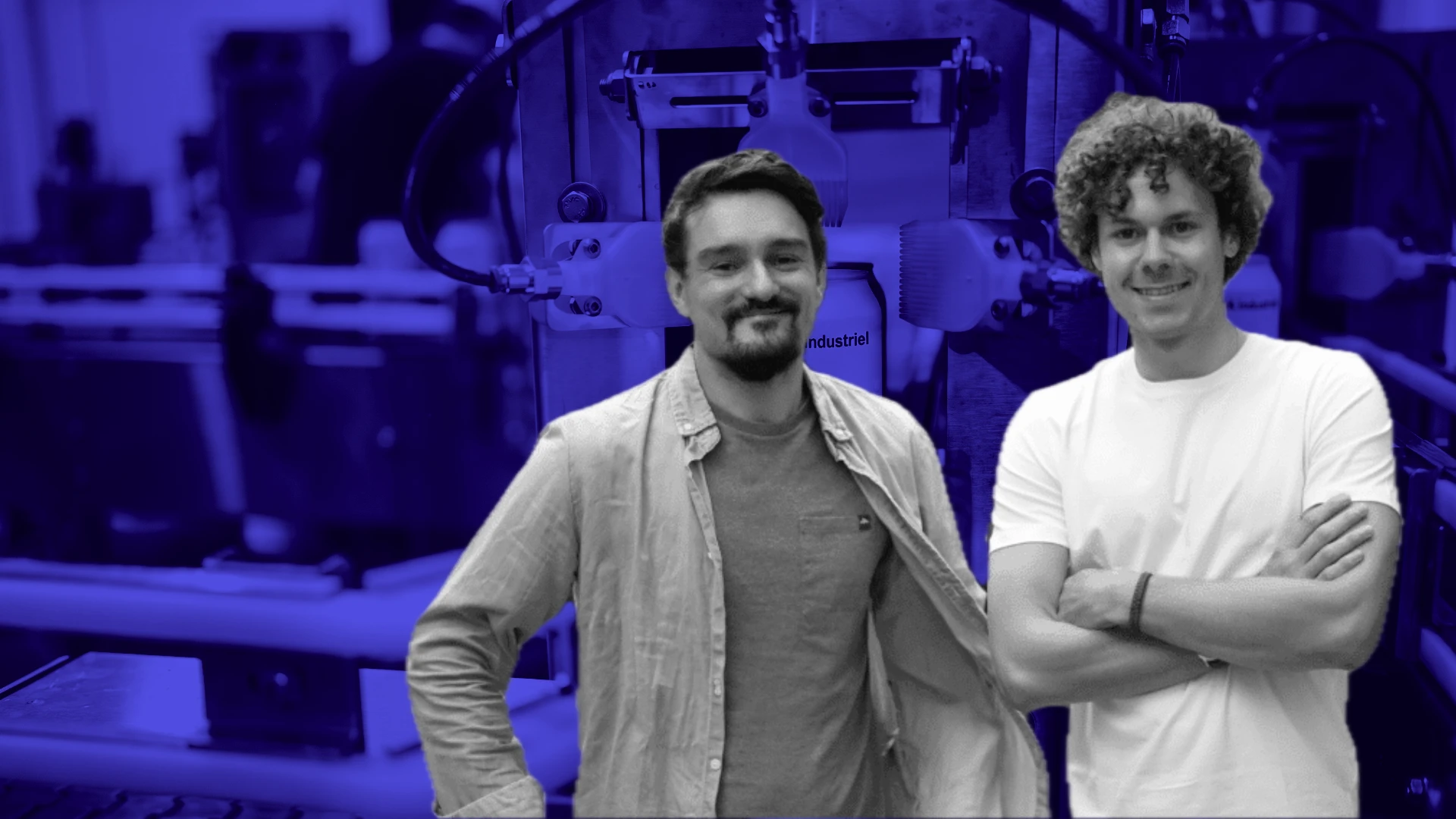
Alexandre Barroux (CEO) and Rémi Bèges (CTO) founded Bonx in 2022. Rémi had spent years building ERP software inside factories because nothing on the market was worth buying, and Alex had visited hundreds of plants and kept hearing the same complaint about ERP. Bonx is based in Paris and New York. Meet the team.
Bonx has raised more than $10 million. Its most recent round, a seed round led by 9900 Capital with Kima Ventures, Purple, OSS Ventures, and Dynamo Ventures, closed in June 2025. Read the announcement.
Core functionality
Yes. Planning works on three linked levels: demand, production, and purchasing. Bonx starts from your sales forecast, takes stock, open orders, and safety stock into account, then uses your bills of materials to calculate the components to buy. Scheduling then places each production operation on a specific machine and time slot, based on operation times, which machines can run it, and opening hours. Bonx flags operations that are late or have no machine, and the schedule recalculates when priorities change. AI can prefill the plans, but your planner reviews, adjusts, and approves them before anything is launched.
Yes. Bonx tracks stock across locations, batches, lots, serial numbers, and units of measure. Because inventory is connected to purchasing, production, quality, and logistics, every movement can be traced back to the operational event that created it: a receipt, a production declaration, a quality check, a transfer, or a shipment.
Yes. Quality checks can happen at reception, during production, before shipping, or anywhere your process requires them. Results stay linked to the related supplier, material, batch, manufacturing order, or shipment, so quality is part of the operational flow rather than a separate spreadsheet or after-the-fact report.
As little as possible, by design. Bonx comes from what its founders saw on the factory floor: Rémi spent years building ERP software inside plants, and Alex visited hundreds of them, and both watched teams lose hours clicking through screens that added nothing to production. So in every deployment, the Bonx team designs for operators first: each screen follows the step they're actually doing, every click that doesn't need to be there comes out, and they tap or scan instead of typing. A supplier's delivery note goes in with a couple of clicks instead of being retyped line by line, and where a scale, printer, or machine can send its readings straight to Bonx, nobody types them at all. At La Maillecotech, data entry became 12 times faster, and operators now help shape the system they work in.
No. Bonx invoices natively, covering sequential invoice numbering, line-level tax, the PDF, and e-invoicing where it's required, then hands the fully coded invoice to your accounting tool, which posts it. Bonx doesn't keep the books: no general ledger, no accounts payable or receivable, no bank reconciliation, no financial close. We think operations and finance should stay in separate systems, and Bonx is built that way on purpose. Here's how the handoff works.
Yes. Bonx records the value of every stock movement, using weighted average cost or FIFO, whichever method your company uses. Incoming lots are valued at their actual purchase price, so changes in raw material prices show up in your stock value, and that value rolls up into semi-finished and finished goods. Bonx then calculates the cost of what you produce, the cost of goods sold (COGS), and the margin on each order. It doesn't keep the books: those amounts go to your accounting tool, which posts them.
The Bonx app is available in English, French, Spanish, and Italian. It also handles multiple currencies across sales, purchasing, and invoicing.
AI in Bonx
An AI-native ERP is built so that AI runs whole workflows, as far as you choose to let it, while people handle the exceptions. AI-native in Bonx means:
- The workflow is designed for AI first. Screens are built for reviewing and approving what the AI did, not for keying in every step.
- AI can own a workflow end to end. An agent reads a supplier's delivery note, matches it to the purchase order, and flags the missing quantity, and a person steps in only when something needs judgment.
- Turning the AI off would cost you capacity, because the work it does would land back on your team.
- It gets better as AI models improve, instead of being reduced to a database that other AI tools sit on top of.
Most ERPs offer the opposite: an assistant in a chat panel, added to a system designed 20 years ago to store records, that can tell you what happened but can't run anything. See what Bonx Intelligence can do.
There are four levels of AI in Bonx, all working on your live data:
- Reading documents: Bonx reads supplier delivery notes, invoices, and customer orders sent as PDFs or spreadsheets, and turns them into digital records for your team to review, so nobody has to retype them.
- Answering questions: it answers questions about your operation, like which customers received a given lot, and lets you act on the answer in the same place.
- Building dashboards: it builds live dashboards from your operational data.
- Running agents: agents handle routine tasks you assign them, such as following up on open quotes, or analyzing a late purchase order and drafting the email to the supplier.
Yes. Rule-based automations, such as creating a shipment when an order is ready or sending invoices to your accounting tool, are set up without code. AI agents are described in plain language and attached to a process step or event, for example checking each delivery note against its purchase order. Managers create them, and an agent can never act beyond the permissions of the profile it runs under.
It's your choice. Routine work, like generating manufacturing orders from confirmed demand, preparing purchase suggestions when material runs short, or moving orders to the next step, can run on its own if you set it up that way.
Most teams start in step-by-step mode, approving each action and correcting the agent where needed, then switch it to automatic once they trust the results. See what Bonx Intelligence can do.
No. Bonx's agents can only act through the tools Bonx gives them, and every action is checked against the user's permissions by standard code, not by the AI. So an agent can never exceed the rights of the profile it runs under, and it can't change Bonx itself. Every action an agent takes is traced and recorded, just like actions taken by people.
Hallucinations happen when an AI model fills a gap with a plausible-sounding guess. Bonx's AI is built so it doesn't have to guess:
- It works from your data, not general knowledge. Every answer and action is grounded in your live operational data, with the full history of every order, lot, and stock movement.
- It can only act through Bonx's own tools. Every action is checked by standard code against the permissions you set, so the AI can't do anything Bonx doesn't allow.
- People review what matters. When Bonx reads a document, you see the source and the extracted data side by side before anything is saved. Agents can run step by step, with a person approving each action, until you trust them to run on their own.
- Everything is traced. Every action an agent takes is recorded, just like actions taken by people.
Your data is yours. Bonx is hosted on Google Cloud in Europe and is regularly penetration-tested by outside specialists. Your operational data is used to run your operation, and what Bonx learns about how you work stays private to your company. It is never used to train models shared across customers.
It starts useful and gets sharper. Bonx works from day one on the standard patterns of manufacturing operations, then learns how you specifically run, your rhythms, bottlenecks, and seasonality, from the data you already generate. So the intelligence that helps on day one does more of the work a few months in.
Yes. Bonx calculates net requirements from open orders, stock, and launched manufacturing orders, then suggests purchase orders with the recommended supplier, the date to order by, and quantities rounded to the supplier's minimums and increments. You can approve suggestions one by one, add lines to an existing order, or hand routine reorders to an agent under the approval rules you set. Purchase order automation without losing control.
Yes. Bonx marks every customer order, manufacturing order, and shipment as on time, late, or missing supply based on component availability, and shows which component is holding it up. It also compares what suppliers promise with what they deliver, so when a supplier confirms 12 days but has averaged 19 this year, you see the risk before the line stops. How to track supplier on-time delivery.
How Bonx compares to other tools
Legacy ERPs, from SAP, Oracle, Infor, Sage X3, and Microsoft Dynamics to industry-specific systems like Aptean, Infologic, and VIF in food and beverage, Datacor in chemicals, and JobBOSS in machine shops, were designed decades ago to record transactions after the fact. Fitting one to a factory typically takes 12 to 24 months, and every change after that becomes a lengthy and expensive project.
Bonx customers reach a first go-live in 10 weeks on average and a full go-live in 4 to 6 months, their own teams adapt the system as the business changes, and Bonx acts on live data instead of reporting on yesterday's. Coverage differs too: a typical legacy ERP handles about 60% of a plant's operational work and leaves the rest to spreadsheets and email, while Bonx customers run about 90% of their operations in it. AI ERP vs. legacy ERP.
All-in-one suites like Odoo put accounting, CRM, HR, websites, and manufacturing under one vendor, which suits companies that want one platform for everything. Bonx goes deeper on manufacturing operations and connects to the tools you already use for the rest. The upgrade model differs too: Odoo ships a major version every year, and custom modules have to be made compatible before each upgrade, while every Bonx customer runs the same version and gets updates several times a week without a migration project. Some manufacturers run both, with Odoo for accounting and Bonx for the factory. Bonx vs. Odoo, side by side.
Industry-specific ERPs know one sector's vocabulary, which helps on day one, and they work well as long as your process fits their template. The trouble starts when you add a sales channel, launch a product line, or subcontract a step the template doesn't expect: each change becomes a paid project, and your team starts working around the system instead of in it. Bonx gives you the industry depth as standard, including lot and batch traceability, shelf life and first-expired-first-out picking, formulas, variants, and quality checks, and your own team adapts the rest as you grow. A manufacturing ERP should fit the company you're becoming, not only the one that signed the contract.
Yes. Replacing the planning spreadsheet, the stock file, the order tracker, and the paper work orders on the floor is how many Bonx deployments start. For example, LCS Groupe cut paper by 90% across five workshops after moving onto Bonx. 6 signs you need a new ERP.
AI has made it easy to get a first version or a prototype of a home-grown ERP. That can be useful for creating illustrative mock-ups.
However, the hard part is everything underneath the interface: a data model that keeps lots, stock, and orders consistent, MRP, invoicing with sequential numbering, reliable integrations, and more. It's also important to think about how you'll maintain the system over time, in particular if the person who built it leaves.
Bonx gives you that foundation as a product, and you can still build the parts that are unique to your plant as apps inside Bonx, which run on the same data and stay connected to your stock, orders, and traceability. Buy vs. build your manufacturing ERP.
Usually not an MES. Bonx covers what most small and midsize plants use one for: work orders on the floor, step-by-step declarations, time tracking, quality checks at each step, and lot genealogy built as production runs.
That said, plenty of customers do keep their MES for specific reasons, such as machine-level data collection or a system their operators already rely on, and Bonx integrates with it.
Whether you need advanced planning and scheduling (APS) depends on how constrained your capacity is. APS vs. ERP covers when a separate tool is worth it, and ERP vs. MES covers the floor side.
Deployment
When the workarounds cost more than the switch would: planners rebuilding the same spreadsheet every week, stock nobody trusts, traceability assembled by hand before an audit, or a growth plan the current system can't keep up with. Switching a few months ahead of a growth push or a major customer audit is far easier than switching in the middle of one. When is the right time to implement an ERP?
Bonx customers reach a first go-live in 10 weeks on average and a full go-live in 4 to 6 months, not the 12 to 24 months that legacy ERP treats as normal. That speed comes down to two things:
- The technology: Bonx is AI-native, so it adapts to how you work through configuration, not the custom code and long cycles legacy ERP relies on.
- The approach: deployment is phased. You take one important workflow live with real users and real data, often run it in parallel with your current tool to prove it out, then extend, instead of waiting a year for a big-bang launch.
For the full breakdown, see how a manufacturing ERP can deploy in weeks.
A Bonx deployment has two milestones:
- First go-live, about 10 weeks in on average: after kickoff workshops and configuration, one important, real flow, such as customer orders through to shipment, goes live with real users and real data. It often runs in parallel with your current tool while you validate it against a clear success criterion.
- Full go-live, typically 4 to 6 months in: the scope extends step by step, flow by flow, with the Bonx team alongside you, until everything agreed at kickoff is live.
From your side, Bonx needs your base data: products, customers, suppliers, prices, stock, bills of materials, routings, quality rules, and documents. Above all, it needs one internal owner who knows the floor and can confirm that each flow matches how you work. You don't need a full project team. Nervures went live in three sprints: connecting its existing systems first, then production and materials planning, then quality checks and performance tracking.
No, and that cleanup is a large part of why ERP projects take a year everywhere else. Because Bonx is AI native, it can easily ingest and make sense of both structured and unstructured data. So a supplier catalog that only exists as PDFs or 10 years of bills of materials in spreadsheets is an input at implementation.
No. Bonx owns the operational data model: bills of materials, inventory, supplier records, orders in production, quality results. Data that belongs somewhere else stays there. For example, customer orders flow in from your e-commerce platform or CRM, invoices go out to your accounting tool, and Bonx keeps both sides in sync. See what Bonx connects to.
Yes. If your company already runs a finance or all-in-one ERP, you can keep it for accounting and run manufacturing operations in Bonx. For example, some customers move their manufacturing operations from Odoo to Bonx and keep Odoo for everything else. Products, customers, and sales orders then sync between the two, and Bonx sends back lots, purchase orders, shipments, and invoices. With accounting-focused systems such as Sage or Microsoft Business Central, Bonx sends each validated invoice, fully coded, for your finance team to post. Either way, nothing is typed twice and your books stay where they are.
No. You can start with the workflows that matter most, such as inventory, production, orders, or purchasing, then expand from there. Because Bonx modules share the same data model, adding more scope later does not mean starting again with a disconnected implementation.
No IT department or developers required. Bonx is fully hosted, so there’s no infrastructure to run and no custom code to maintain. A capable person on your team can configure and adapt it as you grow, which is exactly why most customers run Bonx with the team they already have.
Customization & changes
As deep as you need, and your own team makes the changes. Bonx is adaptable on six levels:
- Your organization: teams, sites, and responsibilities.
- Your data: the fields, tables, and relationships your operations need.
- Your processes: every step, approval, and shop floor operation, the way it happens.
- Your team's language: the terms, units, and statuses your plant already uses.
- Your automations and AI agents: triggers, approvals, and agents for repetitive work.
- Your custom apps: apps for the parts no standard module covers, built inside Bonx on the same data.
All of it is configuration, not custom code, so a change doesn't turn into an IT project, and it carries over to every update. See how Bonx adapts.
Mostly your team. Bonx configures the system with you during deployment and trains the people who will run it. After go-live, your managers add fields, adjust process steps, set access rights, and build views and dashboards themselves, without code. A few things, such as document templates, still go through the Bonx team: you send a request, and it's usually done within days.
Typically, about 90% of our customers' operations run on Bonx's standard modules, configured to their process. The rest, the part that makes your plant different, can be built as an app on the same data, so it stays connected to your stock, orders, and traceability. People you authorize describe the app to Bonx's assistant, test it on live data in draft, and publish it to operators when it's ready. The Bonx team can also build apps with you.
Nothing breaks, and nothing needs migrating. Every customer runs the same version of Bonx, which ships updates several times a week. Your fields, processes, permissions, and automations are built from Bonx's own building blocks rather than custom code, so they carry over to each release automatically. You never sit on an old version or plan an upgrade project to get new features.
Yes. A process can apply to every site or only to some, so one plant can add a quality step the other doesn't need. Processes can also span sites, with a transfer step in between, and you can limit each user to the sites they work at.
You do. Access rights are set by team, site, record type, process step, and field, so an operator can record a measurement without being able to edit its target. Adding fields and creating AI agents is reserved for managers. Every change to a record is tracked field by field, with who made it and when, including changes made by an agent.
Integrations
Bonx has developed a proprietary integration engine that allows us to integrate virtually anything into your ERP. Here is a non-exhaustive list of some of the most common integrations requested by our customers:
CRM and commerce: HubSpot, Shopify, WooCommerce, etc.
Finance and accounting: We integrate with any of the financial software companies supported by Chift; this includes (but is certainly not limited to) QuickBooks, Xero, Sage, Pennylane, Cegid, EBP, Axonaut, etc.
Logistics and 3PL: Veolog, Sendcloud, Chronopost, DHL
Hardware: Bonx connects to the equipment on your floor through a synchronization agent, including scales and weighing systems, label printers and product coders, barcode scanners and mobile devices, quality equipment such as checkweighers, metal detectors, and temperature sensors, and production and packaging lines.
If the integration you're thinking about isn't listed here, talk to the team. We'd love to discuss your vision in more detail and work with you to figure out what is possible.
Bonx works with accounting tools such as QuickBooks, Xero, Sage, and Pennylane, and can connect to virtually any other accounting platform through Chift.
Shopify owns the commercial and payment layer. Bonx receives the order and handles what happens next: stock reservations, production triggers, batch selection, quality checks, shipment preparation, and 3PL coordination.
For example Féroce, a grass-fed meat brand selling direct to consumers, deployed its Bonx integration, which included a Shopify integration, in 42 days before a national TV appearance multiplied their orders tenfold. Shopify stayed exactly as it was. Bonx handled traceability, cold storage, and logistics coordination at scale.
Bonx covers the full operational lifecycle of manufacturers, starting at the order management stage. That order can be passed to Bonx from HubSpot (or any other CRM).
From there, Bonx handles production requirements, stock reservations, procurement, quality steps, etc., sending the right operational data back to the CRM if/when needed.
In other words, sales keeps its pipeline and owns the in data in the CRM, and operations runs the manufacturing flow in Bonx.
For example at Amantys, a custom jewelry manufacturer, each custom order creates a complete work order. Traceability is streamlined and data flows smoothly between HubSpot, the workshop, and Pennylane, reducing re‑entry, errors and client follow‑up requests.
Yes. Manufacturers supplying large retailers and automotive groups run EDI orders through Bonx alongside their other channels, same order list, same workflows, same traceability.
Yes. A small synchronization agent installed on site connects Bonx to the equipment on your floor, so what happens there lands in the same system as your orders, stock, and traceability:
- Scales and weighing: actual weights for ingredients, variable-weight products, and pallets.
- Label printers and product coders: the right lot and date on every label and package.
- Barcode scanners and mobile devices: scanning at receiving, picking, production, and inventory.
- Quality equipment: checkweighers, metal detectors, and temperature sensors.
- Production and packaging equipment: mixing, filling, bottling, and packaging lines, and 3D printers.
Recyc Matelas weighs incoming loads on a weighbridge connected to Bonx, and Something Added connected its HP 3D printers natively. Most machines that expose data through OPC UA, MQTT, Modbus, or an API can be connected, and Bonx can also work through the production systems you already have. Sending recipes or orders back to a machine depends on what its vendor allows.
Yes. Bonx offers REST and GraphQL APIs, outbound webhooks, and an MCP connection for AI assistants, with access scoped by API token or user permissions. It also works with no-code automation tools such as n8n and Zapier. The documentation is at docs.bonx.com.
Yes. Bonx has an MCP (Model Context Protocol) connection, so a manager can add Bonx as a connector in an AI assistant such as Claude and ask about live orders, items, and stock under their own Bonx login and permissions. The connection is read-only today.
If your system has an API, Bonx can almost certainly connect to it. For example, Recyc Matelas, France's first mattress recycling company, runs a direct integration between Bonx and their weighbridge system that pulls tonnage data automatically to eliminate double entry.
Custom integrations are part of how the Bonx model works. Don't hesitate to reach out, the team would be happy to discuss your specific integration needs.
Pricing & buying
Bonx is an annual subscription plus a one-time setup fee, sized to your operation. No surprise change-order invoices and no runaway timelines, none of the weight that makes legacy ERP so risky to own.
Most teams see Bonx pay back in reclaimed hours and fewer errors within the first months. The fastest way to a more precise pricing number is to talk to our sales team.
Hosting, backups, maintenance, support through the in-app help desk, and product updates, which ship several times a week, are all included in the Bonx subscription. Every customer runs the same version of Bonx, so there are no upgrade projects and no surcharge for staying current. Connecting a new outside system after go-live, as well as some modules, is scoped and priced separately.
There's no self-serve trial, because an ERP is only worth judging on your own data. Instead, during the sales process, the Bonx team runs a demo on your real orders, products, and production steps, and during deployment you see your own processes configured in Bonx before anyone is trained. Book a demo.
Yes. Before you sign, the Bonx team puts you in touch with a customer whose operation looks like yours, so you can ask them how deployment went and how they use Bonx day to day. Read customer stories.
During deployment, you work directly with the Bonx deployment team. After go-live, you raise requests from inside Bonx through the in-app help desk, and a Bonx account manager meets with your team every six weeks to review open needs and new features. Service-level agreements (SLAs) are set in your contract terms.
Still have a question?
Bring us the question this page didn't answer
Bring your real orders, stock, and production headaches. We'll show you Bonx running on your own workflows.
Received
Thank you!