The chemical manufacturing ERP built for specialty, fine & toll production

Transforming Manufacturing

Arnaud Nouri
General Manager @ Lefrant Rubco
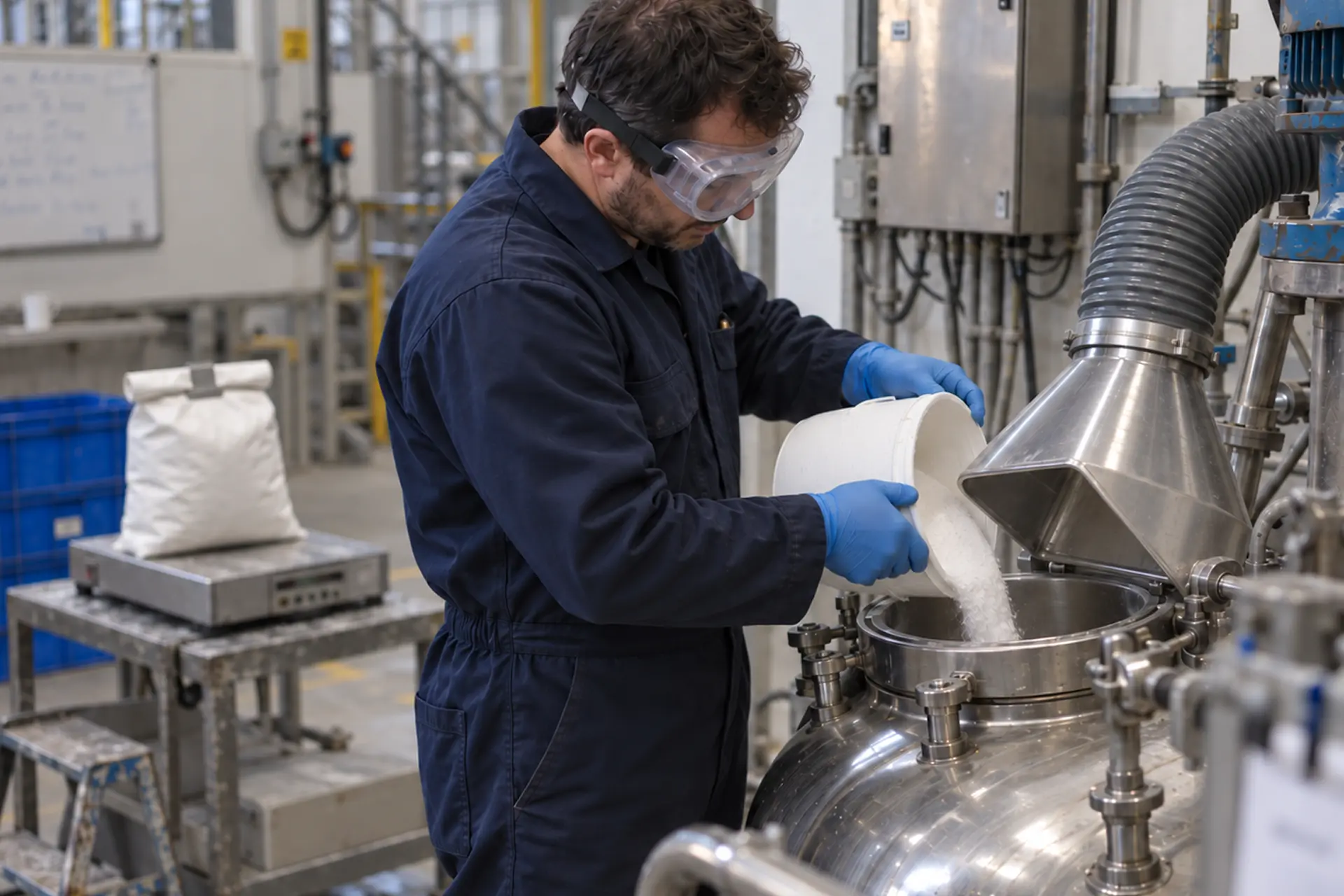
Quantities, order of addition, agitation, and temperature appear on the step the operator is running, not on a spreadsheet beside the mixing station.
Control points capture the actual value on the batch, so a drifting bath or a weak assay shows up before the customer finds it.
Every formula and every open order touching it, listed before the regulation takes effect.
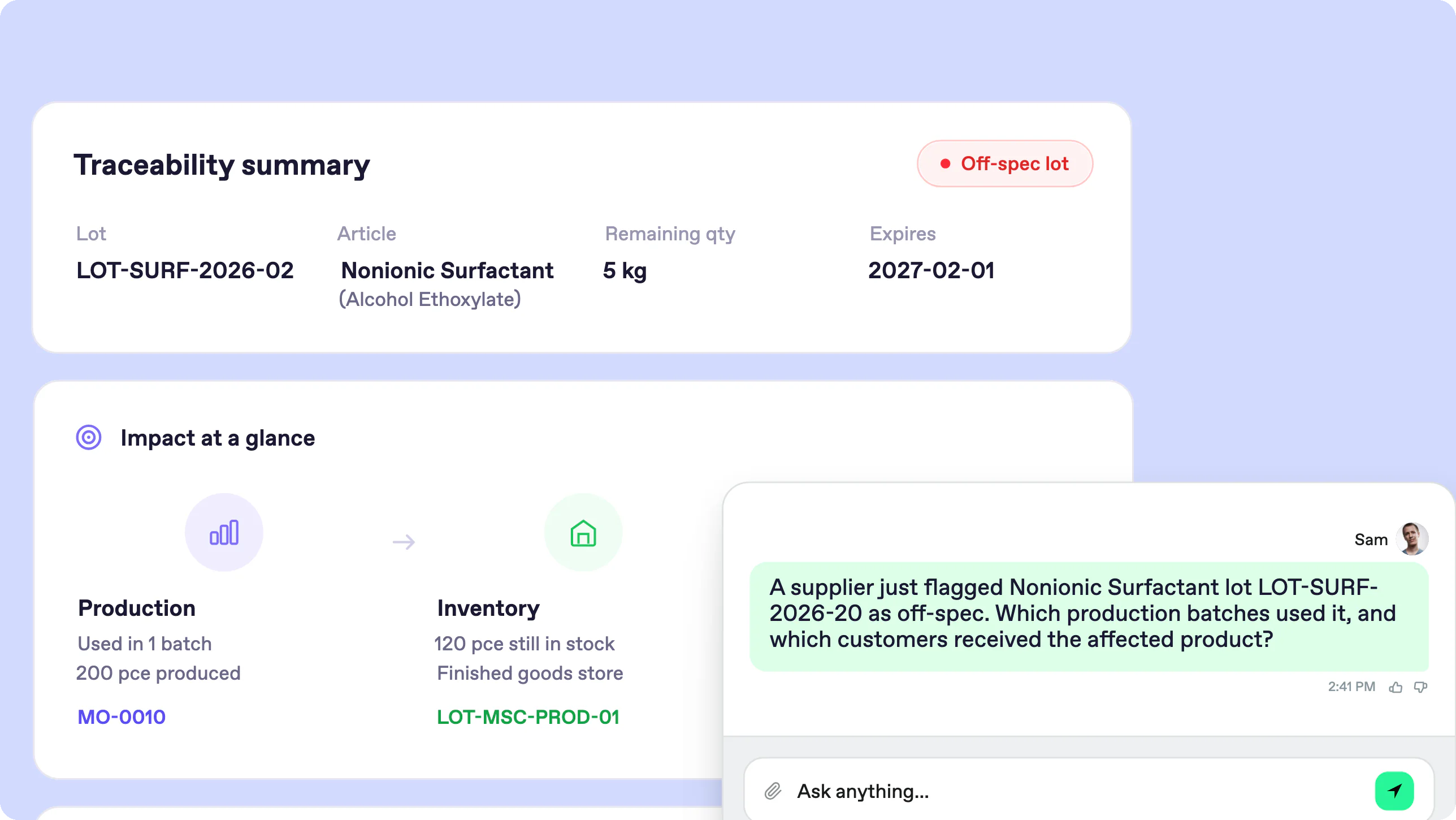
Genealogy from the tanker or drum lot through the blend to the finished container and its delivery note.
Expiry per batch on catalysts, resins, and hardeners, flagged against demand that's already committed.
Toll work runs as a service on client-supplied raw materials, kept out of your stock and your valuation.
Core modules
Integration engine
No, and running them out of your ERP is usually the wrong idea anyway. Safety data sheets need regulatory content that updates as rules change, which is a specialist job. What Bonx holds is the operational record underneath them: what's in each batch, which lot went where, and what the controls measured. Where you already have an SDS tool, Bonx connects to it rather than duplicating it.
Not as a compliance product, and be wary of any ERP that says otherwise. What Bonx does is hold the data those regimes ask you to be able to produce: the composition of every batch, the genealogy behind it, and which customers received it. When a substance loses its authorization, Bonx lists every formula and every open order touching it, which is the operational half of reacting to a regulatory change.
Yes, and it's the right description for what a chemical maker needs. Formulas rather than parts lists, batches rather than units, yields that vary, and genealogy in both directions. Bonx runs that alongside orders, purchasing, planning, quality, and shipping, so the batch and the business it belongs to sit in one system.
As a service on their material rather than a purchase of your own. What they send is received, consumed on their job, and reconciled back to them, and it stays out of your stock and your valuation. Lefrant Rubco does two-thirds of its output as toll chemistry and describes proving what was done with the customer's material as part of what the customer is buying.
Yes, on the step they're running. Quantities, order of addition, agitation, and temperature sit on the operation itself rather than in a folder or a spreadsheet beside the tank, and what they record goes back onto the batch as they work.
Bonx lists every formula and every open order that touches it, before the date it takes effect. Substitution is still your chemists' decision; what Bonx removes is the part where someone works out by hand which products are affected and which customers are waiting on them.
Yes, in both directions. From a finished container, Bonx returns the blend, the lots that entered it, and the tanker or drum they came from. From an incoming lot, it returns every batch and every customer downstream. That record assembles as the blend is made, not afterward.
Bonx invoices natively, including legal gap-free numbering, line-level tax, the PDF, and e-invoicing where it's legally required.
That said, Bonx is not a finance ERP. We think manufacturing ERP and finance ERP should stay separate, and Bonx is built that way on purpose. There is no general ledger, no accounts payable or receivable, no bank reconciliation, and no financial close. The coded invoice goes to your accounting tool, which posts it and keeps the books.