
Additive manufacturing software that runs the farm overnight

Transforming additive manufacturing

Romain Adamowicz
CEO at Something Added
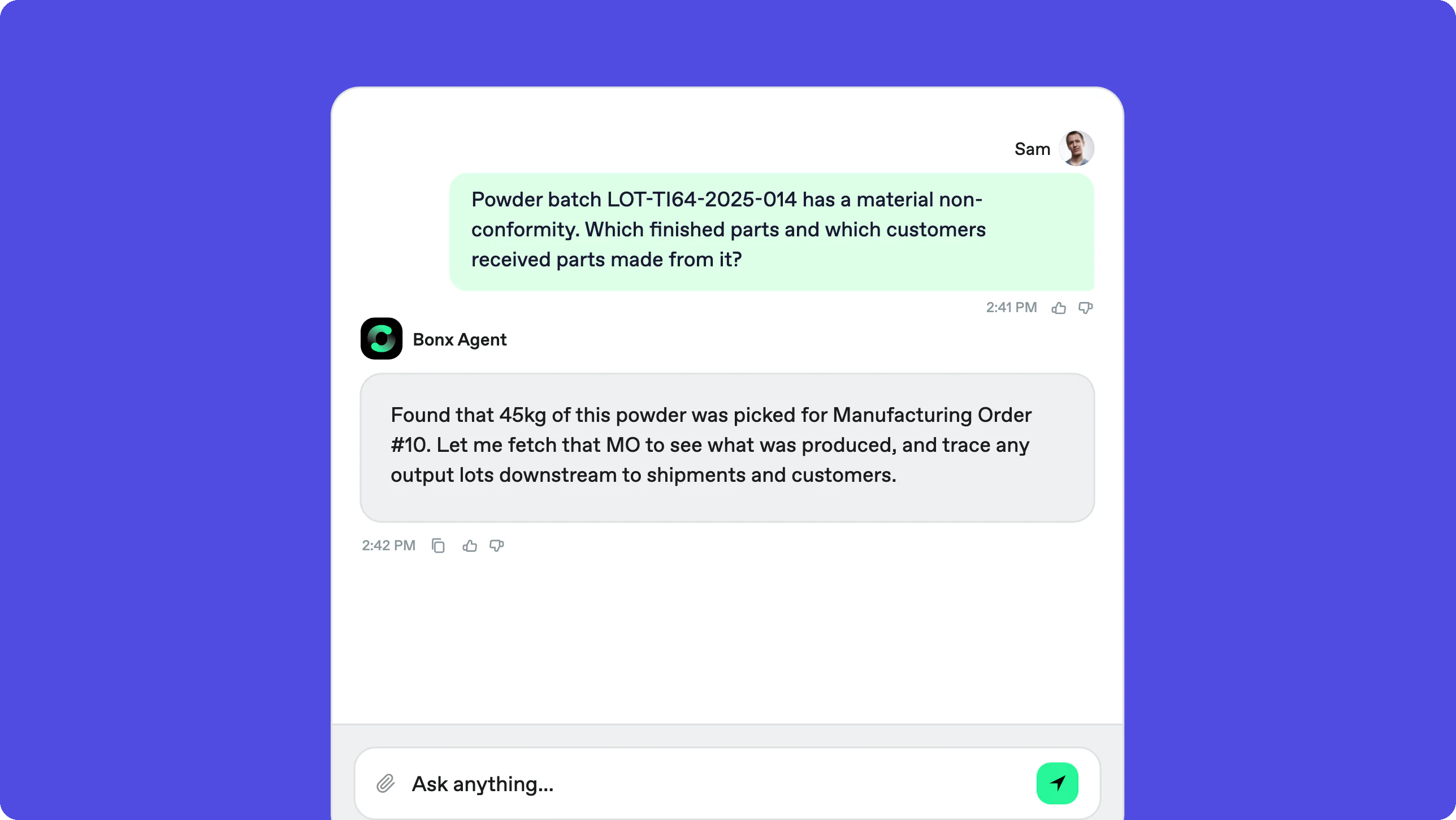
Virgin and recycled lots, blend ratios, and sieve cycles, all followed batch by batch.
Parts from different customers in one build, each traced back to its own order.
Build, post-processing, finishing, machining, and inspection as steps on one order.
Parts lost, powder consumed, machine time spent, and new dates, all from the step where it went wrong.
Machine time and material split across the parts that shared the plate.
Volume, material, and finishing level drive the price on the article itself, instead of an estimate that waits for whoever owns the pricing spreadsheet.
Core modules
Integration engine
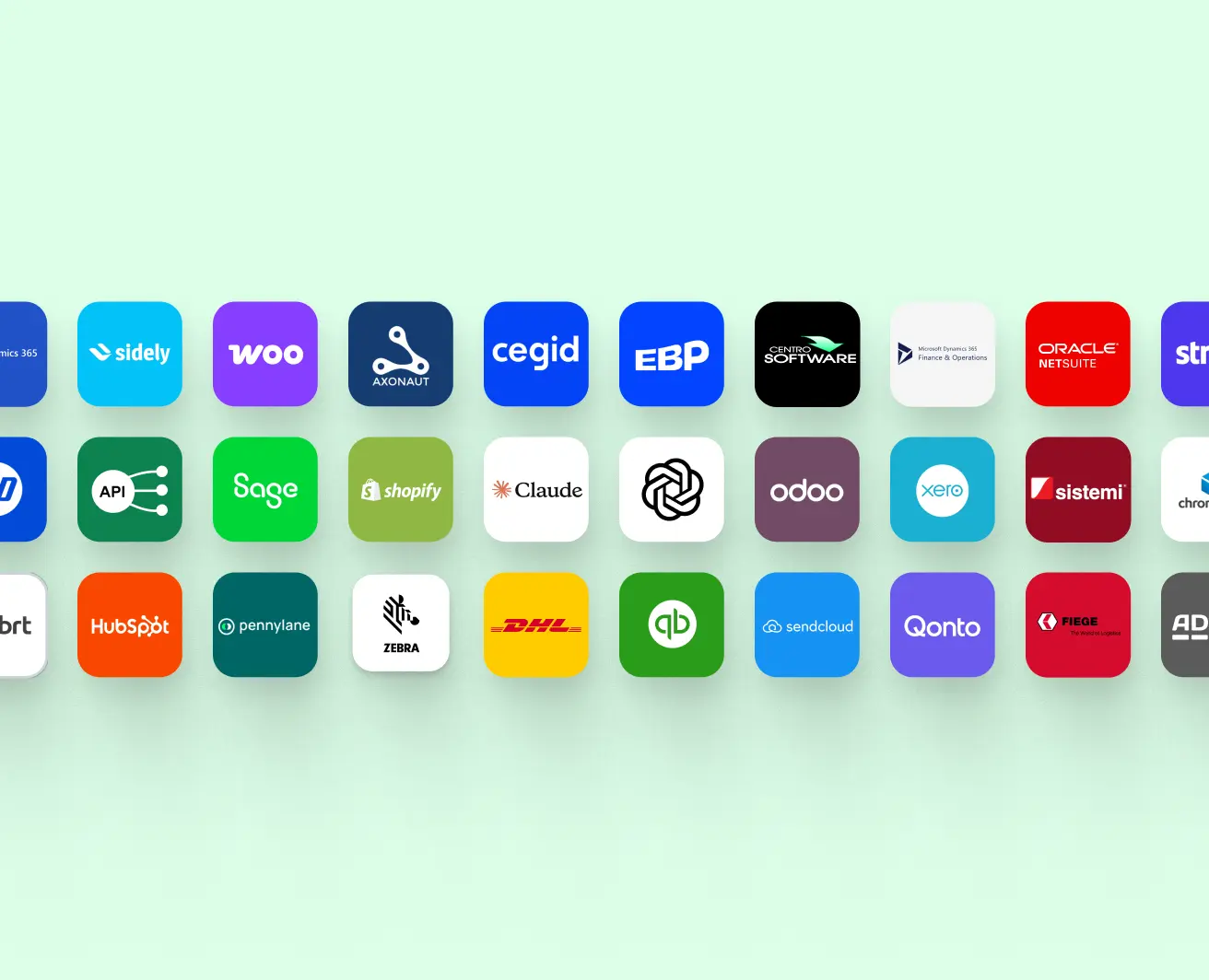
A full ERP. Most additive manufacturing software runs the machines and stops there, and most industrial 3D printing software handles the build and knows nothing about the order behind it. Bonx covers quoting, orders, inventory, purchasing, scheduling, production, quality, and shipping in one system.
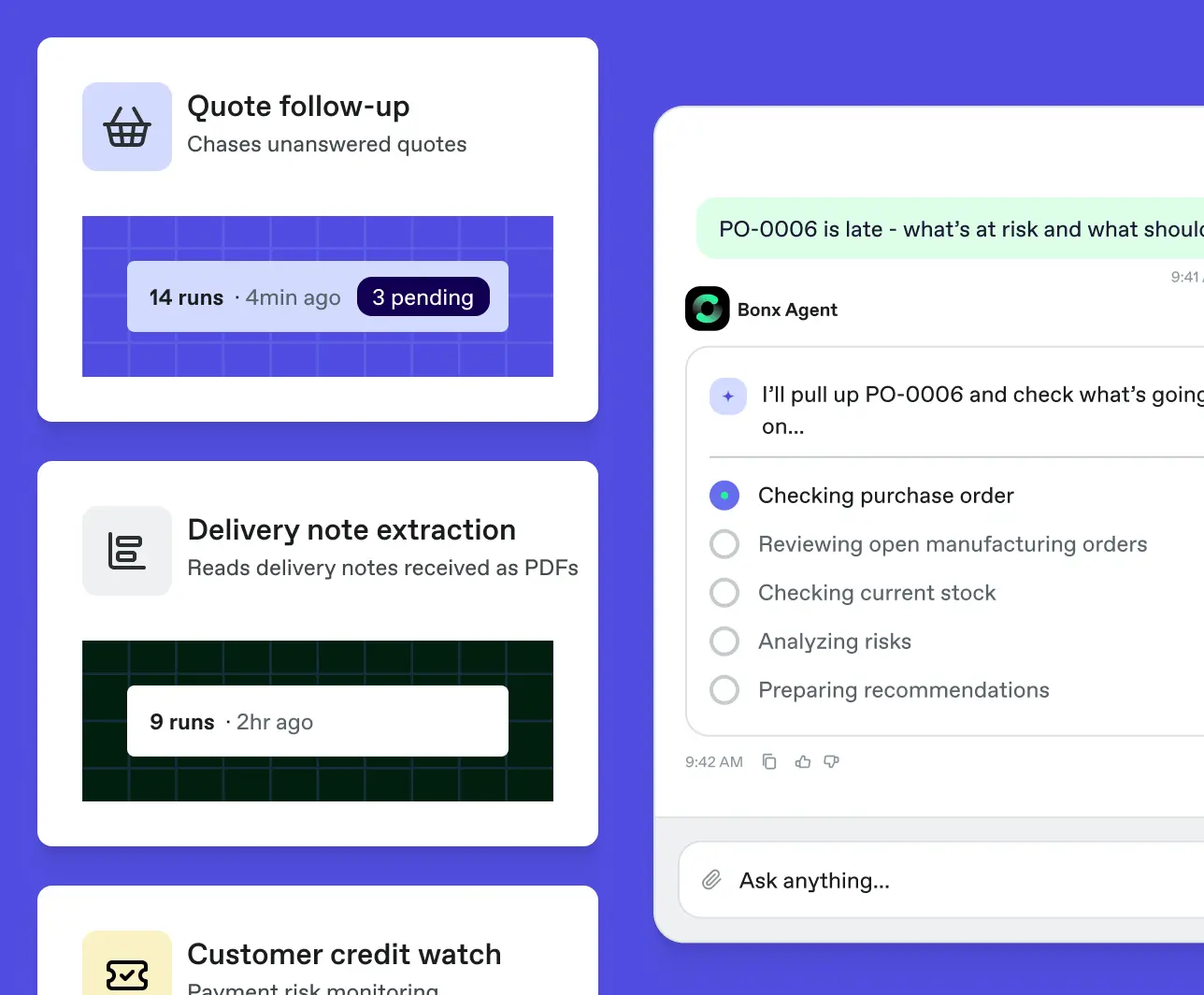
Yes, and unattended is the point. Bonx groups orders, generates the manufacturing orders, and assigns jobs to machines, which is what let Something Added run production 24/7 at more than 10,000 parts a month. 3D print farm management software that only shows you machine status leaves the scheduling to a person.
It does the MES job on the floor and more besides. Operators declare against steps, machines feed data through the integration engine, and the same system holds the order, the material, and the cost. Where a separate MES for 3D printing makes sense, Bonx connects to it rather than duplicating it.
By making everything around the printer as reliable as the printer. Slicing and machine time are usually the parts that already work. What breaks at scale is quoting, nesting several customers into one build, powder reuse, post-processing queues, and knowing what a part actually cost.
Yes, lot by lot. Virgin and recycled powder are separate lots with their blend ratio and sieve count recorded, so a part's genealogy reaches back through every reuse cycle to the original material lot. That works the same way for polymer and metal powder.
Yes. Machine time and material are split across the parts that shared the build, so a job's cost reflects how much of the plate it actually used rather than a flat rate someone set last year. Failed builds land the same way: lost parts, consumed powder, and machine time all attach to the build that failed.
Yes, and a bureau's hardest problem usually isn't printing. It's quoting fast enough to win the job, then filling plates efficiently enough to make money on it. Both are order and planning problems rather than machine problems, which is why they sit in the ERP.
Something Added went live in two months, including a native integration to their HP printers. 10 weeks is the average across our customers. What it needs from you is one internal owner who knows how the farm runs, not a project team.
Bonx invoices natively, including legal gap-free numbering, line-level tax, the PDF, and e-invoicing where it's legally required.
That said, Bonx is not a finance ERP. We think manufacturing ERP and finance ERP should stay separate, and Bonx is built that way on purpose. There is no general ledger, no accounts payable or receivable, no bank reconciliation, and no financial close. The coded invoice goes to your accounting tool, which posts it and keeps the books.
