The ERP built for appliance manufacturers & assemblers

Bonx is the AI-native manufacturing ERP that learns how you work and takes on more autonomy over time. When your system plans the imported module alongside the part you make, records the end-of-line test on the unit that took it, and keeps spare parts demand out of the assembly plan, your people have more time for what matters most.

Transforming Manufacturing

Bonx works the way you work

"Ninety percent of what we build is made to order for export. The rest is made to stock for Italy. Same factory, same ovens, two opposite ways of planning. Every system we looked at wanted us to pick one. Bonx runs both.”

Enrico Vento

President & CEO @ Bompani

Built for how appliance manufacturing actually runs

MASTER DATA: Handle voltage, plug, and finish as one product

Market versions as variants of a single model, sharing a bill of materials and a cost structure.

PLANNING: Plan what you make and what you import together

Use-by and best-before set per article, tracked per batch, flagged against open demand.

SHOP FLOOR: Build to the sheet at the station

The station form carries the variant's parts, the instructions, and the end-of-line test, with the result recorded on the unit.

TRACEABILITY: Follow a unit into after-sales

Each unit is its own lot, so a warranty claim or a recall resolves back to its components and its build.

PURCHASING: Keep spare parts out of the assembly plan's way

Service demand planned on its own safety stocks, for the years you owe support.

SHIPPING: Pack the way each retailer asks

Palletizing and shipping documents configured per customer and printed at the dock.

Explore Bonx, the AI-native manufacturing ERP

Core modules

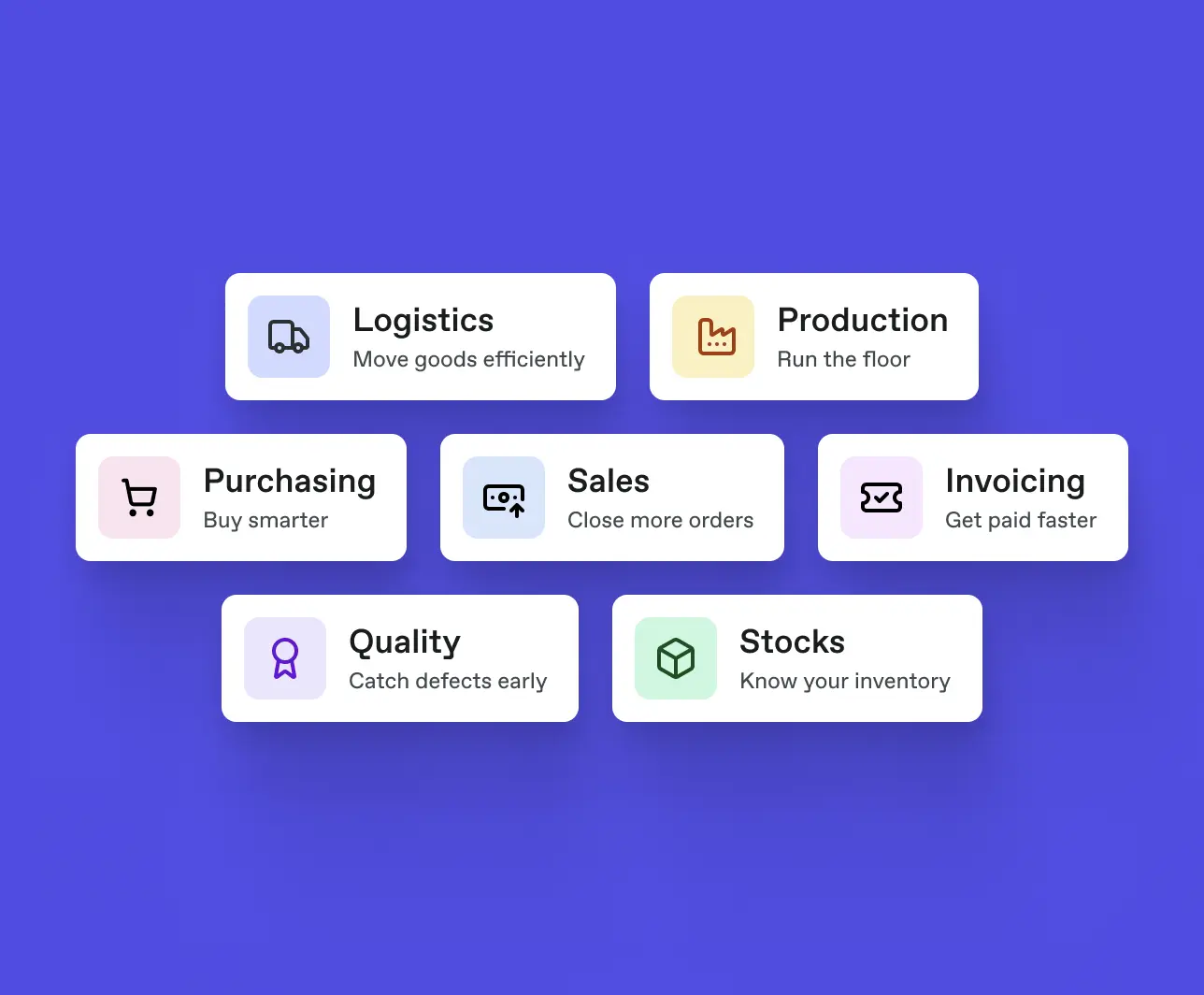
Everything an appliance manufacturer needs to run operations, from the order to after-sales

Integration engine

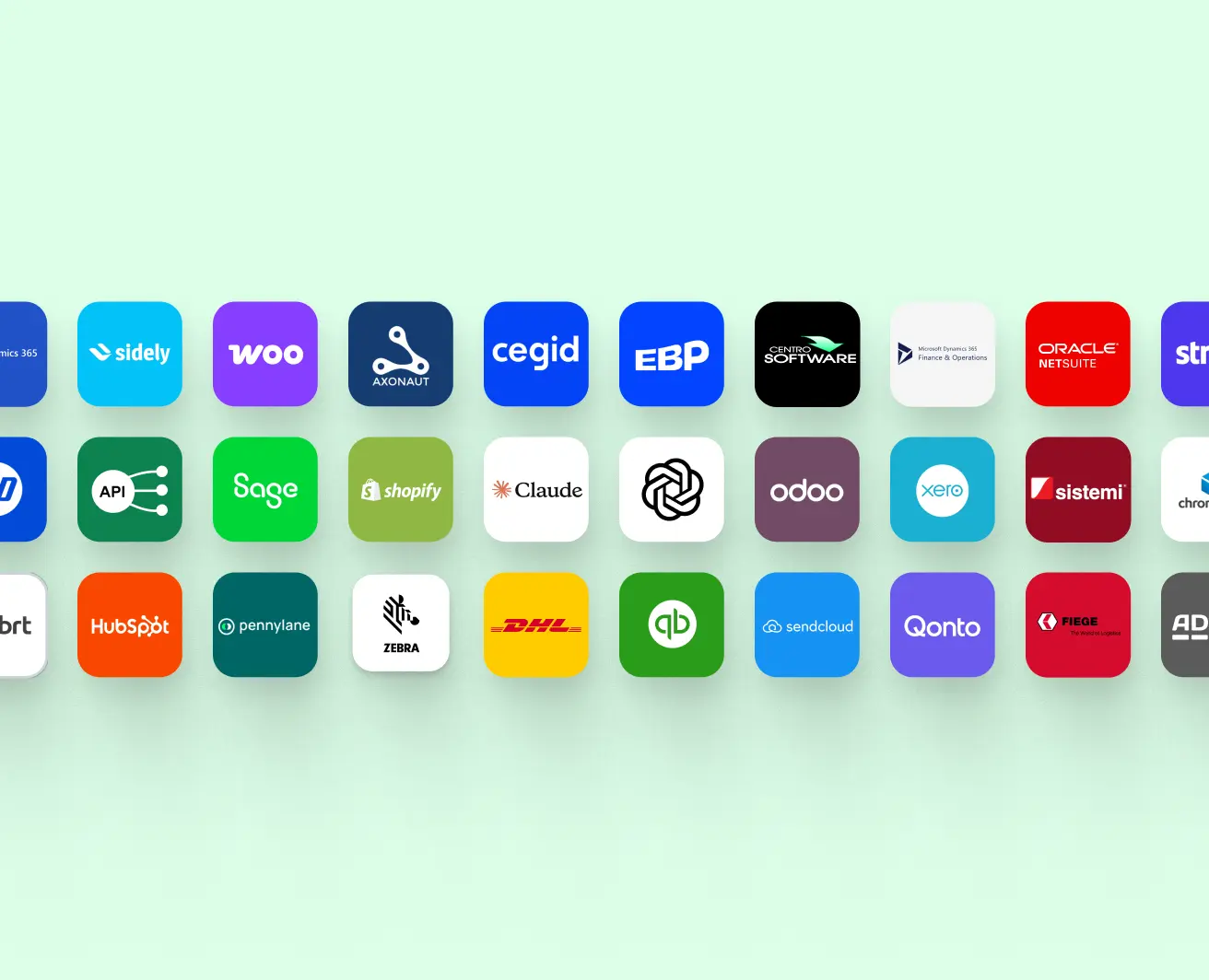
Connect to anything in your stack, from systems to machines & more

Bonx intelligence

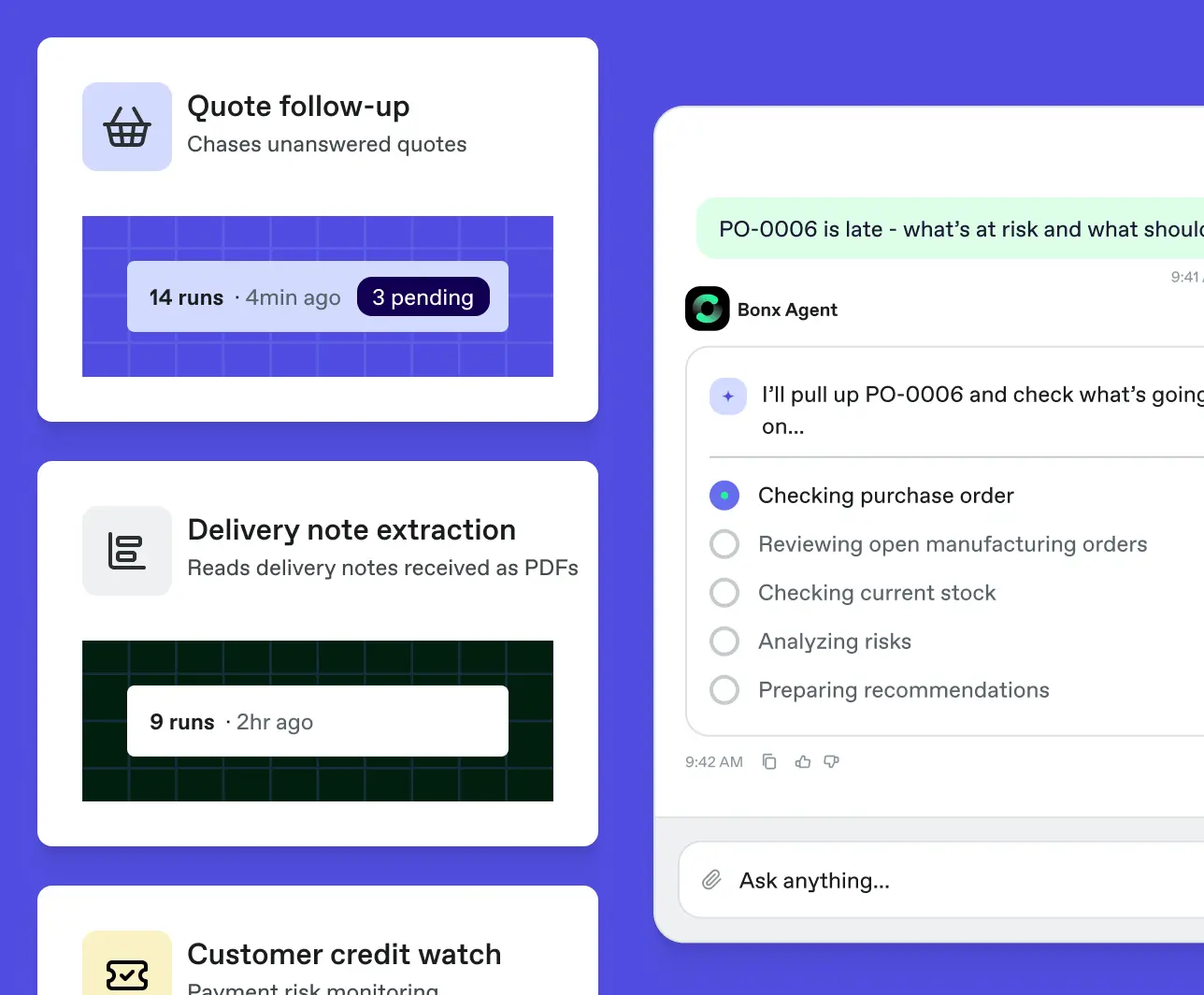
Let AI handle the routine

Discover why operators love Bonx
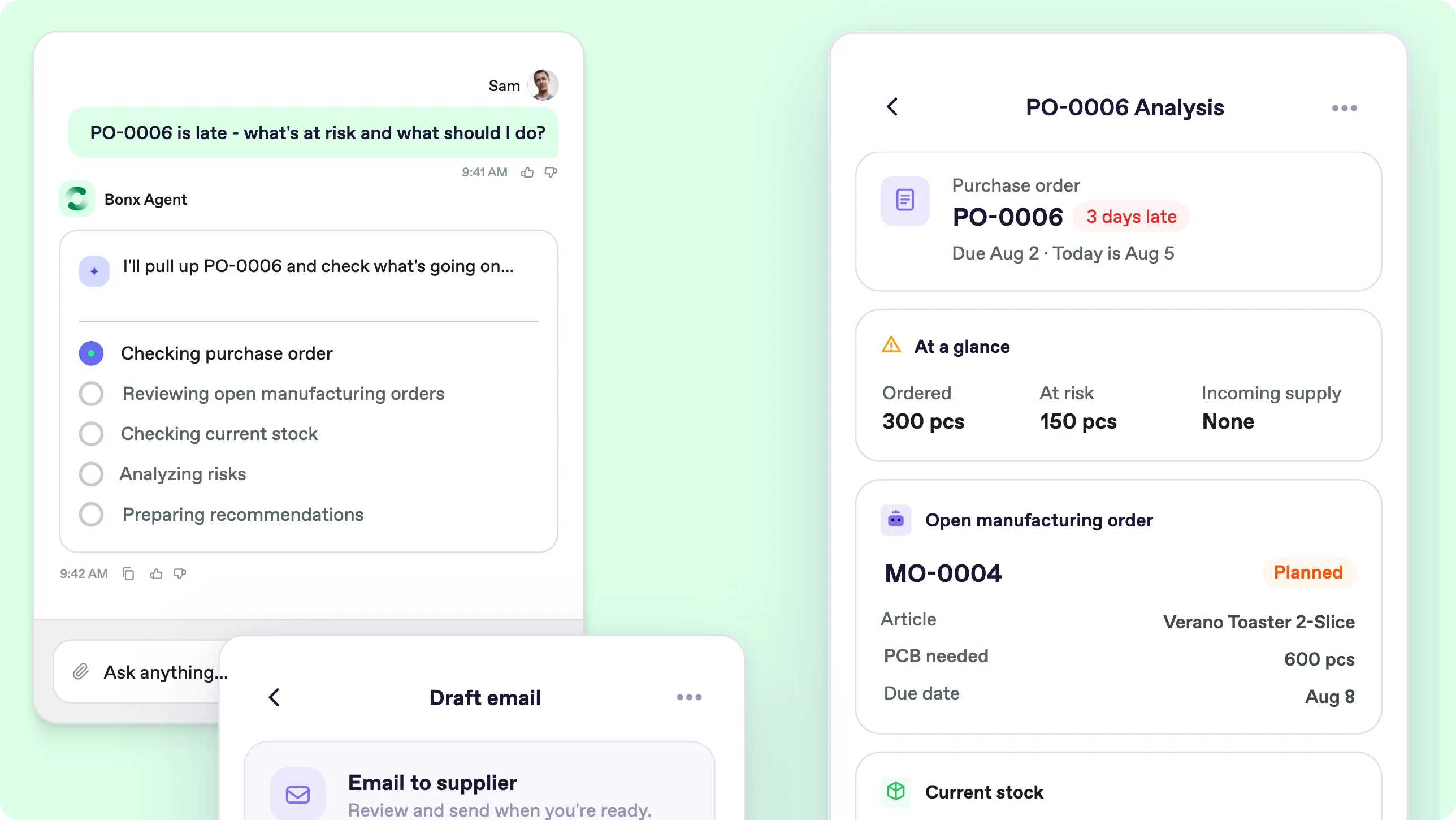
Bonx Agent cards for quote follow up and delivery note extraction beside a chat window.

FAQ

Bonx is appliance manufacturing ERP for manufacturers that need product variants, assembly planning, purchasing, inventory, quality, serialization, traceability, and invoicing in one operational system. It can support home appliance ERP workflows when the problem is running production and aftersales, not retail point-of-sale or field-service dispatch.

Yes. White goods manufacturing software needs to manage model variants, long-lead purchased modules, assembly line constraints, unit-level testing, serial numbers, warranty records, and service parts. Bonx connects those operations around the product and the unit, so a refrigerator, washer, or range does not become a disconnected set of spreadsheets.

Yes, when the consumer durables ERP needs to own the manufacturing operation. Bonx is a strong fit for durable products with variants, imported components, serialized units, retailer requirements, spare parts, and warranty traceability. If the core problem is retail, point-of-sale, or consumer service tickets, Bonx connects to those systems rather than replacing them.

Yes, as variants. Voltage, plug type, and finish are attributes on the model rather than separate products, so they share a bill of materials and a cost structure and a new market doesn't mean a new article someone builds by hand.

Yes, for the operational layer around the assembly line. Bonx holds the build, the variant's parts, the station instructions, the production status, and the quality record. It does not replace programmable logic controllers or machine-control software. It gives the team one operational view of what the line is building and what each unit still needs.

No. End-of-line test software usually owns the test bench or inspection equipment. Bonx records the result on the unit, links it to the serial number, and keeps failed or incomplete units out of available stock until the right action is taken. Where the test system exposes usable data, Bonx can connect to it.

Yes, against the same build and the same date. A long-lead module from a supplier and a part you machine yourself are both netted against what the build needs, so the constraint shows up wherever it actually is.

Aftersales parts management runs on its own safety stocks rather than competing with the assembly plan for the same components. That matters for as long as you owe support, which in appliances is usually measured in years after the product leaves the catalog. Bonx keeps service demand visible without letting it distort the production plan.

Yes. Each unit is its own lot or serial record, so a warranty claim or recall resolves back to the components that went into it and the build it came from, in both directions. The same record can hold end-of-line test results, quality status, shipment, and service history.

Bonx does not grant UL certification or ENERGY STAR certification. The manufacturer owns the certification. What Bonx can support is the operational record behind the product and version: model, market configuration, component lots, test results, quality status, and shipment history, so the team can find the evidence when a certification, audit, or customer question needs it.

Yes. Bonx can support make-to-order and make-to-stock logic on the same line when the product, customer, and market rules require it. Export orders can be built to confirmed demand while domestic or standard versions replenish stock, without forcing the team to split the operation across two systems.

Bonx invoices natively, including legal gap-free numbering, line-level tax, the PDF, and e-invoicing where it's legally required.

That said, Bonx is not a finance ERP. We think manufacturing ERP and finance ERP should stay separate, and Bonx is built that way on purpose. There is no general ledger, no accounts payable or receivable, no bank reconciliation, and no financial close. The coded invoice goes to your accounting tool, which posts it and keeps the books.