Odoo for manufacturing: what to check before choosing
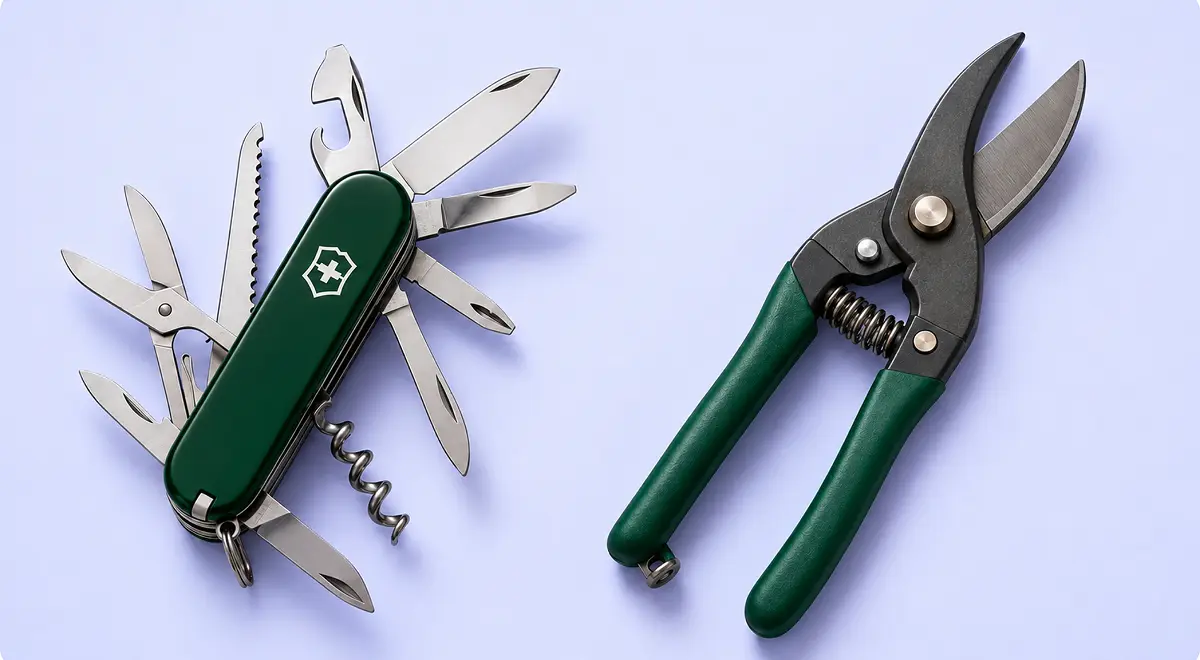
A Swiss Army knife is useful when the job is broad, light, and varied. That is exactly the appeal of all-in-one ERPs: one broad suite for sales, accounting, inventory, purchasing, website, HR, production, and more. But the more serious or specialized the work becomes, the more the right tool matters. No one in their right mind uses a Swiss Army knife if they need to do serious cutting all day long; they use shears.
So the question is, should you run a production line with the tool that can do a little bit of everything? Or do you need something more fit for the job? Put differently, can an all-in-one ERP carry the operational reality of your factory without pushing coordination back into spreadsheets, messages, meetings, and manual checks, which defeats the purpose of a manufacturing ERP in the first place?
This article looks at where Odoo fits into the manufacturing tech stack and how to think about choosing the system that owns the flow from order to production, stock, quality, logistics, and everything in between.
Odoo describes itself as a suite of open-source business apps covering CRM, e-commerce, accounting, inventory, point of sale, project management, and more, with the promise of being easy to use and fully integrated.
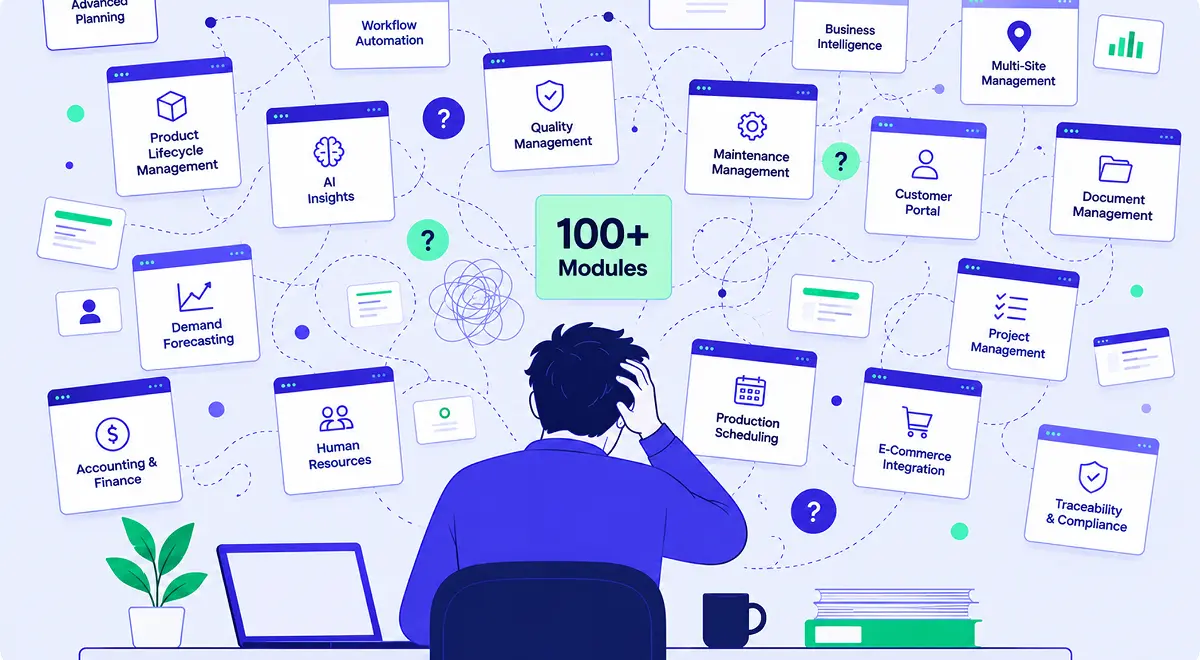
Even when talking about just the manufacturing piece, Odoo's coverage is broad, spanning inventory, manufacturing, product lifecycle management, purchasing, maintenance, quality, barcode workflows, lots and serial numbers, shop floor workflows, subcontracting, product variants, replenishment, receipts, deliveries, and shipping.
That breadth can be attractive. Instead of one system for sales, another for inventory, another for accounting, and another for production, Odoo gives the company a common base.
Odoo is more likely to fit manufacturing operations when:
For all-in-one ERPs like Odoo, the pitch is simple: one vendor, one database, one integrated suite. For back-office consistency, that can be useful. You may choose to accept some compromise on the operations side because the suite reduces tool count and brings more administrative work into one place.
The important thing is to recognize the operational tradeoff and move forward with it in mind.
Breadth does not automatically mean the system will handle the daily operational layer well. A manufacturing ERP should be able to handle questions like:
If the ERP mainly records the answer after a person decides, the company still needs another layer where the real coordination happens. The official record may live in the ERP, while the operating work still moves through Excel, email, Teams, WhatsApp, phone calls, and meetings.
That is the gap manufacturers should investigate before choosing an all-in-one ERP like Odoo. Not "does Odoo have a manufacturing app?" but "does Odoo become the place where operational work actually moves?"
In addition to the fundamental question of whether the manufacturing ERP actually fits the way teams work, there are two other considerations with an all-in-one ERP: customization and AI features.
When seeking a manufacturing ERP that fits your operations and where the work on the floor actually happens, customization inevitably comes up.
The good news is that Odoo is highly customizable. The question is what that customization costs the business after go-live, both in terms of time and agility of the business, for example whether operations can adjust the way work is prioritized without turning it into a technical project, and money. And, importantly, how that impacts the total cost of ownership of the ERP.
A configurable platform like Odoo can be a strong middle path when the core model fits and customization stays controlled. It becomes risky when every operational exception needs another field, script, custom module, integration, partner request, or workaround.
That is why manufacturers should look beyond whether Odoo can be customized. It can be. They should ask how much customization is needed before the system fits the factory, and who will maintain that fit as the business changes. Read more about buy vs. build your manufacturing ERP for a more in-depth look at the skills required for deep customization of adaptable ERP.
AI is quickly becoming part of every ERP conversation, but AI features do not automatically make an ERP operationally intelligent. For example, the Enterprise Edition of Odoo 19 includes AI agents, AI search, AI fields, drafting assistance, and database queries across the suite.
But the important question for manufacturing operations is not whether the ERP has AI, but rather where the AI sits. If AI helps users search, write, summarize, or query records, it may well improve the interface. That is useful, but it does not necessarily change the operating model. The system may still be waiting for people to interpret the situation, decide what happens next, and perform the routine work around that decision.
Manufacturing needs AI closer to the operational flow. The system should understand demand, stock, production status, quality status, supplier constraints, capacity, and business rules well enough to help prepare or perform the next action.
That can mean generating manufacturing orders, preparing procurement suggestions, assigning work, reprioritizing stock, surfacing exceptions, or asking for human approval when the tradeoff matters. A chatbot on top of ERP data is not the same thing as a system with AI at its core and that can help the factory act.
For more on that distinction, read Bonx's guide to agentic ERP for manufacturing operations.
When operational depth matters more than suite breadth, a specialized manufacturing ERP is usually the better path.
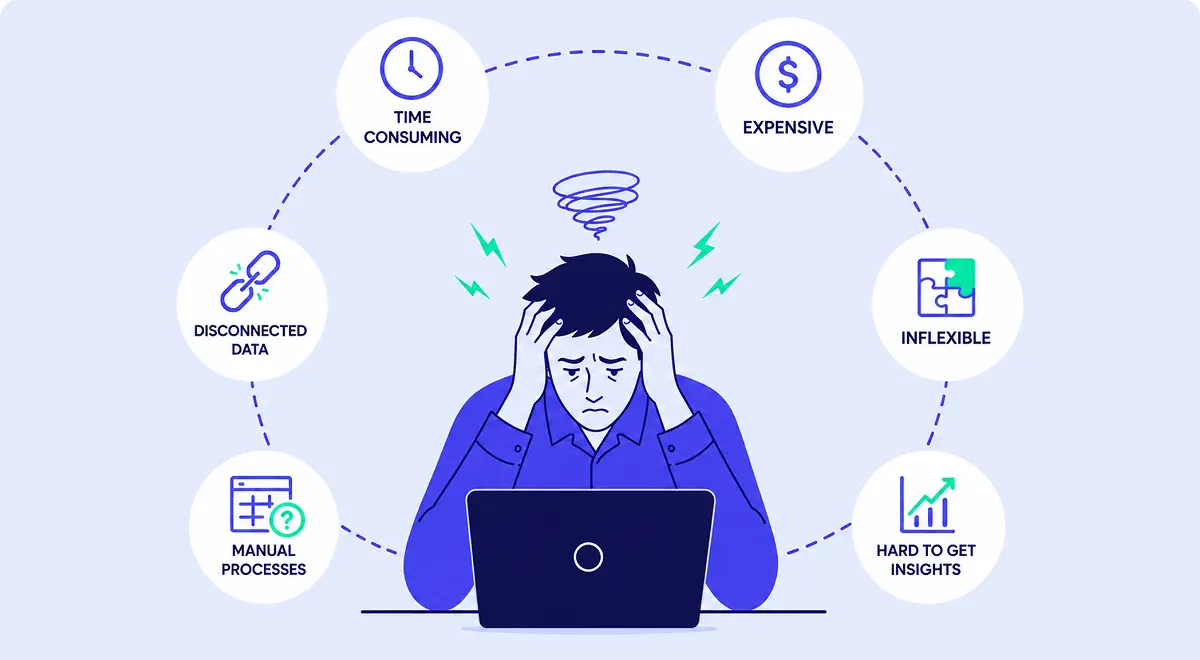
If you have a manufacturing ERP today and yet production planning is rebuilt manually, stock is not trusted for daily decisions, quality and traceability records are scattered, operators update the system after the shift, or sales and finance each have a different version of the same order, then you must ask yourself what value that system is actually providing.
A specialized manufacturing ERP might also be relevant when the business wants to keep strong tools in place that are already working well, for example HubSpot for CRM, Shopify for e-commerce, a finance or accounting tool, etc., yet they are outgrowing spreadsheets or no-code tools such as Notion and need a system to better scale operations. In this case, the manufacturing ERP does not need to replace those systems, it just needs to own the operational flow and connect everything with a strong integration engine.
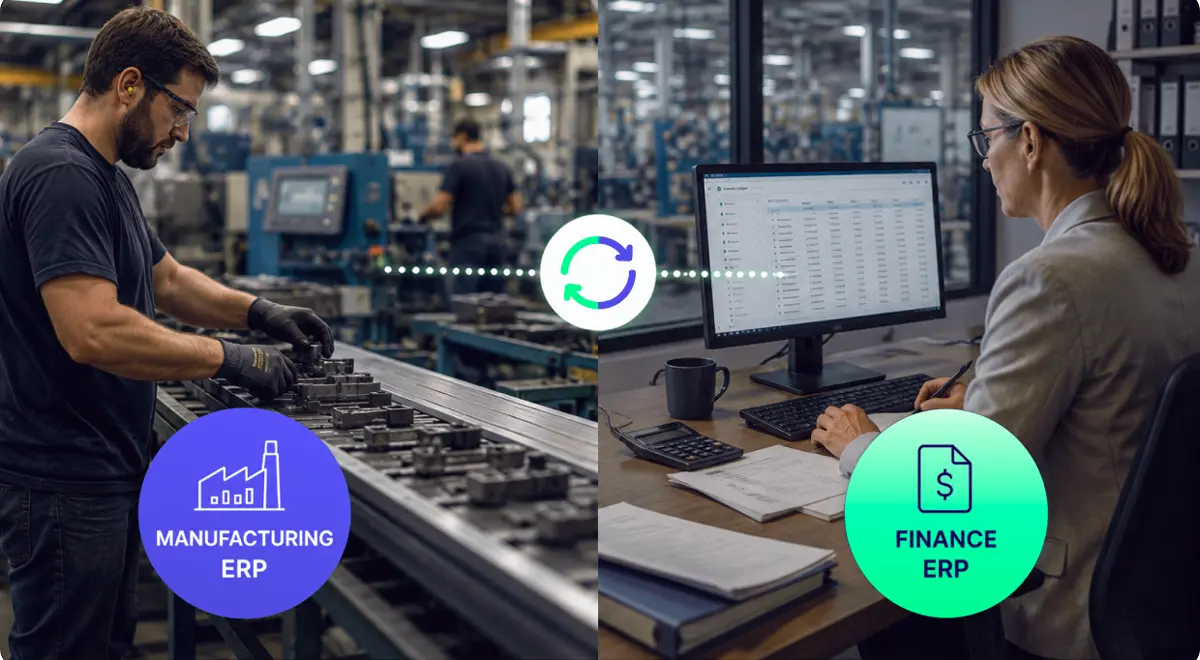
That is why it often makes sense to separate manufacturing ERP from finance ERP. Finance needs clean records, controls, invoicing, and reporting. Operations needs live decisions about orders, stock, purchasing, production, quality, traceability, and logistics.
One system can try to own everything, which usually entails tradeoffs in one or more parts of the system. Or each system can own the part where it needs to be excellent, and strong integrations can ensure the systems get the information they need from the other parts of the business.
Bonx is an AI-native manufacturing ERP, which means:
Bonx is a strong fit when the ERP project is not about consolidating business apps, but about making the factory easier to run. Instead of asking manufacturers to replace every tool around the business, Bonx connects to the systems already in the stack and brings operational coordination into one place.
That difference shows up in customer operations. L'Atelier du Ferment connected operations to Sidely and Pennylane while supporting full batch traceability across more than 100,000 bottles. Bonx helps the team generate manufacturing orders and procurement suggestions based on sales, shelf life, and cold storage capacity.
Something Added deployed Bonx in two months with a native integration to HP 3D printers, then used Bonx to group orders automatically, generate manufacturing orders, assign jobs to machines based on industrial rules, and run 24/7 production.
Amantys connected HubSpot, the workshop, and Pennylane through Bonx, with 0 data re-entry between sales, production, and accounting. That is the system boundary in practice: commercial tools keep the customer layer, finance keeps accounting, and Bonx owns manufacturing execution.
It can be; Odoo includes manufacturing, inventory, purchasing, quality, maintenance, product lifecycle management, barcode, shop floor, lots and serial numbers, subcontracting, and related workflows. The buying question is whether those capabilities fit the depth and variability of your factory without requiring costly customization.
Odoo can be good for small manufacturers that want a broad suite and have relatively standard production flows. It becomes a harder fit when the company needs deep manufacturing coordination, frequent operational adaptation, complex traceability, custom production, or needs strong integrations with existing specialist tools.
The limit is usually not whether Odoo has a module. Its coverage is very broad. The limit is whether the system can absorb the coordination layer around manufacturing: exceptions, handoffs, priority changes, quality holds, supplier delays, stock rules, and decisions that happen while work is moving. Odoo is very customizable, but at some point, customization might become prohibitively time consuming and costly. At this point, either total cost of ownership rises, bringing the return on investment (ROI) into question, or customization never happens and therefore the utility of Odoo as a manufacturing ERP at all is in question.
Odoo may be better when suite consolidation matters more than manufacturing depth. A specialized manufacturing ERP is usually better when the operational core is the main problem that needs to be solved: planning, stock truth, purchasing, production, quality, traceability, and logistics.
Odoo is a broad all-in-one business suite that includes manufacturing among many other apps. Bonx is an AI-native manufacturing ERP focused on the operational core of the factory: order management, inventory, supplier management, production, stock, planning, purchasing, quality, traceability, and logistics. If you want the direct comparison, read Bonx vs. Odoo for manufacturing operations.
Contact us
So were we. That's why we built Bonx, the AI-native manufacturing ERP.