What is agentic ERP?
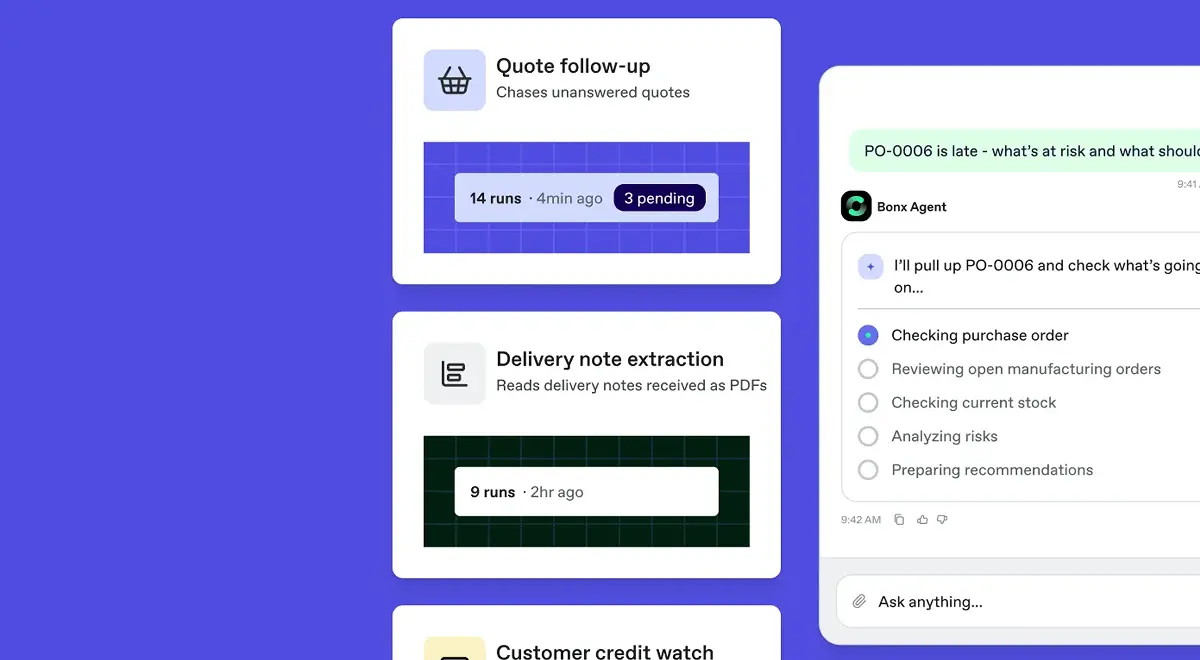
Agentic ERP is about to become one of those terms software vendors stretch until it means almost anything. If you are evaluating enterprise resource planning (ERP) in 2026, the first job is to keep the term grounded.
For a COO or general manager, the question is whether the system can safely take routine operational work off the team while keeping people in control of the decisions that need judgment.
This article explains what agentic ERP should mean in manufacturing, where it differs from a chatbot or workflow rule, and how to tell whether a vendor can actually remove work from your team's plate.
An agentic ERP is an ERP system that can take operational action on behalf of the team.
It can read the operational context, apply the constraints it has been given, execute routine steps, and ask for human approval when the decision carries risk or needs judgment. The important shift is not that the ERP has artificial intelligence (AI) somewhere in the product. It is that the system can move work forward instead of waiting for people to interpret every signal and perform every step by hand.
In manufacturing, that can look like:
The ERP still needs reliable records. It still needs clean data, permissions, traceability, and controls. But a traditional ERP mainly records what happened. An agentic ERP helps make the next operational move.
ERP has always promised control. The problem is that most systems achieved control by asking people to feed the database.
In many ERP setups, the system becomes the official place where information lives, while the work still happens around it. Operators update statuses after the shift, planners rebuild schedules in spreadsheets, buyers check shortages by hand, and someone still has to move data between the customer relationship management (CRM) system, the accounting tool, the warehouse, and the production plan.
That model was frustrating before AI. Now it looks structurally old.
AI agents make a different unit of work possible. Instead of asking software for a report, the team can ask the system to prepare the next action: create the manufacturing order, suggest the purchase order, flag the risky batch, draft the supplier reminder, update the plan, or bring a specific exception to a manager.
That does not make every AI feature agentic. A dashboard with an AI summary is not agentic ERP. A chatbot that answers questions about stock is not agentic ERP. A workflow rule that sends the same email every time a field changes is useful, but it is not the same thing either.
Agentic ERP starts when the system can do operational work inside the business process, under clear limits and supervision.
For more context on the broader category, read Bonx's guide to AI ERP versus traditional ERP.
Most manufacturers will see three things labeled as "agentic" over the next year. Only one deserves the name.
The first is the AI chatbot inside the ERP. You ask a question and get an answer: what is late, what changed, what stock is available, which orders are at risk. That can be helpful, especially when the underlying data is clean. But the system is still responding, not acting.
The second is classic workflow automation. If a status changes, send an email. If stock drops below a threshold, create an alert. If an approval is missing, block the next step. These automations save time, but they usually follow fixed if-this-then-that logic. They do not understand the wider operational context.
The third is agentic ERP. The system looks at demand, stock, capacity, supplier constraints, quality status, customer priority, and business logic, then prepares or performs the next operational action. It may act automatically when the action is routine and low risk. It may ask a human to approve when the tradeoff matters.
The buyer's test is simple: does the system only explain the work, or can it carry part of the work?
Manufacturing is a strong test for agentic ERP because the work is physical, constrained, and full of exceptions. Materials arrive late, batches expire, machines have capacity limits, quality blocks stock, customers change priorities, and a plan that looked good yesterday can be wrong by lunchtime.
That is where an agentic ERP should help.
A passive ERP stores demand. An agentic ERP should help turn demand into the next set of actions: what to produce, what to buy, what to reserve, what to check, and what to escalate.
For a food manufacturer, that may mean converting sales forecasts into manufacturing orders while accounting for shelf life and cold storage capacity. For an additive manufacturer, it may mean grouping orders into printer jobs based on machine constraints and material use. For a textile company, it may mean creating production tasks across several workshops with traceability captured as work moves.
In each case, the ERP is doing more than storing demand for someone else to interpret. It is preparing the next operational move.
Traditional planning often breaks because it treats the plan as something a person rebuilds after reality moves. Agentic ERP should keep watching for the signals that change the plan: a late purchase order, a quality hold, a capacity issue, a priority customer order, or a batch that needs to be used before it expires.
The system should not hide those tradeoffs. It should make them visible earlier, prepare the likely options, and act where the path is clear.
Most manufacturers do not run on one system. Sales may live in a CRM. E-commerce may create orders. Accounting may happen in another tool. Shipping, machines, scanners, and supplier systems may all sit around the ERP.
Agentic ERP only works if those handoffs are connected. Otherwise, the agent is acting on an incomplete picture, and the team is still copying data between systems.
This does not mean one giant suite has to own everything. It means the operational ERP needs enough context to act usefully while the surrounding tools keep doing their jobs. For the broader system-boundary question, read why manufacturers should separate the operational ERP from the finance ERP.
The useful version of agentic ERP keeps people in the decisions where price, customer priority, quality risk, supplier judgment, or capacity tradeoffs still matter.
A system can prepare a replenishment plan, but a buyer may still approve the supplier when price, risk, or relationship matters. A system can prepare a new production priority, but a manager may still decide whether a strategic customer jumps the queue. A system can flag that stock is close to expiry, but quality and commercial teams may decide whether to discount, rework, block, or scrap it.
Good agentic ERP removes the repetitive work around the decision so the team can spend more attention on the decision itself. Bad agentic ERP hides logic, moves too fast, or treats human oversight as an obstacle.
For operations leaders, the control model matters as much as the AI model. You should know which actions the system can take automatically, which ones need approval, which rules the team can change, which exceptions are escalated, which decisions are logged, and which actions can be reversed or corrected.
If a vendor cannot explain those boundaries clearly, the product is not ready for serious operations.
Do not start with the most impressive demo. Start with the work your team does every week that the ERP should carry.
Ask the vendor to show a real operational flow, not a clean prompt response. For example: a customer order changes, a supplier is late, a batch is blocked for quality, or capacity moves from one workshop to another. Then watch what the system does.
The questions are practical:
Every ERP looks intelligent inside its own scripted flow. The real test is how much work still lands on the team's plate when a supplier misses a delivery, a customer changes the order, or production has to move.
Bonx is an AI-native manufacturing ERP and a system of action. It is a strong fit for manufacturers that want agentic ERP for the operational core of the business: order management, inventory, purchasing and supplier management, planning, production, quality, traceability, and logistics.
When configured to do so, Bonx can generate manufacturing orders, prepare procurement suggestions, assign production work, prioritize stock, trigger routine operational work, and surface exceptions for human approval.
The proof is in customer operations, not in the label.
Additive manufacturer Something Added deployed Bonx in two months with a native integration to HP 3D printers. Before Bonx, production depended on manual checks, order grouping, machine selection, and print job launch decisions. With Bonx, orders are grouped automatically, manufacturing orders are generated, and jobs are assigned to machines based on industrial constraints. The factory now runs 24/7 production with more than 10,000 parts produced each month by a reduced team.
Food manufacturer L'Atelier du Ferment connected operations to Sidely and Pennylane while supporting full batch traceability across more than 100,000 bottles. Bonx helps generate manufacturing orders and procurement suggestions based on sales, shelf life, and cold storage capacity, which is exactly the kind of operational context an agentic ERP needs before it can act usefully.
Féroce deployed Bonx in 42 days before a national TV appearance multiplied orders tenfold. The business kept traceability and logistics under control through the surge because the operating flow had been structured before volume hit.
That is the useful definition of agentic ERP in practice: a manufacturing ERP that can take routine operational work into the system, act inside approved limits, and bring people in when judgment matters. A chatbot bolted onto old software does not meet that bar, and neither does a demo where AI writes a paragraph about your stock position.
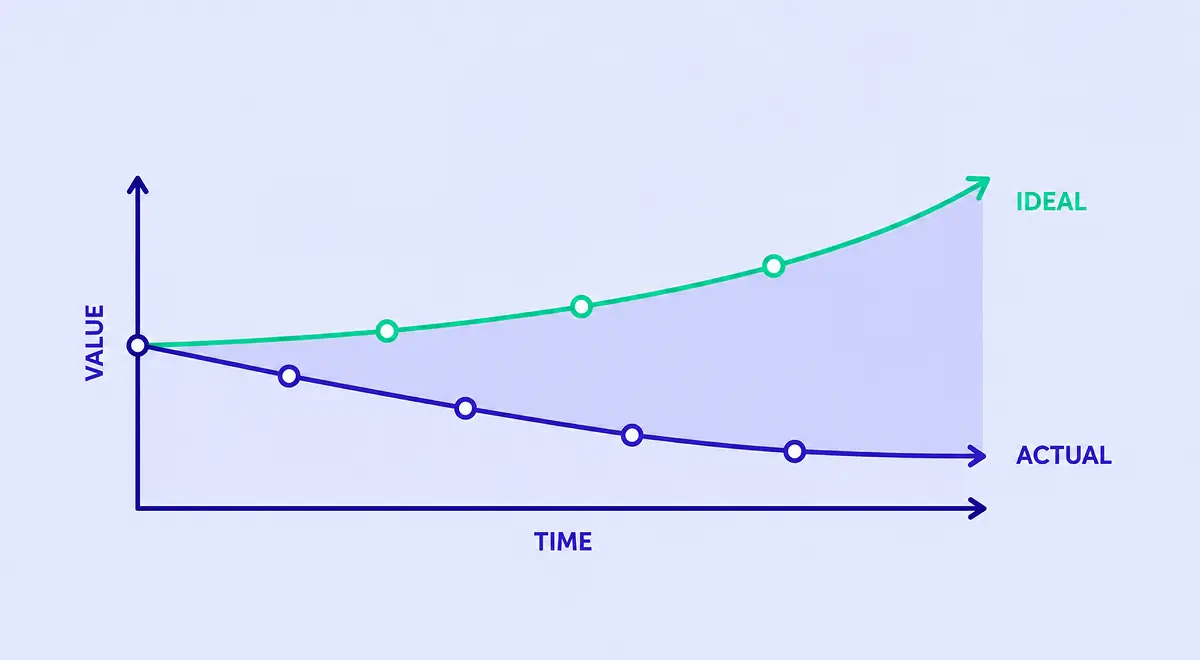
For the last 40 years, ERP vendors sold systems that mostly recorded the business and asked people to do the work around them. AI agents make that bargain harder to defend. If software can understand operating logic, monitor context, and act safely under supervision, then an ERP should do more than store yesterday's truth.
The practical test is whether the ERP can remove real work from the team without hiding the decisions people still need to make. Ask what work the agents can actually carry, what boundaries keep them safe, and how quickly the system can prove it on the flows that decide whether you deliver on time.
Agentic ERP is an ERP system that can take operational action on behalf of the team. It can read business context, apply approved constraints, perform routine steps, and ask for human approval when a decision needs judgment.
AI ERP is the broader category. It may include AI search, forecasting, summaries, anomaly detection, or chat interfaces. Agentic ERP is narrower: the system can act inside operational workflows rather than just analyze or explain them.
It can be safe if the system has clear limits, approval gates, traceability, permissions, and exception handling. Buyers should reject any agentic ERP pitch that cannot explain where automation stops and human decision-making starts.
No. The practical goal is to move teams from routine execution to oversight. The system can prepare work, perform low-risk actions, and flag exceptions, while people handle supplier strategy, customer tradeoffs, quality judgment, capacity decisions, and business priorities.
In manufacturing, an agentic ERP might generate manufacturing orders from demand, prepare procurement suggestions based on missing materials, reprioritize work when capacity changes, or assign jobs to machines based on industrial constraints. Bonx customers use those patterns in real operations, including L'Atelier du Ferment for production and procurement suggestions and Something Added for automated order grouping and machine assignment.


Contact us
So were we. That's why we built Bonx, the AI-native manufacturing ERP.