Féroce automated batch traceability and handled a 10x order spike, without breaking its brand promise, with Bonx
Féroce's brand runs on a promise: scan any package and know exactly where it came from. Bonx deployed in 42 days to keep that promise at 10x the volume.








42
10x orders
10x

Féroce produces grass-fed ground beef enriched with organ meats sourced from farms free of pollutants and drug residues. A superfood, provided every link in the chain stays under control. The company engineers that assurance into the product itself with a QR code on every package that connects customers to the specific farm, producer, and batch lab results behind what they're eating.
In one year, the brand hit €2 million in revenue with just six people by selling direct through Shopify, with half their customers on a subscription model. When rapid growth and a looming TV appearance forced them to find an ERP fast, one constraint was non-negotiable: the system had to adapt to their QR code logic, not the other way around.
Challenge
In the beginning, Féroce founder and CEO David Nicolas was the one linking each order to its batch number and managing the QR codes. He was also singlehandedly managing a complex multi-party supply chain coordinating ingredients, labels, recipes, packaging, and transport. This included a meat cutting workshop with weekly production batches of three animals, an olive oil bottler in France supplied by a mill in southern Spain, and a bone broth producer who receives Féroce's meat by-products.
At twenty orders a day, it was manageable. At hundreds of orders, it was time-consuming. Beyond that, the team knew it would be structurally impossible to maintain.
Growth was pushing the system toward its limits in other ways, as well. For example, the team had to expand their cold storage from 9 m² to 100 m² and the warehouse to 280 m². In addition, the offering expanded to fresh, frozen, and dry products with shelf lives ranging from a few days to eighteen months. Working with whole animals, where each carcass generates dozens of interrelated product lines, material balance had become too complex to manage manually.
At this point, Féroce was already processing up to 200 orders a day.
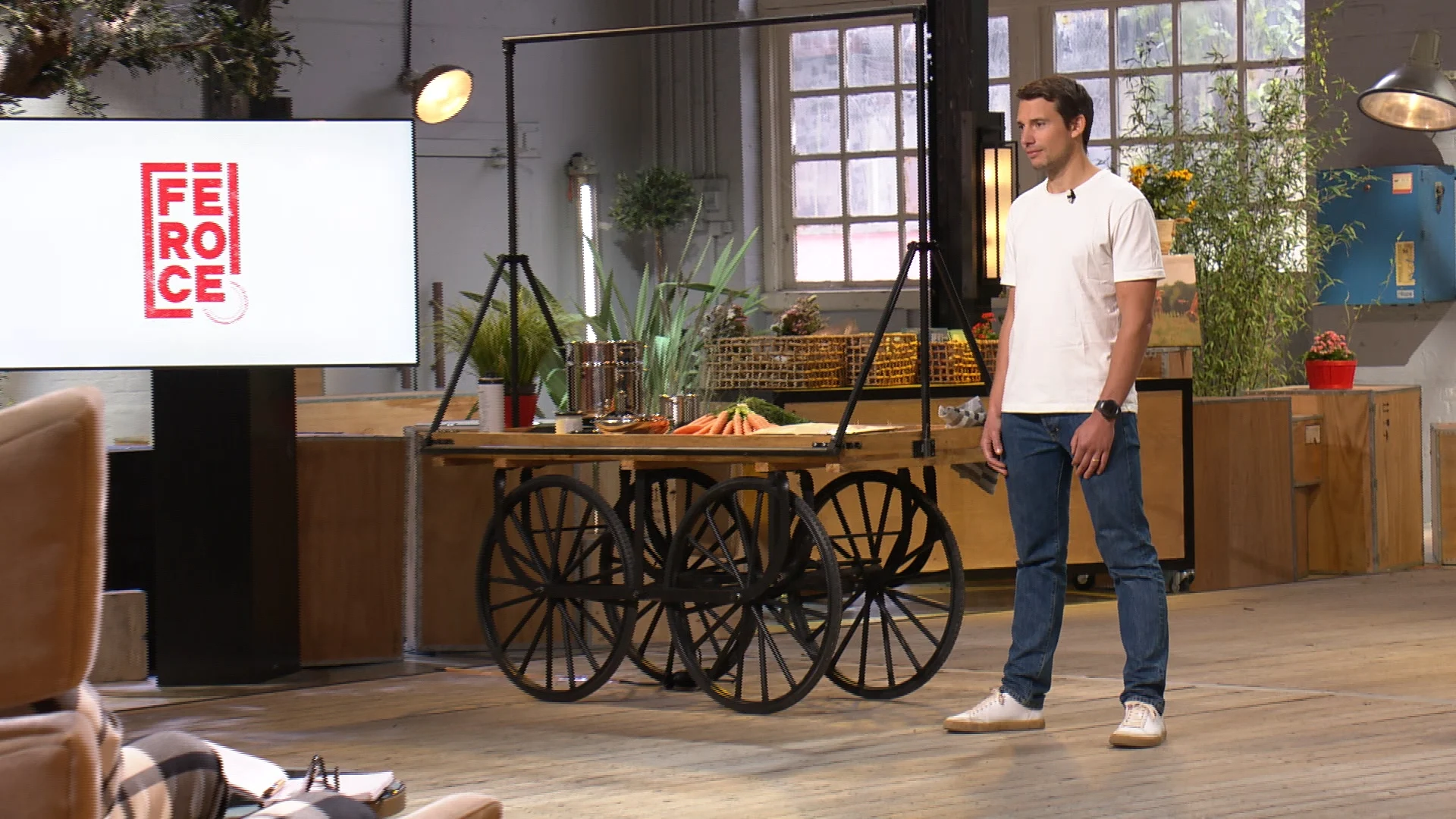
Then, in late 2025, David was selected to pitch Féroce on Qui veut être mon associé, the French equivalent of Shark Tank, airing on M6 in January 2026. Thousands of orders were expected within days of broadcast, and the promise of complete traceability on every single one of them had to hold.
Why Féroce chose Bonx
The team evaluated several solutions in search of a tool capable of:
- Integrating with the company’s existing QR codes,
- Connecting to Shopify and the tools already in place, and
- Scaling with a company whose volumes can double from one week to the next.
However, they found generalist ERPs too heavy and too slow to deploy for such a tight deadline, while e-commerce tools (including Shippingbo) were too shallow to manage Féroce’s complex material flows. In addition, none of the systems could hit the mark on their QR code requirements. Most tools they explored would force them to use the system’s own barcode logic, which wouldn’t work with Féroce’s packaging.
That's what led Féroce to Bonx, with a non-negotiable time constraint: operational before the warehouse move and battle-tested before the show airs in January.
“Bonx adapted to our system, not the other way around. When orders surged tenfold overnight, every package was traced and shipped to the same standard.”
— David Nicolas, founder at Féroce
Bonx at Féroce in practice
Bonx deployed in just 42 days at Féroce, integrating with their existing setup without rewriting it. Shopify remains the commercial core, and their existing processes were preserved. But Bonx structures what could no longer stay manual. That includes:
- Batch traceability. The existing QR code becomes the operational backbone. Scanned during order preparation, it identifies the batch, automatically links it to the order, and retains the full history of raw materials, analyses, and transformations. What David used to do alone is now automated, in real time, at any volume.
- Inventory management in controlled environments. Every warehouse zone, every cold storage location, every shelf life is visible from a single dashboard. Pickers know what to pull, where, and in what order. Batches closest to their expiration date are automatically prioritized with no human judgment required and no risk of error.
- Material balance. Working with whole animals or complex recipes means a decision on one product line impacts all the others. Bonx projects rotation rates, anticipates overstock or shortage risks, and allows production volumes to be adjusted before the problem arises.
- Subcontractor management. With Bonx, each service provider receives production orders and reports progress within the same system. Coordination moves out of emails and phone calls into a shared operational reality.
Results and what’s next for Féroce
When the episode aired in January 2026, orders increased tenfold in a single day. Féroce prepared and shipped every one of them with complete traceability intact, proving not only that they could handle exponentially more volume, but that they could do it without changing their brand promise.
That result set the baseline for what comes next. Féroce is targeting €6-7 million in revenue in 2026 and €100 million within five years, adding new products, onboarding new suppliers, opening physical stores, and expanding into new distribution channels. Each new layer of complexity runs through the same system that held on the hardest day.
Read the story of another client
.png)
