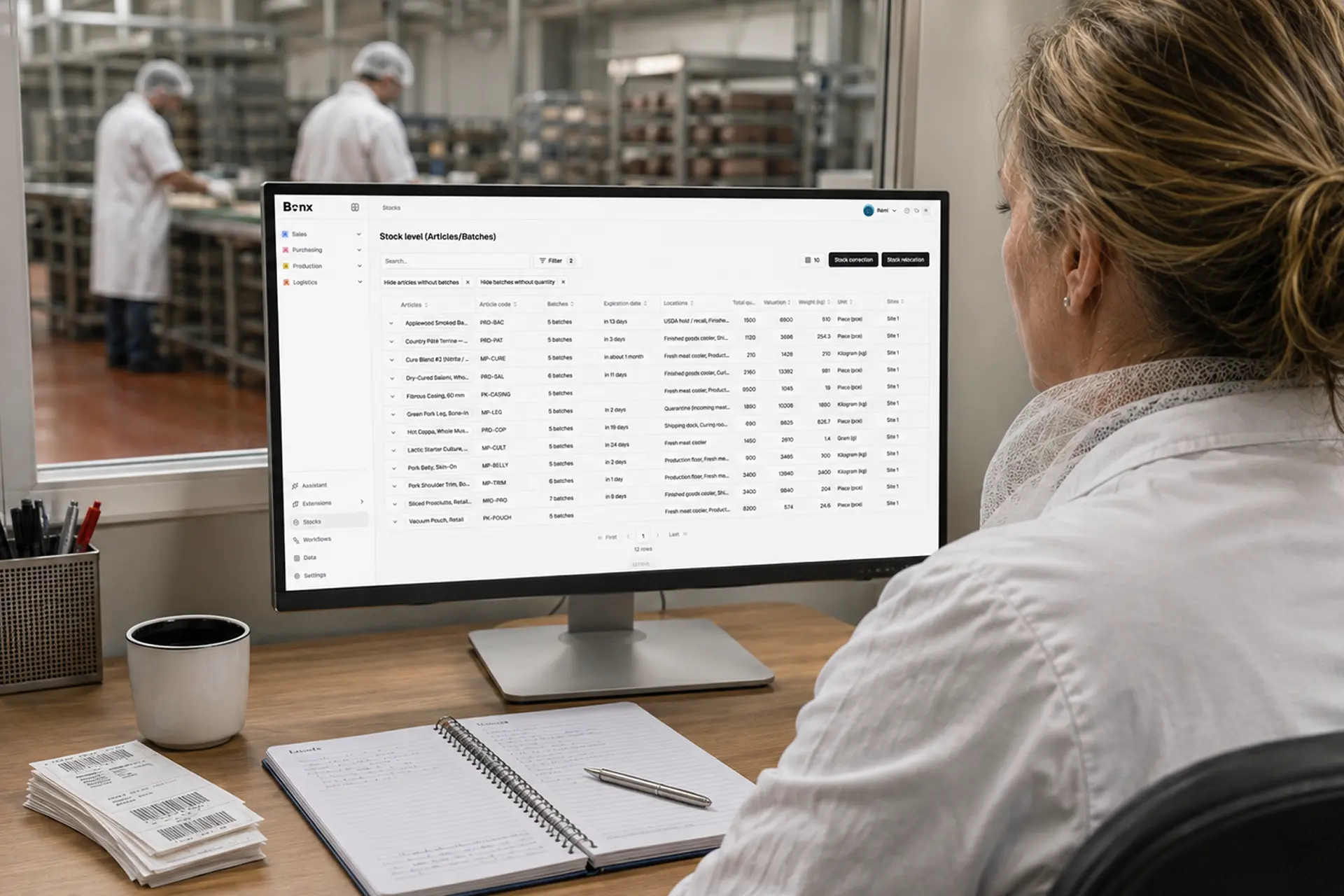
The Odoo alternative built for manufacturing operations
A Swiss Army knife is handy, but when the work becomes serious enough, what you really need is the right tool for the job. Where Odoo gives you breadth across the entire business, Bonx gives manufacturers depth in actually running the factory.
The operational backbone of mid-market manufacturers worldwide:









bonx vs odoo
What you’re comparing
Bonx and Odoo are built for different jobs. If your priority is having a broad business suite with many apps under one vendor, including accounting, HR, inventory, etc., Odoo might be the right choice. However, if your priority is improving operations (order management, production flow, stock truth, purchasing, planning, quality, traceability, logistics, etc.) with a tool that can integrate across the rest of your stack, deploy quickly, and introduce AI for routine operational work, choose Bonx.


Why manufacturing teams choose Bonx over Odoo
Bonx handles extreme variability
How the Made in Italy brand manages unpredictable supply and keeps craftsmanship alive as it grows

“Bonx adapted to our system, not the other way around.”
Bonx excels at driving operational coordination
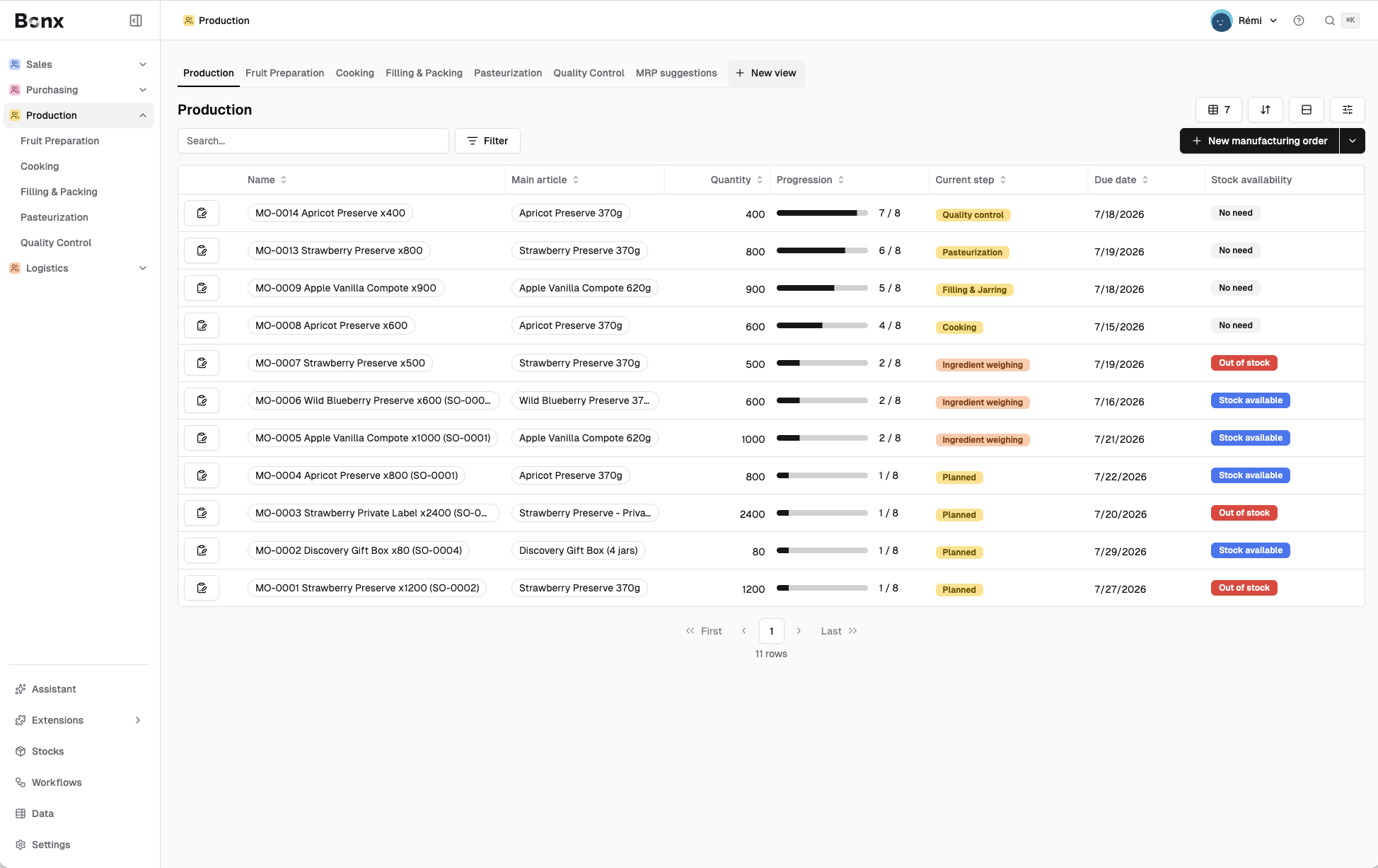
Manufacturing operations get messy in the coordination layer: exceptions, tradeoffs, handoffs, etc. Bonx brings that operational coordination into one system, where Odoo often still sits alongside Excel and other ancillary workarounds that then need to be reconciled back into the ERP later.

“With Bonx, everything is aligned from production to finance and sales. It gives us clarity and control as we grow.”
Bonx is built for real-time decision making
Most manufacturing ERPs record past transactions but do not, even with AI features added on top, help people act in real time. At Bonx, we built a manufacturing ERP with AI at its core to help operations decide what happens next with live context across orders, stock, planning, production, quality, and logistics.

“We operate a fully automated dark factory, and Bonx is the backbone behind it.”
Bonx delivers quantifiable value, fast
Bonx is not valuable because it deploys quickly (though it does deploy 6x faster than legacy ERP); it is valuable because teams see operational work disappear quickly. Less paper, less re-entry, fewer manual checks, higher productivity, stronger traceability, and more orders handled without more coordination overhead.
90% reduction in paper usage across 5 production workshops at LCS Groupe
0 data re-entry between sales, production, and finance at Amantys
95% reduction in manual data re-entry across production and logistics at Nervures
10h per week per employee saved across 80 workshops at Résilience
15% increase in revenue due to productivity gains and lower inventory cost at Recyc Matelas
12x improvement in data entry time and 10% increase in productivity at La Maillecotech
See Bonx in action
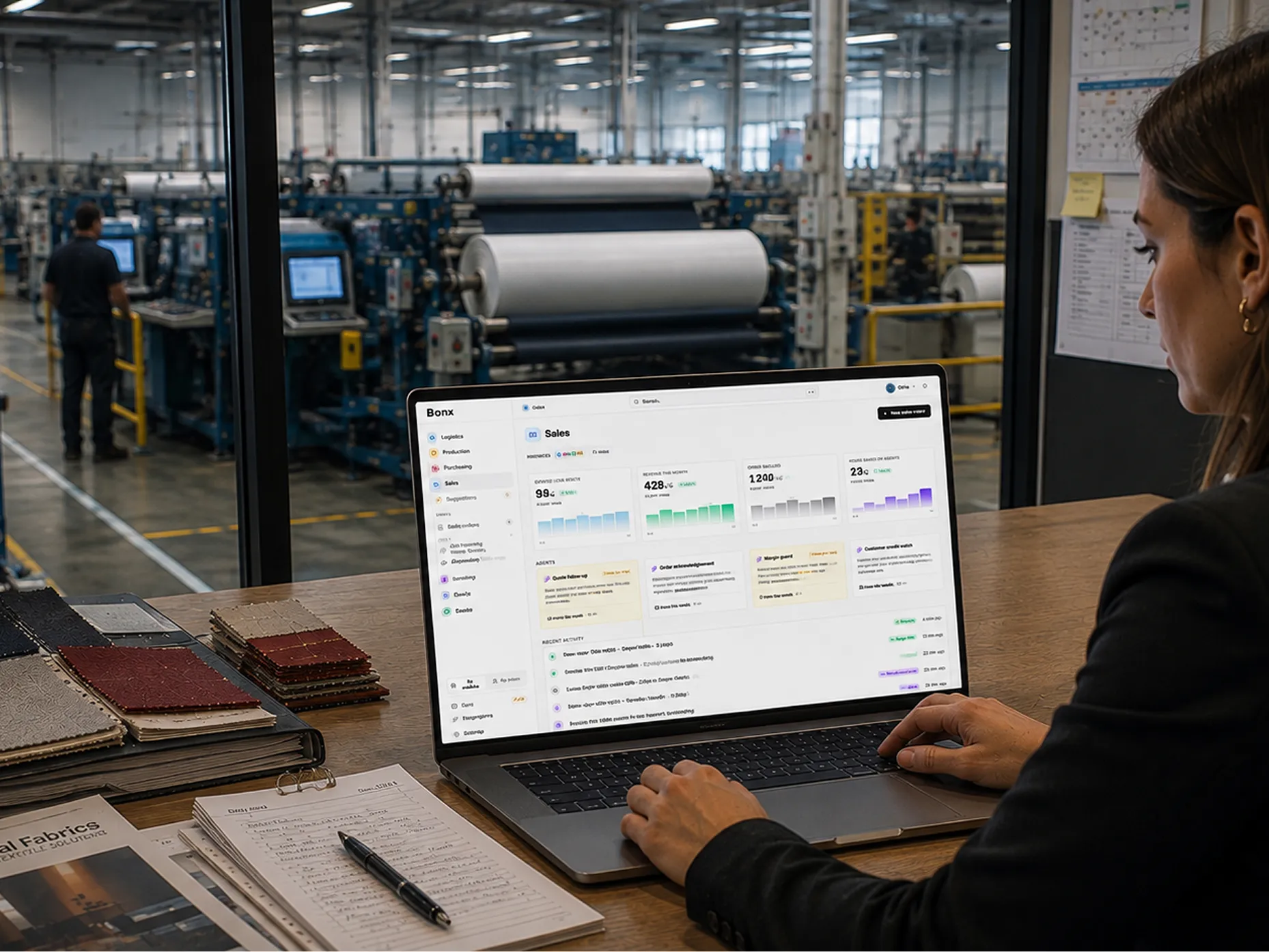
Bring your real order, stock, production, quality, traceability, and finance handoff challenges or questions. We'll show how Bonx can bring 2x-4x team efficiency to your operations with a personalized demo.
FAQ on Bonx vs. Odoo
Sì. Alcuni clienti hanno spostato le operazioni di produzione da Odoo a Bonx e hanno mantenuto Odoo per la contabilità e il resto dell'azienda. Bonx si collega in modo nativo a Odoo, in entrambe le direzioni: prodotti, clienti e ordini di vendita sono sincronizzati tra i due sistemi, e Bonx invia a Odoo lotti, ordini d'acquisto, spedizioni e fatture. Nessun dato viene inserito due volte.
No. Bonx gestisce la fatturazione: numerazione progressiva, IVA per riga, generazione del PDF e fatturazione elettronica dove è obbligatoria. Poi trasmette ogni fattura convalidata, già completa dei codici contabili, al tuo software di contabilità, che la registra. Bonx non tiene la contabilità: niente contabilità generale, niente contabilità clienti e fornitori, niente riconciliazione bancaria, niente chiusura contabile. Se oggi la tua contabilità è su Odoo, può restarci. Bonx si collega anche a Sage, Pennylane, QuickBooks, Xero e agli altri software di contabilità supportati da Chift. Ecco come funziona il passaggio alla finanza.
Durante il deployment, Bonx ha bisogno dei tuoi dati di base: prodotti, clienti, fornitori, prezzi, giacenze, distinte base, cicli di lavoro, regole di qualità e documenti. Non serve ripulirli prima. Bonx sa acquisire dati strutturati e non strutturati, per esempio i tuoi dati Odoo, distinte base tenute in fogli di calcolo o un catalogo fornitore disponibile solo in PDF. Se tieni Odoo dopo il go-live, il collegamento mantiene i dati sincronizzati in entrambe le direzioni.
Sì. I tuoi responsabili aggiungono campi, modificano le fasi dei processi, gestiscono i permessi di accesso e creano viste e dashboard in autonomia, senza codice. Per ciò che nessun modulo standard copre, le persone che autorizzi possono creare un'applicazione dentro Bonx, sugli stessi dati. Tutto questo è configurazione: ogni adattamento resta valido a ogni aggiornamento. Tutti i clienti Bonx usano la stessa versione e ricevono aggiornamenti più volte alla settimana, senza progetti di migrazione. Odoo pubblica una versione principale ogni anno, e i moduli personalizzati vanno resi compatibili prima di ogni aggiornamento di versione. L'adattamento di Bonx è incluso nell'abbonamento. Scopri come si adatta Bonx.
Oltre a Odoo, Bonx si collega a CRM e piattaforme e-commerce come HubSpot, Shopify e WooCommerce, ai software di contabilità supportati da Chift, a operatori logistici come Sendcloud, Chronopost, DHL e Veolog, e alle macchine di reparto tramite un agente di sincronizzazione. Bonx offre anche API REST e GraphQL, webhook in uscita e un collegamento MCP per gli assistenti IA. Se uno strumento ha un'API, Bonx può quasi certamente collegarsi; il collegamento a un nuovo sistema esterno è oggetto di un preventivo prima dell'inizio dei lavori. Scopri a cosa si collega Bonx.
I tempi si contano dalla riunione di avvio. Al primo go-live, un flusso reale e importante, per esempio dall'ordine cliente alla spedizione, è in produzione in Bonx con utenti reali e dati reali. Spesso funziona in parallelo con il tuo strumento attuale, il tempo di convalidarlo secondo un criterio di successo definito all'avvio. Nei progetti con un perimetro ridotto, il primo go-live è arrivato da 4 a 12 settimane dopo l'avvio. I tempi dipendono soprattutto dal perimetro, dalle integrazioni e dalla quantità di dati da riprendere da Odoo.
Il deployment è completo quando tutto il perimetro definito all'avvio è in produzione. Il perimetro si estende flusso dopo flusso, con il team Bonx al tuo fianco, e il calendario di ogni fase viene fissato con te all'avvio. Non è necessario attivare tutti i moduli insieme. Da parte tua serve soprattutto un referente interno che conosca il reparto e possa confermare che ogni flusso corrisponde al vostro modo di lavorare. Non serve un team di progetto completo.