6 reasons legacy ERPs struggle to meet the needs of electronics manufacturers

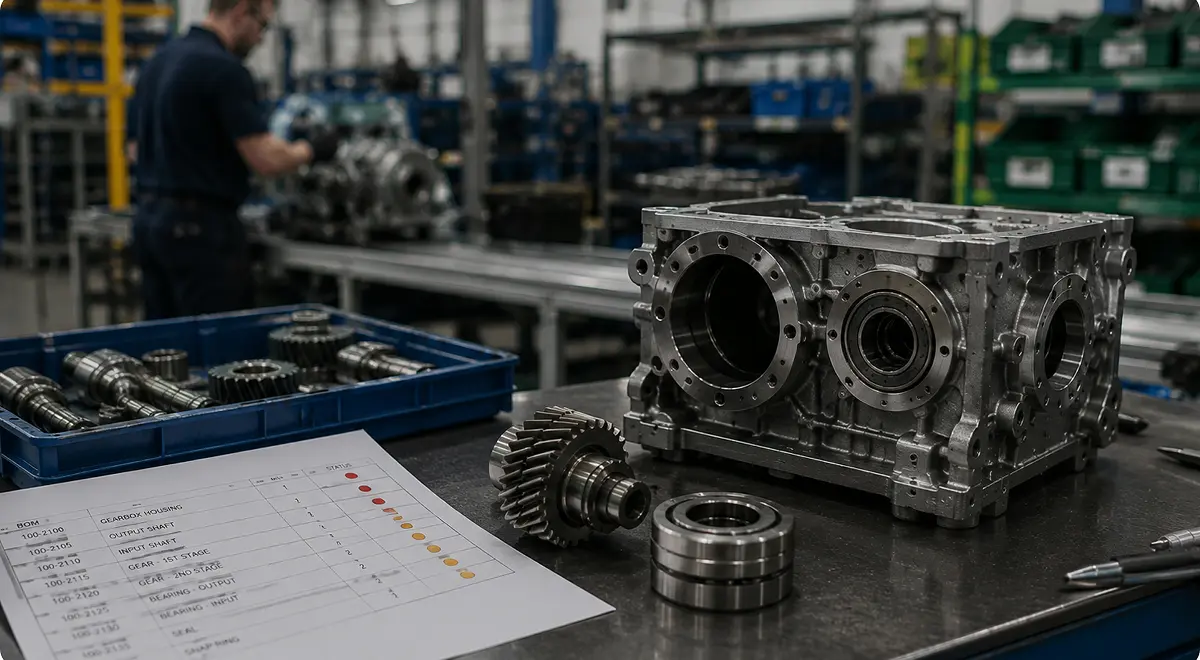
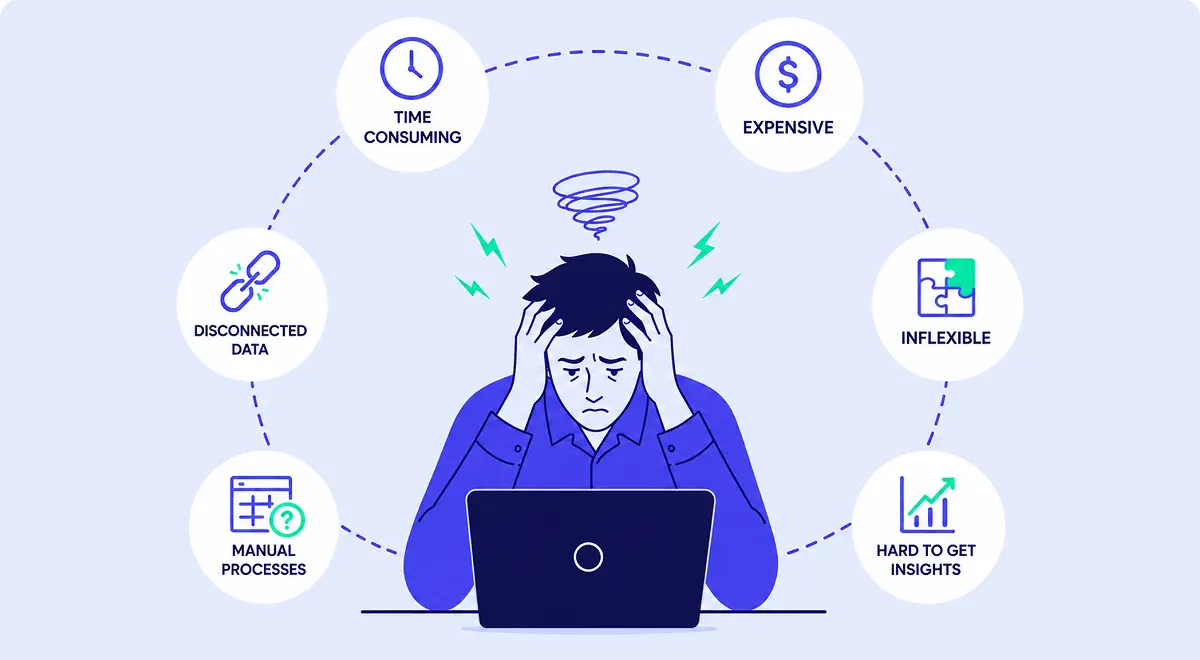
The reality is that most legacy ERPs were built for approved data, clean transactions, and workflows that move in a neat sequence. Electronics manufacturing software has to handle a messier reality where BOMs, suppliers, alternates, compliance evidence, test results, and customer commitments all move fast and come to a head.
Here are six places legacy ERP usually starts to crack.
Electronics BOMs do not sit still for long. For example, a PCB assembly moves to a new revision, a component gets replaced, a chip change affects firmware, or a customer build needs a different approved component set from the standard product.
The issue is not whether the ERP has a BOM module, as pretty much all do. The question, and the issue, is whether the system can keep the BOM connected to the rest of production, including any downstream work or actions.
In a legacy ERP, BOM changes often behave like master-data maintenance. Someone updates the structure, maybe adds an effective date, maybe attaches a file. But the hard questions come after that. Which open work orders are still safe to run? Which purchase suggestions just became wrong? Which stock can still be consumed? Which customer orders depend on the old revision? Which quality or compliance records need to follow the change?
If the system cannot answer those questions cleanly, then the answer lives somewhere else, usually in people's heads. Eventually, you arrive at a stage where the ERP has the "official" truth, but it may or may not be the one people trust.
That is why BOM management matters more in electronics than a simple product-structure screen suggests. The BOM is not just what goes into the product, it is what purchasing, production, costing, quality, traceability, and delivery all calculate from.
Component shortages make legacy ERP look especially thin. A buyer can usually see that a part is short, and that is the easy part. What they need to know is whether an alternate can be used for this product, this customer, this revision, this market, and this production run.
That answer does not belong to purchasing alone. Engineering cares about fit and performance, quality cares about evidence and inspection, compliance cares about RoHS, REACH, exemptions, and declarations. Sales or account teams may care about customer-specific approvals, and production cares about whether the substitute is visible before kitting starts.
Legacy systems often reduce all of that to a substitute item field, an approved vendor list, or a note, but that is often not enough. In electronics, substitution is a controlled decision with consequences.
The risky part is that teams do not stop moving when the ERP cannot model the decision. They make the decision anyway, whether that's in email, in a spreadsheet, or in someone's head, maybe a planner that remembers which customers allow which parts.
Nothing about that is careless; in fact, it is what good teams do when the official system is too slow. But it also means the most important part of shortage response is happening outside the system that production, inventory, and traceability depend on.
RoHS and REACH are not side topics in electronics manufacturing. They attach themselves to components, suppliers, substitutes, BOM revisions, finished products, and shipments.
The European Commission describes RoHS as restricting hazardous substances in electrical and electronic equipment, with 10 restricted substances covered under current rules. The Commission's RoHS overview is useful background, but for an electronics manufacturer, the practical question is much simpler: when a part changes, does the evidence change with it?
REACH creates similar operational pressure through supplier communication, substances of very high concern, restrictions, and article-level obligations. The European Commission's REACH page explains the regulation through registration, evaluation, authorization, and restriction of chemicals. Inside the factory, that often becomes a more concrete problem: supplier declarations, certificates, exemptions, customer requests, and market-specific rules that have to stay tied to the product record.
Legacy ERPs usually treat this as document storage. The certificate exists, the declaration was collected, and the supplier folder looks organized. Then a substitute gets used, a BOM revision changes, or a customer asks what evidence applied to a shipped unit, and the team has to piece the answer together manually.
That is the gap. Compliance evidence may be near the part, but not truly on the part. Electronics manufacturers need the system to know which component is compliant for which product, market, customer, supplier, and revision. If a declaration expires, the affected BOMs and open orders should be visible. If a substitute is approved electrically but missing documentation, that should block or flag the operational decision before the part reaches the build.
ERP will never replace regulatory judgment. It should, however, stop making teams prove and reconcile compliance from a mess of folders and files after the fact.
A lot of legacy ERP traceability looks fine until someone needs the full story quickly. The system may show that material was received, moved, consumed, produced, inspected, and shipped. That is transaction history, but electronics manufacturers often need genealogy. In other words, which supplier lot or serialized component went into which assembly, under which BOM revision, through which operation, with which test result, rework event, quality status, shipment, and customer.
That distinction matters when a supplier issue appears or a field failure repeats. The team needs to know which finished units are affected, what is still in stock, what shipped, what failed test, and which open work orders are exposed.
In many companies, every team holds a piece. Receiving has supplier lots, production has work order progress, test equipment has pass/fail data, quality has nonconformities, shipping has the customer record, etc. The ERP has enough transactions to look useful, but not enough connected context to answer the real containment question without a manual investigation.
Modern electronics manufacturing ERP should make traceability part of the work itself. Receiving, kitting, production, test, rework, shipment, and returns should update one connected record.
Electronics manufacturing changes all the time. A new supplier might need an extra inspection step, a customer program might need a different approval path, a test requirement changes, etc. None of this is unusual, but the problem is that legacy ERP often treats these changes as customization work.
That might mean adding a field, changing a workflow, modifying an approval, connecting a supplier data source, or adjusting a shop-floor step. If these things were easy, it wouldn't be a problem, but in too many systems, each change means tickets, consultants, waiting, and cost.
So instead of the ERP reflecting the way things really get done on the floor, the real process moves elsewhere. It moves into spreadsheets, no-code tools, shared folders, planner notes, and tribal knowledge. The ERP stays stable, but over time, the system records fewer of the decisions that matter most: why a substitute was allowed, why a build used a certain revision, why a supplier was bypassed, why a quality hold changed the plan, or why one customer needed a different path from another.
For electronics manufacturers, adaptability is part of control. If the system cannot change safely, the team will create a faster system beside it, and that faster system will become the place where the real operation lives.
US investment in semiconductor and electronics supply chains has put more attention on domestic capacity. CHIPS for America reports more than $36 billion in announced funding, part of a broader $52 billion CHIPS and Science Act investment intended to strengthen domestic semiconductor manufacturing and supply chains. NIST's CHIPS funding updates show how much capital is moving into that effort.
That creates opportunity for electronics manufacturers and suppliers, but it also raises the cost of operational weakness. Domestic production still has component volatility, supplier coordination, customer approvals, quality evidence, compliance documentation, and serial history. A manufacturer can move production closer to the customer and still lose time because BOMs, alternates, purchasing, compliance, and traceability are handled in separate systems.
If reshoring is supposed to mean shorter lead times, stronger customer trust, and more resilient production, the ERP cannot be a slow recordkeeping layer that everyone routes around. It has to help the team control change in real time.
Good electronics manufacturing software should keep events connected across purchasing, engineering, production, quality, compliance, traceability, and logistics. At minimum, that means:
Bonx is the AI-native manufacturing ERP and a strong fit for electronics manufacturers that need operations software to adapt around BOM depth, component volatility, traceability, and compliance workflows, because Bonx connects order management, inventory, purchasing and supplier management, planning, production, quality, traceability, and logistics in one operational system.
The proof comes from manufacturers dealing with similar operational pressure, even when the sector is different. L'Atelier du Ferment connected production planning, purchasing, stock, batch traceability, Sidely, and Pennylane with Bonx, while tracking more than 100,000 bottles from fermentation to cold storage. Feroce went live with Bonx in 42 days before a national TV appearance multiplied orders tenfold, keeping traceability and logistics under control through the surge. LCS replaced paper work orders with real-time production tracking across five workshops, cutting production errors by 95% and paper usage by 90%.
Electronics manufacturers have their own constraints, but the operating lesson is familiar: the system has to keep the real work connected while the business changes. If it cannot, the company will keep running electronics manufacturing in the gap between the official ERP and the workarounds people trust more.
That gap is where legacy ERPs struggle. Electronics manufacturing needs software that helps control the next component-level decision before it becomes the next shortage, compliance gap, traceability investigation, or late order.

Contact us
So were we. That's why we built Bonx, the AI-native manufacturing ERP.