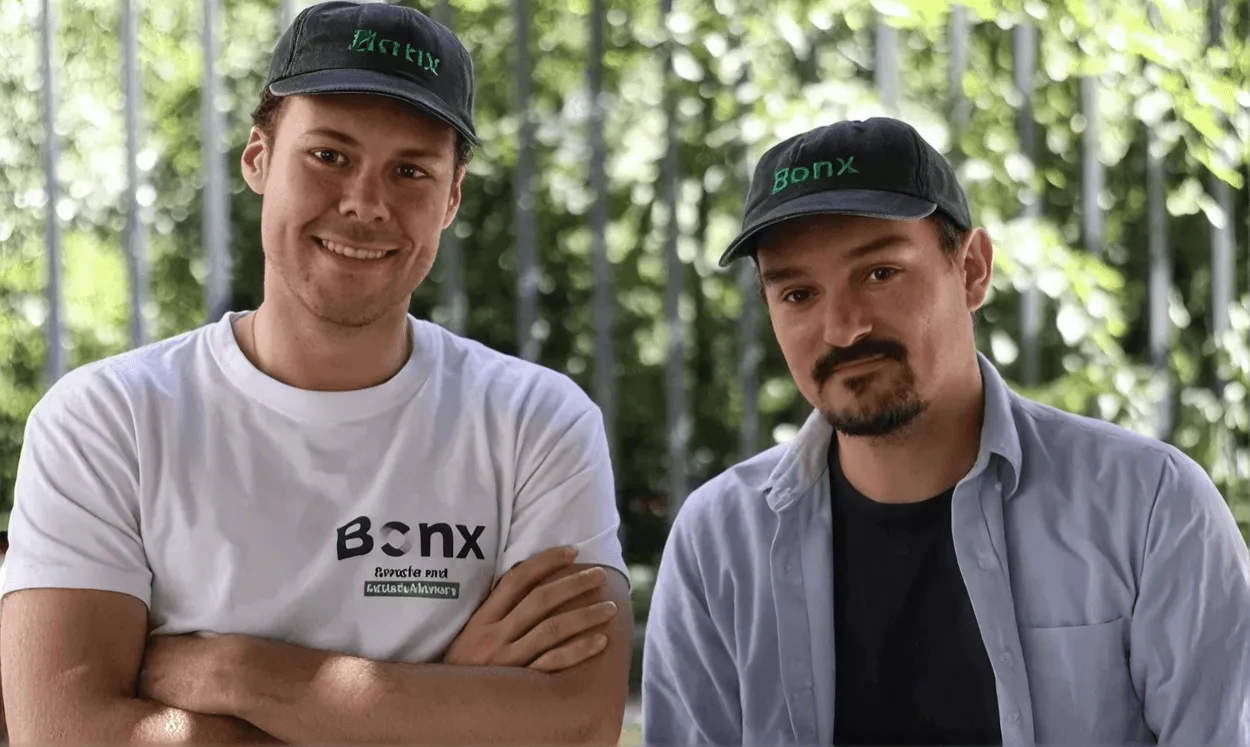
How textile manufacturers get more efficient with Bonx
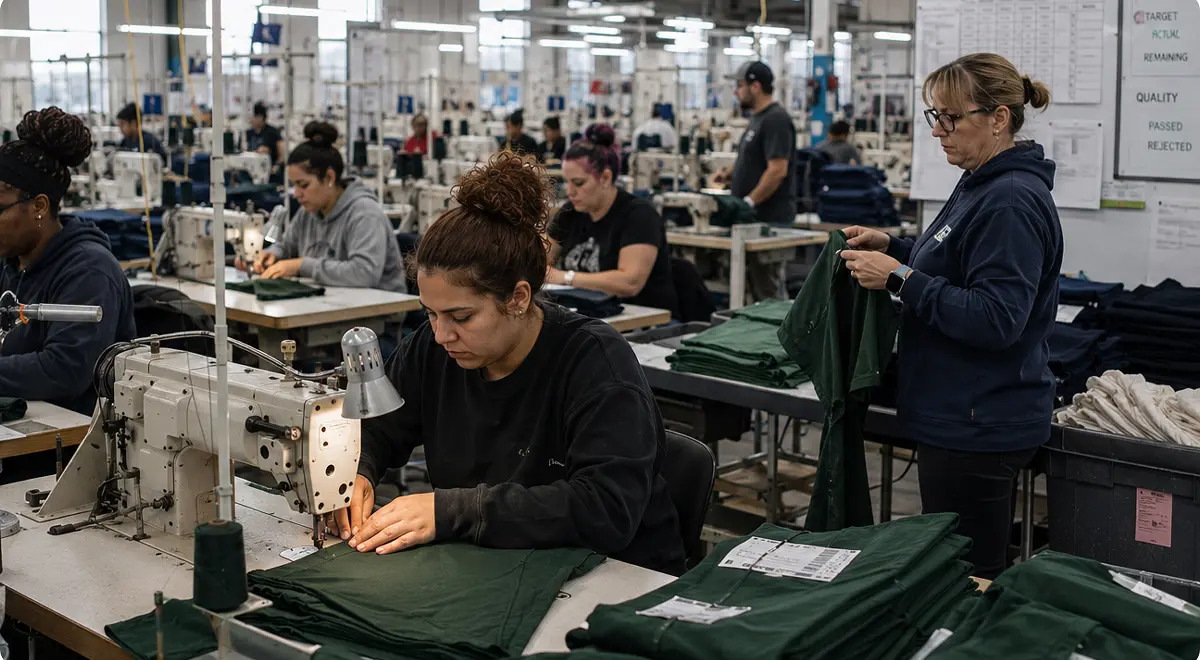
Textile efficiency improves when the system matches the work on the floor and when the ERP is a system of action, helping make decisions that speed up operations instead of impeding them.
Leading textile manufacturers working with Bonx prove the business benefits of a modern, AI-native ERP. Bonx connects order management, inventory, purchasing and supplier management, planning, production, quality, and logistics in the same operational system, then helps teams remove the routine work that slows production down. This article shows how four very different textile manufacturers used Bonx to reach their own operational goals.
La Maillecotech manufactures Made in France knitwear accessories. Before Bonx, the company's problem was not that operators lacked discipline. The problem was that production tracking asked too much from them.
Operators were spending nearly one hour every day entering production data manually. That is an expensive hour in any factory, but especially in a workshop where the people entering the data are the same people producing, controlling, and improving the work.
For a manufacturer built around local know-how, the Made in X opportunity only works if the operation underneath can keep up: traceability, production visibility, reliable promises to customers, and enough flexibility to improve without slowing the workshop down.
La Maillecotech also needed a system the team could keep improving after go-live. They did not want to impose a rigid process on operators, then spend months waiting for every adjustment. They wanted production workflows to evolve from field feedback, because the people closest to the machines knew where the friction was.
That is where Bonx's flexibility mattered. La Maillecotech digitized production records, gave the team real-time production data, and made operators part of the improvement process. Daily data entry dropped from one hour to a few minutes. The company saw a 12x improvement in data entry time and a 10% productivity gain.
The lesson is simple: efficiency starts where the work happens. If the system makes operators serve the database, the factory loses time. If the system can be adjusted around real feedback from the floor, the data gets better and the team gets time back.
Nervures is France's leading paraglider manufacturer, which means there is zero room for error when it comes to production, as a paraglider is certified flight equipment. Materials, assemblies, quality checks, and traceability records cannot be approximated later.
For years, Nervures managed production through Google Sheets and financial data through Sage. The setup worked because the team knew it well. But growth changed the equation. As Nervures prepared to double revenue within three years, every new order, product, and operator added more reconciliation work between disconnected systems. This is the kind of moment when manufacturers start asking whether it is the right time to implement an ERP: not because the current system has collapsed, but because the next stage of growth will make its limits harder to absorb.
Bonx was deployed in three sprints: first connecting existing systems and shared data objects, then covering production management with manufacturing order generation, progress tracking, operator scheduling, and materials requirements planning, then adding quality checklists and operational performance tracking.
The result was a 95% reduction in manual data re-entry across production and logistics workflows. More importantly, Nervures gained a shared operational layer where a production plan change is reflected in inventory projections, and a quality event on the floor stays connected to the operational data management needs to understand cost and performance.
For textile manufacturers, this is the precision argument for efficiency. Manual reconciliation may feel manageable at today's size, until growth turns it into a permanent tax on the business. Bonx helped Nervures remove that tax before it became a quality risk.
Résilience coordinates 80 independent textile workshops across France. It produces large-series, 100% French textiles for major brands while employing and training people in professional reintegration and with disabilities.
That model creates a coordination problem most factories never face. A production order may be split across several workshops in different regions. Materials move between sites. Quality issues need to be captured before they reach the client. Social reporting matters as much as production reporting because it is part of the organization's mission.
Bonx gave Résilience one shared operating system across the network. Four operational flows were standardized, production declarations became simple enough for operators in their first weeks on the job, and the platform team in Roubaix gained a live view of production, stock movements, quality, and social data across all sites.
The result: 10 hours saved per week per employee.
That is what efficiency looks like in distributed textile production. It is not about forcing every workshop to become identical. It is about making the center strong enough to coordinate complexity while keeping the operator experience simple at the edge.
LCS Groupe is a textile customization manufacturer in Perpignan, producing custom apparel and merchandise across five specialized workshops. The business depends on reactivity. Clients order late because events, campaigns, festivals, uniforms, and samples rarely arrive with comfortable lead time. That makes LCS a good example of why ERP for personalization-heavy manufacturing has to handle variation without slowing the floor down.
Before Bonx, LCS managed this complexity with paper work orders and the knowledge of experienced team members. A single job could move through heat transfer, screen printing, embroidery, digital finishing, and sewing. Every handoff mattered, but the system did not show downstream teams what was happening upstream.
Bonx replaced paper work orders with digitized manufacturing orders linked to QR codes. When an operator completes a step, the order advances in the system. The next workshop sees what is coming. Logistics sees where the order sits. Customer-facing teams can answer status questions without walking the floor.
Work order generation also became automatic: one order per workshop per confirmed quote, routed to the right team. Purchasing flows were connected to production scheduling, so materials and components stopped moving in parallel with the plan and started informing it.
The results were concrete: 95% fewer production errors, 90% less paper, one day recovered on average lead time, and 30% additional turnover.
For LCS, real-time visibility was not an internal nice-to-have. It protected the promise the company sells: speed customers can trust.
These four companies are not doing the same work, but they all ran into the same underlying problem: the system had to get closer to the reality of production.
La Maillecotech needed to reduce operator admin and make the ERP usable from the floor. Nervures needed to scale precision without adding reconciliation work. Résilience needed 80 independent workshops to behave like one coordinated operation. LCS needed real-time visibility across five workshops because its market punishes slow answers.
Bonx helped each of them in a different way because textile efficiency does not come from one generic workflow. It comes from fixing the specific places where the operation loses time:
For a textile manufacturer evaluating Bonx, the question is practical: where is your team still carrying work the system should handle? These examples show what Bonx can do once the buying question is active. If you are still comparing systems, this guide to choosing the right ERP for a textile SME explains what to test before shortlisting vendors: traceability, shop-floor capture, textile variability, and stack fit.
If manufacturing orders are created by hand, Bonx can help generate and route them from confirmed demand. If production status depends on calls or floor walks, Bonx can make progress visible in real time. If operators are losing time to data entry, Bonx can make declarations faster and easier to improve. If quality, traceability, purchasing, and planning are separated, Bonx can bring them into the same operational flow.
That is why Bonx works well for textile manufacturers. It does not ask every workshop to become the same. It gives each operation a system that can fit the way work actually moves, then keep improving as the floor changes.


Contact us
So were we. That's why we built Bonx, the AI-native manufacturing ERP.