The Made in X opportunity
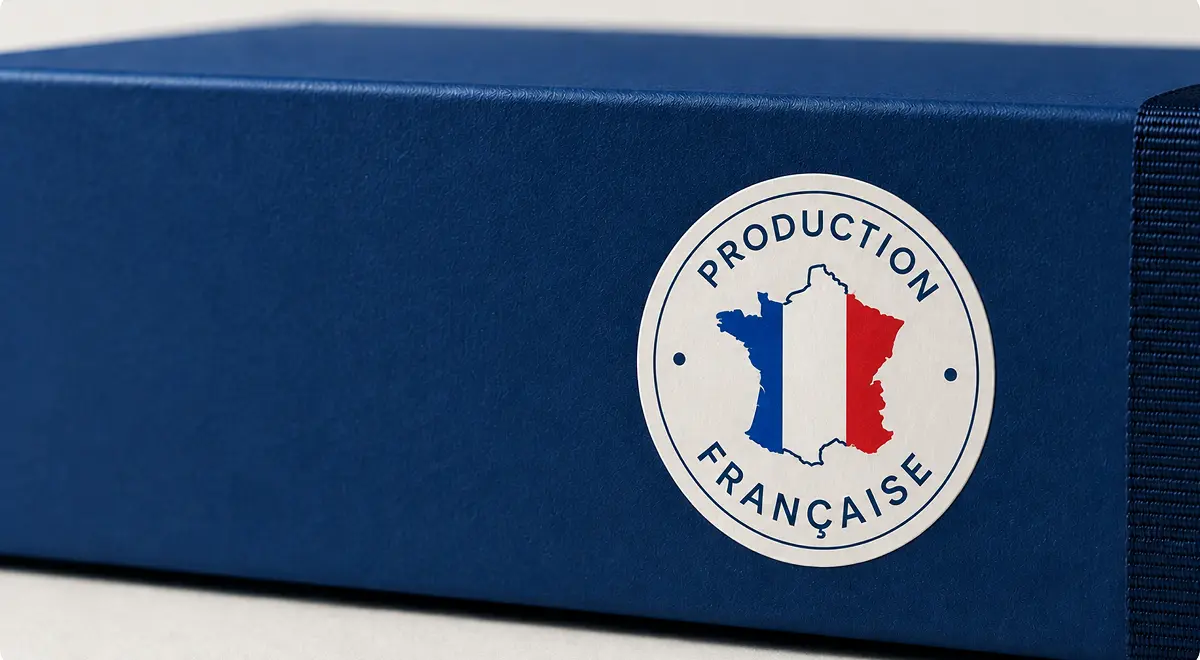
Consumers have started looking at origin labels again.
Not always. Not at any price. Nobody should build a manufacturing strategy on the fantasy that country of origin beats quality, availability, and cost every time. But the signal is real enough to matter.
McKinsey's 2025 consumer research found that 47% of consumers globally consider locally owned companies important in purchase decisions. For small and mid-sized manufacturers, that shift creates an opening.
This article looks at why "Made in X" has become a commercial opportunity, where small manufacturers are unusually well placed to benefit, and what has to be true operationally before a local production story can survive real growth.
"Made in France," "Made in Italy," "Made in Germany," "Made in Britain," "Made in USA." The wording changes by country, but the customer instinct underneath is similar.
People want to know who made the product, where it was made, and whether the story on the label matches the reality behind it.
Sometimes the motivation is economic: support local businesses, local jobs, and local industry. Sometimes it is environmental: fewer transport miles, more accountable supply chains, less dependence on opaque sourcing. Sometimes it is quality: the belief that certain places still carry real manufacturing know-how in textiles, food, cosmetics, furniture, jewelry, or precision parts.
Usually, it is a mix of all three.
For manufacturers, origin works because it gives customers something to trust. Smaller companies can compete there in a way large brands often struggle to match.
A large brand can buy ads around local production. A smaller manufacturer can often show the workshop, the people, the suppliers, the material choices, and the decisions that make the product different. That proof is harder to fake.
But the story only carries you so far. Customers still expect orders to arrive on time, quality to hold, batches to be traceable, and retailers to get reliable answers when something changes. Once demand depends on that trust, the opportunity is operational too.
Local manufacturing gives small and mid-sized companies a natural advantage because their production story is usually closer to the truth.
They are not trying to retrofit authenticity onto a global sourcing machine. They can often point to real capabilities:
For a customer, that proximity is reassuring. For a retailer, it can be commercially useful. For the manufacturer, it can become pricing power, but only if the business can deliver consistently.
A "Made in X" promise raises expectations. If the product is local, customers assume the company has more control. If the supply chain is shorter, they assume the lead time should be more reliable. If the brand talks about craftsmanship, they expect quality problems to be rare and well handled.
That may be unfair, but it is how trust works. The stronger the promise, the less tolerance there is for operational confusion.
From the outside, a local origin claim is a few words in visible places: packaging, product pages, retailer decks.
Inside the business, those few words touch almost everything.
Can you prove where key materials come from? Can you link a finished product to the right supplier batch, manufacturing order, quality check, and delivery? Can you tell which workshop handled which step? Can you separate what was made locally from what was assembled locally, finished locally, packed locally, or designed locally?
Those distinctions matter.
In France, for example, official guidance explains that "Fabriqué en France," "Produit en France," or "Made in France" can be used only when the company can justify the origin under non-preferential origin rules. For manufactured goods, that usually means the product was either fully obtained in France or underwent its last substantial transformation there. The French customs authority and French economy ministry both make the same underlying point: if you choose to use the claim, you need to be able to support it.
Other countries have their own rules, labels, and enforcement systems. The operational reality is similar everywhere.
A "Made in X" claim is only as strong as the data behind it.
At small scale, local manufacturing often runs on proximity and memory.
Someone knows which supplier sent the material or which batch went into the order. Someone can walk across the workshop to check status or has the spreadsheet handy that explains what happened.
That works, until it does not.
The problem usually appears at the exact moment the company is winning. A new retailer signs. A product goes viral. A distributor asks for more traceability. A wholesale customer wants shorter lead times. A certification body asks for documentation. A second workshop opens. A subcontractor joins the flow.
The business has more demand for its local production story, and less room for improvisation.
The same growth that makes "Made in X" valuable also exposes whether the company can actually operate at that standard.
If supplier records live in one spreadsheet, inventory in another, quality checks on paper, production status in someone's head, and logistics in a separate tool, the promise gets fragile. The team may know exactly what happened, but the system still asks people to keep too much connected manually.
That is a bad bargain for manufacturers who have already done the hard part: building something customers want to buy.
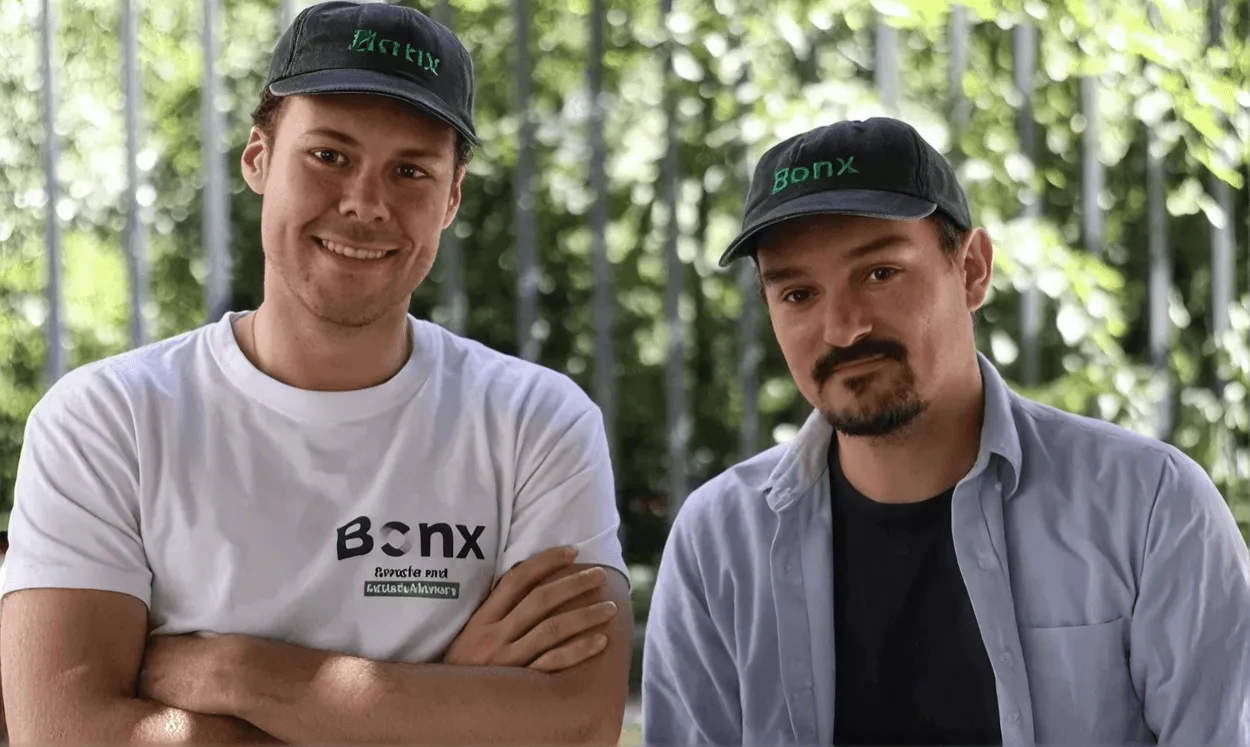
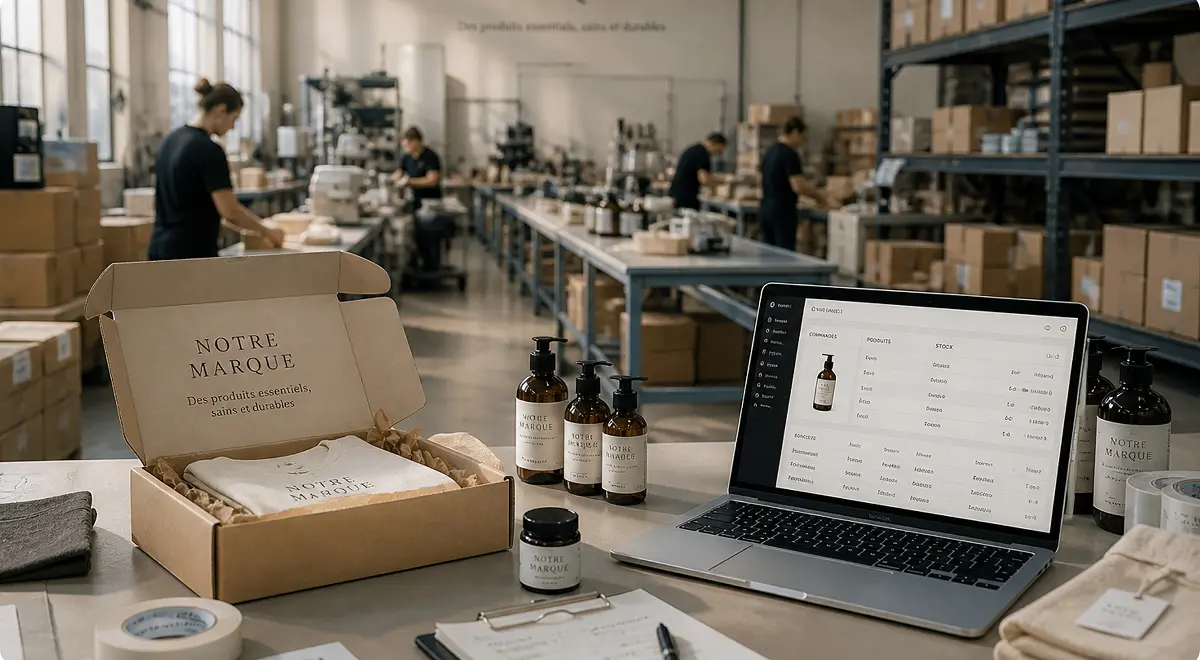
Bonx is an AI-native manufacturing ERP. It helps manufacturers keep the operational core connected: order management, inventory, purchasing and supplier management, planning, production, quality, and logistics. Because Bonx is a system of action, it can also generate, schedule, and trigger routine operational work instead of waiting for the team to update records after the fact.
"Made in X" manufacturing depends on operational proof. Bonx gives that proof a place to live and act.
At L'Atelier du Ferment, a fast-growing family food manufacturer scaling fruit kefir production, volumes were doubling every year across four workshops. The company needed to structure production, shelf-life management, procurement, and batch traceability while keeping Sidely for sales and Pennylane for accounting. With Bonx, more than 100,000 bottles are tracked from fermentation to cold storage, and manufacturing orders and procurement suggestions are generated based on sales, shelf life, and cold storage capacity.
That is what local production needs as it scales: not a heavier system, but a clearer one.
At Féroce, where every package carries a QR code linking the customer to farm, farmer, and laboratory analyses, the product promise depends on traceability. When a national TV appearance was expected to create a demand spike, Féroce deployed Bonx in 42 days. Orders increased tenfold in a single day, while every package remained traced and shipped to the same standard.
That is the difference between a local story and a local operation. The story attracts demand. The operation absorbs it.
The same pattern shows up outside food. LCS Groupe, a textile customization manufacturer in Perpignan, built its reputation on reactivity across five specialized workshops. Bonx replaced paper work orders with real-time production tracking, reducing production errors by 95% and paper usage by 90%. For a deadline-driven manufacturer, speed stopped depending on who happened to know where an order was.
And Résilience, a French textile network coordinating 80 independent workshops, uses Bonx as the shared operational backbone for production, traceability, quality, and social reporting. The network saves 10 hours per week per employee while making distributed production behave like one coordinated factory.
That is especially important for local manufacturing. The future of "Made in X" will not only be single-site workshops. It will also be networks, subcontractors, local specialists, regional production capacity, and flexible models that need to behave as one operation without becoming administratively impossible.
Small manufacturers have a rare opening.
Consumers are paying more attention to where products come from. Retailers want more resilient supply. Governments are talking about industrial sovereignty. Brands are looking for production partners who can offer proximity, quality, and a story customers believe.
But demand for local products will not automatically become growth for local manufacturers.
The companies that benefit will be the ones that can turn origin into proof, proof into trust, and trust into repeatable operations. They will be able to show where things were made, how they moved, what changed, which batch was affected, whether the order can ship, and what the customer can safely be promised.
"Made in X" is a commercial advantage only when the operation underneath can carry it.


Contact us
So were we. That's why we built Bonx, the AI-native manufacturing ERP.