Why traditional ERPs are a nightmare
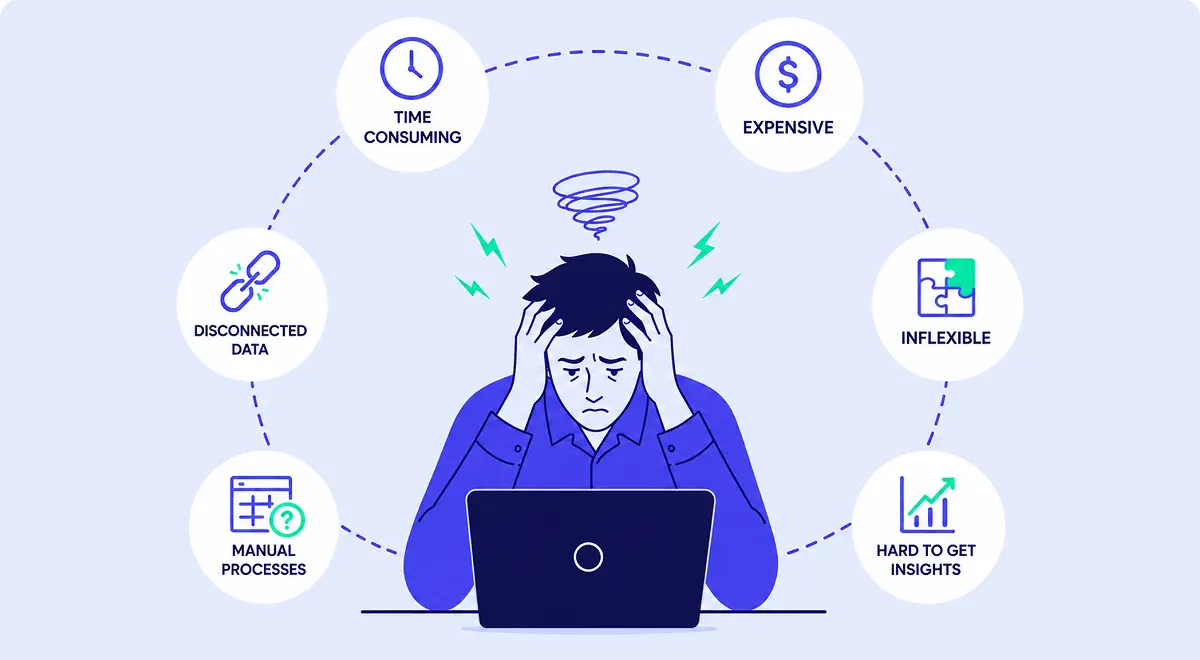
A traditional enterprise resource planning (ERP) project can cost six figures, take 18 months, pull your best operations people away from the factory, and still produce a system the team avoids the moment work gets urgent. That should make people angrier than it does.
Somehow, the ERP industry managed to convince manufacturers that the pain is normal: long timelines, heavy consulting, late go-lives, operators keeping paper notes because the system is too slow, finance reconciling reality against the ERP at month-end. Unfortunately, a broken model became familiar.
Traditional ERPs are a nightmare because the pain does not end at go-live. Manufacturing will always involve late suppliers, changing customer requirements, and production plans that need to move. This article looks at how traditional ERPs turn that normal movement into slow projects, shadow systems, and work your team has to carry, then ends with what to reject the next time a vendor tells you that pain is just part of working with an ERP.
Traditional ERPs charge you twice. The first invoice is obvious: licenses, consultants, integrations, data migration, and training. A project that looks expensive on paper is usually worse in real life because the people carrying it are the same people who still have to ship orders, fix supplier issues, answer sales, and keep production moving.
The second invoice is even more painful because it never stops. Every process change becomes a discussion. Every exception becomes configuration. Every new sales channel, warehouse, supplier rule, quality check, and reporting need has to pass through the question nobody wants to ask: how painful will this be in the ERP?
The business pays once to install the system, then keeps paying whenever reality moves.
Traditional ERP projects start by turning the company into documentation. The team maps processes, approves requirements, defines fields, signs off workflows, and tries to capture how the business works.
Meanwhile, the factory does not wait. A supplier lead time moves from two weeks to six. A new customer wants different delivery rules. A product line changes. A warehouse layout gets rebuilt because volume outgrew the old one. The operations team adapts because it has no choice, while the ERP project keeps implementing the version of the business that existed during the workshops.
For a stable company, that lag is annoying. For a growing manufacturer, it is dangerous.
A 12-month ERP project gives the business 12 months to drift away from the assumptions being configured. An 18-month project gives it 18 months. By go-live, the system can match the signed-off scope and still miss the way work now happens. This is how a project becomes obsolete before it is finished.
Traditional ERP logic loves the clean process: receive the order, check stock, plan production, buy materials, manufacture, ship, invoice. As you well know, factories do not run that cleanly.
The material arrives late, but the customer order is urgent. A batch is held for quality. A supplier changes packaging. A product has one routing for small runs and another for larger volumes. A subcontractor can take overflow this week, but not next week. One customer needs a labeling exception. Another needs delivery split across two sites.
Traditional ERPs make companies choose between two bad options. Over-model everything, and the system becomes too complex for normal users. Under-model the exceptions, and the team is doing the majority of their work in spreadsheets, through email, on paper, and with the two people who know how things actually work.
Bad ERP interfaces get mocked because they look old. The ugliness is not the real offense (though it certainly doesn’t help); the real offense is making simple work expensive.
Receiving stock should not require an operator to understand the logic of five screens. Updating a batch status should not feel like a finance task. Closing a manufacturing order should not take so long that people wait until the end of the shift and enter what they remember.
When the system slows the floor down, people protect production first. They move the pallet. They prepare the order. They write the note. They message the planner. They update the ERP later because the carrier, the machine, the cold room, or the customer cannot wait for software.
People do not reject systems because they enjoy chaos. They reject systems that make it harder to do the job. Once that happens, the ERP stops being the operating backbone; it becomes a delayed record of work that already happened.
The old ERP promise was control. Put the business into one system, standardize the process, and management gets visibility. That promise made more sense when operations changed slowly. In a growing manufacturing business, it breaks.
Growth means more products, more variants, more stock locations, more sales channels, more suppliers, more quality rules, more people touching the same order. A good system should absorb that movement. A traditional ERP turns it into internal negotiation.
Can we change the workflow? Who owns the field? Will the integration break? How long will the consultant take? Can it wait until phase two?
After enough of those conversations, the team stops asking the ERP to adapt. A rigid ERP, therefore, does not prevent shadow systems — it creates them.
Most traditional ERPs are systems of record, meaning they store what happened: orders, stock movements, purchase orders, invoices, batches, routings, and statuses. Of course, manufacturers need records, and no serious operation can run without them.
But recording the business is no longer enough when the team is drowning in routine operational work. The planner still prepares the schedule. The buyer still checks shortages. The operations lead still chases late orders. The warehouse still decides what to pick first. Someone still moves information between tools because the system does not do it.
The modern ERP should (and can) do more. It should be a system of action, not just a system of record, one that frees peoples’ time instead of demanding it.
Bonx is an AI-native manufacturing ERP. We categorically reject the old standard of months-long implementation, rigid configuration, late integrations, and a system that mostly waits for humans to feed it.
Instead, our customers go live in 1 to 3 months, connect the tools already in their stack, and move routine operational work out of spreadsheets and into the system. Most importantly, Bonx helps create a system of action that moves manual work to the ERP to execute on humans’ behalf (with oversight, of course).
For example?
The warning signs usually show up before the replacement project has a name.
Do not let a vendor sell familiar pain as maturity. Reject the idea that an ERP needs 12 to 18 months before it can create value. Reject the idea that your team should reshape the business around the software. Reject the idea that every process change after go-live should become a consulting bill.
Ask harder questions.
Traditional ERPs are painful because they ask the business to freeze before the system can help. Growing manufacturers change constantly: suppliers, products, customers, stock locations, quality rules, and planning constraints all move. If the ERP cannot move with them, the team builds workarounds.
Traditional ERP implementations take so long because too much has to be modeled upfront. Processes, exceptions, data structures, permissions, reports, and integrations are defined before the system goes live. That creates long projects, and long projects give the business more time to drift away from the assumptions being configured.
Some ERP projects fail because they are badly implemented. But the deeper problem is the model itself: rigid configuration, heavy consulting, late integrations, and systems that record work more than they help execute it. A perfect implementation of the wrong model still leaves the team fighting the software.
Start looking when the ERP stops being the place where work happens. Warning signs include manual planning, stock figures people do not trust, operators updating the system after the shift, process changes that require consultants, and sales or finance teams keeping their own version of operational truth.
Bonx is an AI-native manufacturing ERP that deploys in weeks, connects with the existing stack (CRM, finance, etc.), adapts after go-live, and actually takes action to help people be more efficient in operational work. Customers use Bonx across order management, inventory, purchasing, planning, production, quality, and logistics without turning every business change into a consultant project.


Contact us
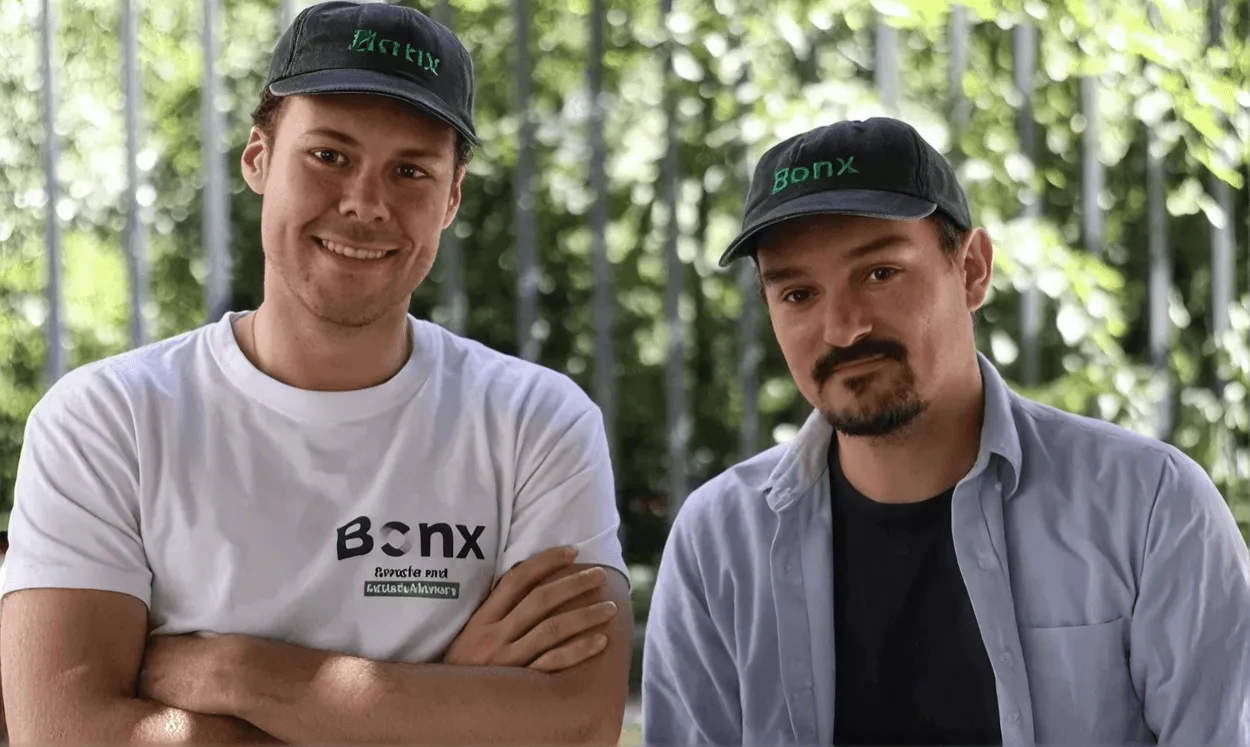
So were we. That's why we built Bonx, the AI-native manufacturing ERP.