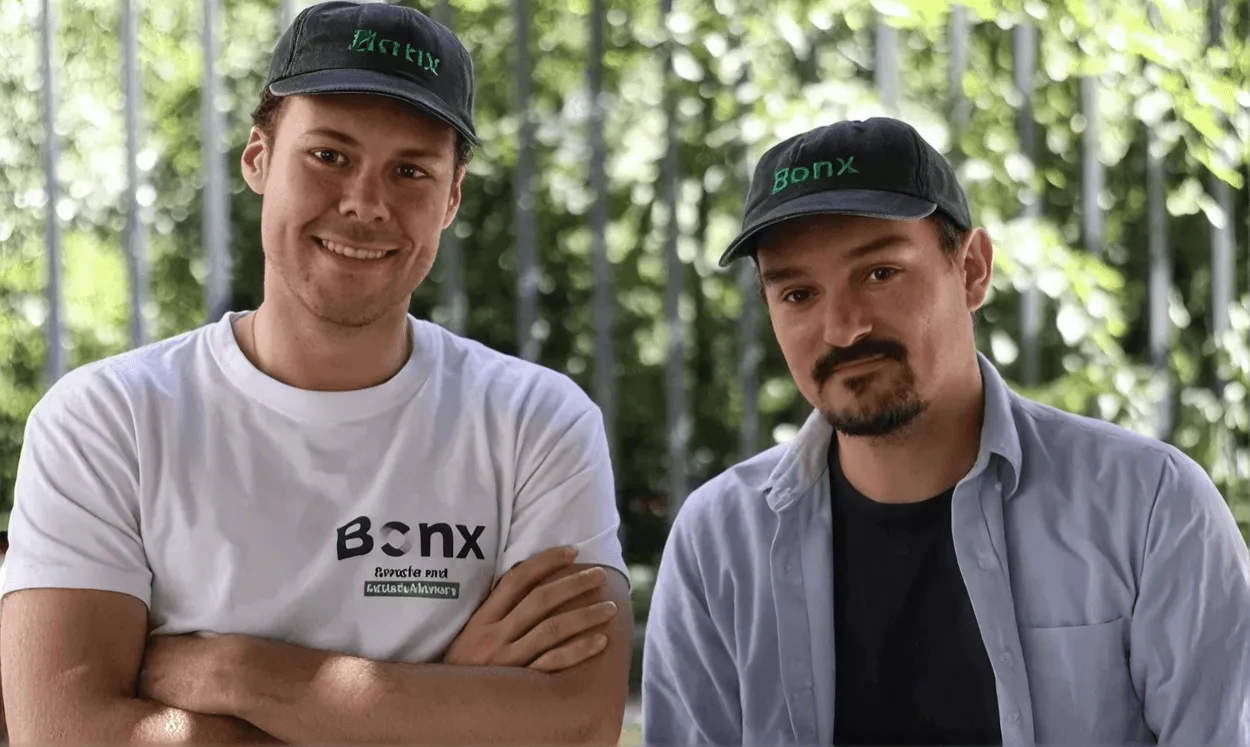
We interviewed 150 manufacturers about ERP deployment; here's what we found

Every growing manufacturer eventually reaches the same inflection point where they ask: is it time to deploy an enterprise resource planning (ERP) system? Usually, the reasons are sensible: production needs to be tracked in real time, stock figures are too fragile, nonconformities are getting expensive, and margins are hard to read. The team has outgrown the spreadsheets, paper notes, and heroic workarounds that carried the business up to this point.
So the ERP project starts to look like a necessary evil, the painful but mandatory step between where the company is and where it wants to go. That is often where the wrong assumptions enter the project.
At Bonx, we have interviewed more than 150 industrial small and midsize enterprises (SMEs) about exactly this moment. The companies that struggle with ERP implementation rarely fail because they chose the wrong screen, field, or report. They fail because the project is set up around the wrong assumptions: that the business can freeze, that finance should drive the whole thing, that vendor "best practices" really are what's best, and that operational reality can be handled later.
The five points below focus on the mistakes we see most often, and on the decision a manufacturing leader actually has to make: how to avoid turning ERP implementation into a slow, expensive project that the factory works around as soon as it goes live.
Traditional ERP vendors still sell implementation as a project that takes at least 12 months, and that is usually the optimistic version. Once scoping, configuration, data migration, integrations, testing, training, and delays are included, many projects stretch toward 24 or 36 months. For a growing manufacturer, a long timeline changes what the project is trying to implement.
Over three years, your customer mix, supplier constraints, and product catalog all change. Production changes too, because the factory has to keep absorbing new volume, new exceptions, and new promises made by sales. Meanwhile, the ERP project keeps implementing the company that existed during the first workshops. By the time the system is live, it may match the signed-off requirements and still be two years behind the actual business. That is how an ERP becomes obsolete the first time teams use it for real work.
Long projects also create a convenient dependency for vendors. Once the system is finally live, the company immediately needs new workstreams because reality has moved. Another phase starts. Another consulting budget appears. The business pays to catch up with itself. Your goal is not to prepare software for a hypothetical company three years from now. Your goal is to create operational impact now, then keep adapting as the business changes.
ERP systems have historically been driven by finance teams, and there is a good reason for that. Finance needs reliable numbers, clean controls, traceable flows, and a system that supports management reporting. Those needs matter, but treating them as the drivers when looking for a manufacturing ERP, one that handles the operational part of the business, is where the project starts to drift.
Manufacturing ERPs should support the way orders move through the business: from customer demand to procurement, production, quality, stock, logistics, and delivery. If finance owns the implementation alone, the project can become excellent at control and weak at operations.
The factory contains the operational logic that makes the business different: how urgent orders are handled, how exceptions move, where quality checks actually happen, which supplier issues need early warning, which production steps cannot be captured by a neat generic workflow.
Finance should absolutely be involved. The chief financial officer and finance team bring discipline on metrics, cash, reporting, and governance. But the ERP cannot be designed as if the factory were a downstream data source for month-end reporting. The core business is production. If the people responsible for operations are not central from day one, the system will serve the wrong kind of control.
"Best practices" is one of the most expensive phrases in ERP sales because it sounds reassuring, especially for vendors who have seen and accompanied many companies on their journey. The software has standard processes, and the implementation team knows what manufacturers in your sector usually do.
Sometimes that experience is useful, to be sure, but when a vendor uses "best practices" to mean "adapt your business to the way our ERP already works," you should be careful.
Traditional ERPs were built around a simple idea: most industrial companies operate in broadly similar ways, with variations by sector, so they can be represented through similar workflows in the same system. That idea made more sense when operations were slower, product lines were more stable, and customer expectations were less fragmented. It makes much less sense now.
Today, the differences between manufacturers matter more, not less. Your customer promises, lead times, quality checks, production constraints, supplier relationships, traceability requirements, and service model are part of your differentiation. If the ERP forces you into the same operating mold as your competitor, the software is not just standardizing your process. It is flattening the things that make the company work.
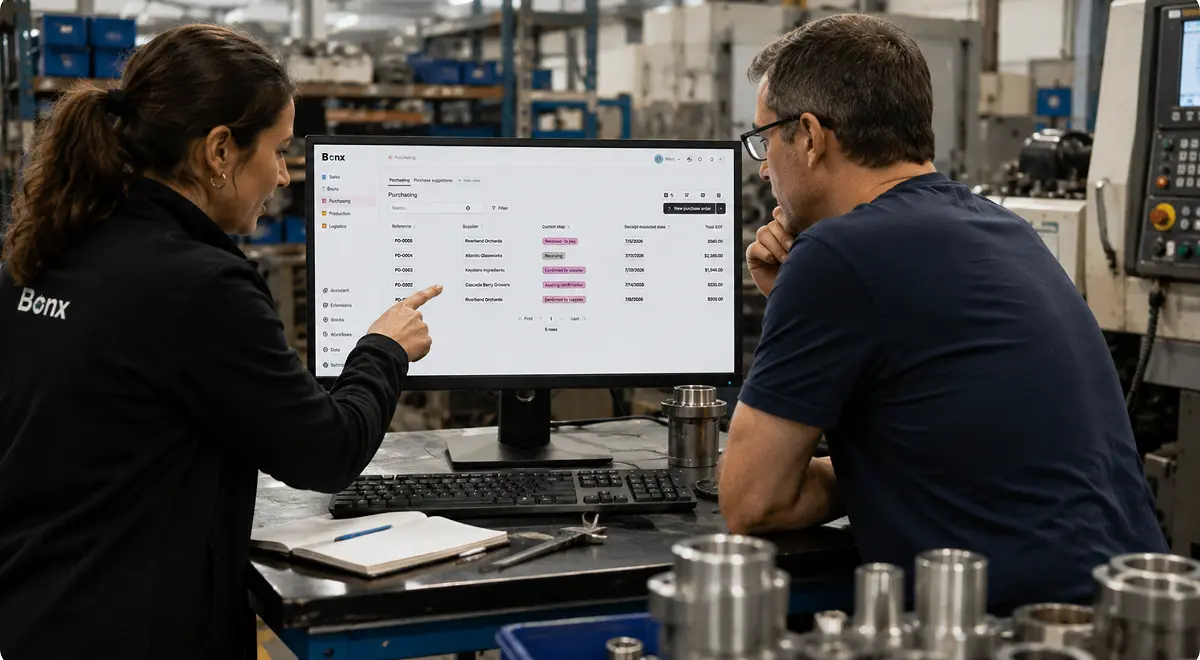
At Bonx, you will not hear us sell "best practices" as a reason to ignore how your factory runs. Bonx is an AI-native manufacturing ERP, and the point is to fit how your operations actually work, then keep adapting as they evolve. Customers deploy Bonx in one to three months and can change processes after go-live without turning every improvement into a consultant project.
The right question, therefore, is not whether a process is common in your industry. The right question is whether it is the best process for your specific business.
Traditional ERP sales often leans on fear because the thing being sold is so heavy. The project is expensive, the timeline is long, and the commitment is hard to reverse. That is how you end up hearing arguments like: "You need something solid and rigid." The fear pitch usually tries to make flexibility sound dangerous and rigidity sound responsible. But in manufacturing, rigidity is often where the danger comes from. A rigid system does not prevent operational complexity. It pushes that complexity into spreadsheets, side tools, paper, and the heads of the few people who know how work really moves.
Do not be impressed by arguments that treat slowness as seriousness. Ask for proof instead. How long does implementation really take? What percentage of customers go live successfully? Can the system adapt after deployment without a new consulting project? Can production use it in the normal flow of work, or will the team update it afterward because the interface slows them down?
An ERP should be reliable, of course. But reliability is not the same thing as rigidity, and a vendor that confuses the two is giving you a reason to ask harder questions.
A detailed specification can feel like control. It gives the team a document, a scope, a shared language, and a way to compare vendors. The problem is that many ERP vendors do not read it with the level of care you imagine. Sometimes that is a vendor problem. Often, it is a model problem.
If the ERP ultimately expects your company to adapt to its existing structure, a 90-page specification will not change much. The vendor will still move you toward standard questionnaires, fixed workflows, and the configuration paths the system already supports. That does not mean you should start with nothing, it just means the first document should be useful, not ceremonial.
A good starting brief should capture where the company is today, what it is trying to achieve, which operational problems need to be solved first, and what makes the business different. Include the production flow, the order management flow, the most important exceptions, the tools already in use, and the two or three subjects where better visibility or execution would create fast impact. That is more than enough to start serious conversations. From there, the vendor should be able to show how real flows would work in the system, not hide behind a long discovery process that ends with you adapting to the software anyway.
The better path is faster, more operational, and less ceremonial.
Start with the flows that matter most. Involve finance where finance belongs, but do not let finance define a manufacturing ERP that needs to run order management, procurement, production, quality, stock, and logistics. Test real exceptions, not only the clean workflow. Ask the vendor how the system changes after go-live, because your business will change after go-live.
Most importantly, reject the idea that ERP implementation has to be a multi-year ordeal before it creates value. Bonx customers, for example, do not deploy that way. Feroce went live with Bonx in 42 days without interrupting operations, before a national TV appearance multiplied orders tenfold in a single day. Something Added deployed Bonx in two months with a native integration to HP 3D printers, helping the factory group orders automatically, generate manufacturing orders, and run 24/7 production with more than 10,000 parts produced each month.
ERP implementation should prove that the business can keep moving, the system can adapt to real operations, and the team can improve the way work happens after go-live. If you are about to launch an ERP project, do not start by asking which vendor has the most elaborate implementation playbook. Ask which system can create impact quickly, support the way your factory actually runs, and earn usage from the people producing the data every day. That is the difference between simply deploying software and building an operating system for the business.
Contact us
So were we. That's why we built Bonx, the AI-native manufacturing ERP.