2026: the time to switch ERPs is now
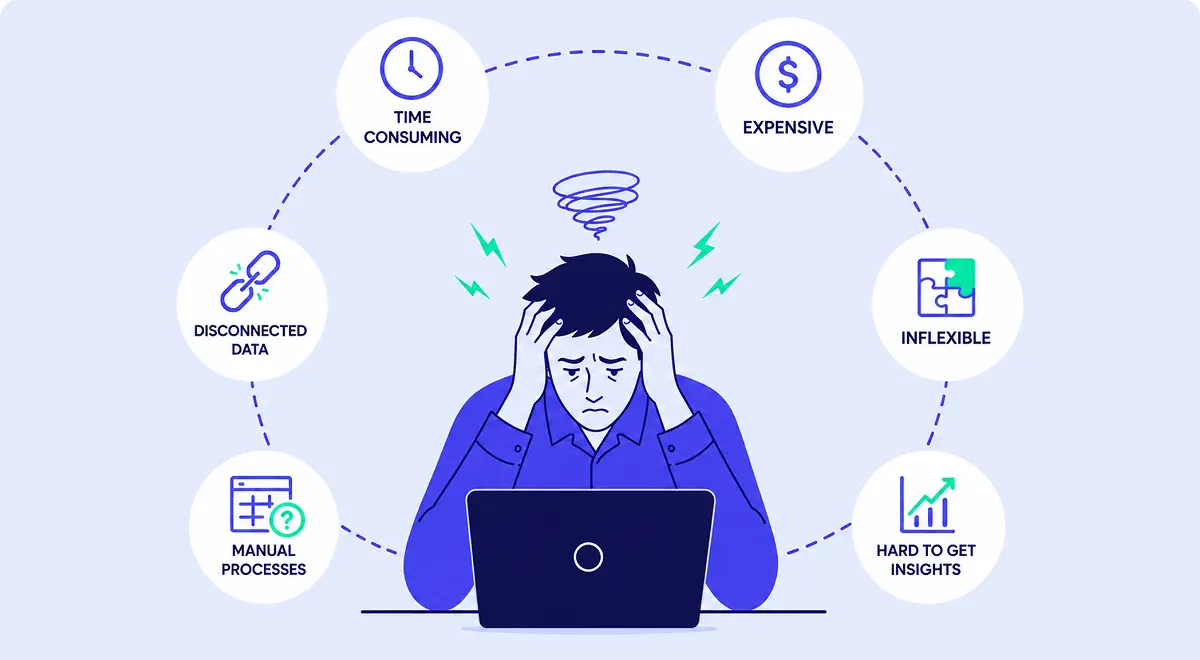
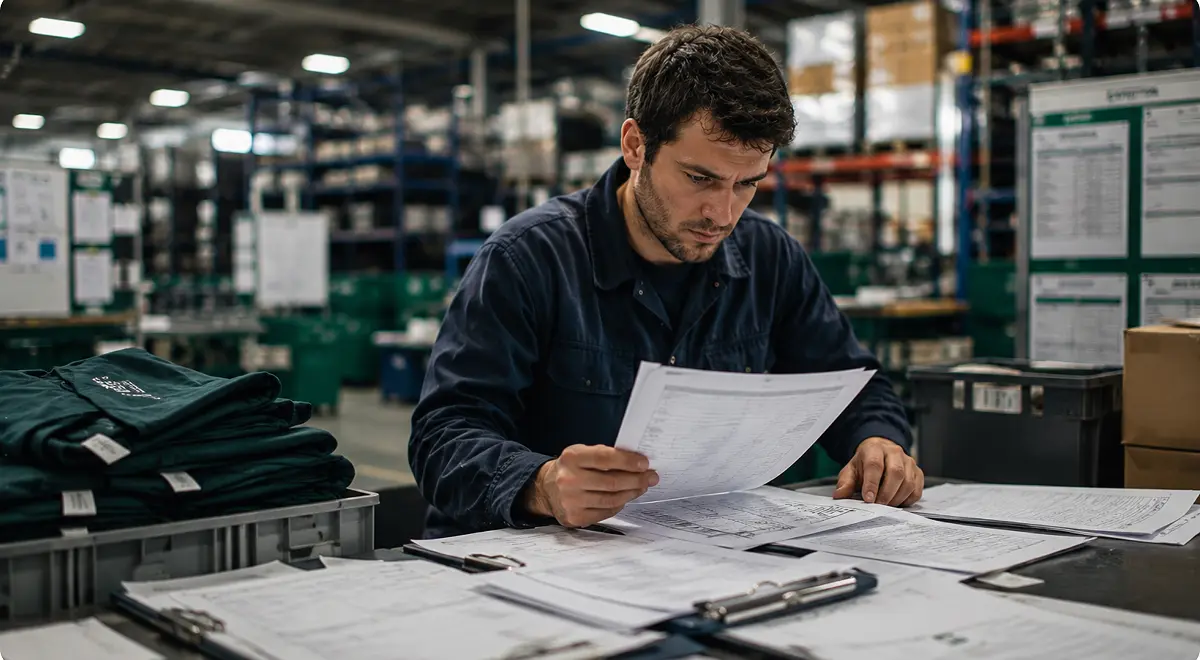
ERP replacement is the most-deferred software decision in mid-market manufacturing, and for good reason. The typical project still runs 12 to 24 months, costs well into the six figures once consulting and integration are factored in, and pulls a third of the operational team off their day jobs for a year or more. Half land late. A non-trivial number land broken. SAP made that model the norm, and most of the market still operates by its rules.
If you've been deferring an ERP replacement, you weren't being conservative. You were being rational.
What changed in 2026 isn't a single vendor releasing a single product. It's three things landing at once:
Each one is reason enough to put the conversation back on the table. Together, they break the math that justified deferring it.
When ERP vendors started rolling out "AI features" over the last couple of years, what that mostly meant was a chat interface in front of your data. You could ask it questions, get summaries, surface anomalies. Useful, but the system was still doing the same job it always did: recording state. A human still decided and executed.
That changed in 2026. Large language models crossed the threshold where they can interpret operational rules and take actions reliably enough to be trusted with production decisions, not just answer questions about them. That shifts the unit of work the ERP performs. Procurement gets prepared, production gets scheduled, and sales orders get filled. The team should be able to supervise rather than execute.
What makes agency possible at scale within Bonx specifically is a hybrid data model: rigid schemas where precision matters, free text where the rules are too fluid or too customer-specific to hardcode. Legacy ERPs are pure schema, decades deep, with rules baked into code. Retrofitting one to operate as a hybrid system isn't a feature release. It's a different product. We've covered the architectural difference in how AI-native ERPs differ from legacy ERPs at the data-model level.
That's why "now" matters. If you're waiting for your incumbent ERP vendor to ship the same kind of agent-led capabilities, you're waiting for them to rebuild from the data model up. They aren't going to.
The standard ERP project still runs 12 to 24 months. That hasn't changed for most vendors, and it isn't going to.
It's changed at the AI-native end of the market. Bonx goes live in 1 to 3 months. That's a full go-live, not a pilot, not a single module, not a phased migration that reaches 30% coverage in year one. It's the operational backbone, adapted to how the business actually works.
Feroce, a grass-fed meat brand whose orders surged tenfold after a national TV appearance, went live in 42 days with zero operational interruption. Something Added deployed in 2 months and included a native integration with their HP 3D printers, the first of its kind. L'Atelier du Ferment, doubling volume every year across four workshops, connected Bonx to their existing finance and sales tools and got full batch traceability without rewriting their stack.
These aren't best-case demos. They're the median.
The project that used to consume 18 months of organizational attention now consumes 2 or 3. That's why "now" matters: the version of this decision you turned down three years ago isn't the version on offer today.
For most of the last decade, deferring an ERP project meant absorbing a cost that was internal: more spreadsheets, more workarounds, more time from the two people on the team who actually understood how the system fit together. That cost was real, but it was yours to manage, and most of your competitors were managing the same one.
Some of them stopped. Manufacturers running on AI-native ERP are quietly compounding a capacity advantage that shows up on the P&L.
Operators at La Maillecotech moved 12x faster on data entry. Their CEO put it this way: "Our operators are now directly involved in tool optimization, which motivates them and optimizes our production." Résilience, a network of 80 textile workshops, recovered 10 hours per employee per week. LCS Groupe cut production errors by 95% and paper usage by 99% in three months.
A team of 30 that recovers 10 hours per person per week is a team of 30 that grew by a third without hiring. A 95% drop in production errors removes a cost line.
Stack a few of these over 18 months and the gap between a manufacturer running on legacy ERP and one running on an AI-native system isn't a few percentage points. It's 2x to 4x team capacity, with the same headcount, on the same product, in the same market.
That's why "now" matters: deferring used to mean carrying internal cost. It now means watching a competitive gap widen on someone else's P&L. Every quarter you wait, the gap compounds.
If 2026 is the year you stop deferring, here's what going live actually looks like.
Bonx is the AI-native manufacturing ERP that covers the full operational backbone (sales, production, procurement, stock, logistics) in one system that connects to the rest of your stack rather than replacing it. An agentic layer sits on top, taking operational work off the team's plate: preparing replenishment plans, drafting follow-ups on overdue orders, replanning production in real time as the floor changes.
Customers run on Pennylane, Sidely, Shopify, HubSpot, and more alongside Bonx, with no data re-entry between them. Amantys runs sales, production, and finance fully synchronized with zero re-entry across HubSpot, the workshop, and Pennylane. L'Atelier du Ferment generates manufacturing orders and procurement suggestions automatically against sales forecasts, shelf life, and cold storage capacity.
The numbers across the customer base are consistent:
If you've been deferring this conversation, the most useful thing you can do in the next 90 days is talk to a manufacturer your size who went live recently. Not a flagship reference from three years ago. Someone whose project closed in the last six months. Ask what broke, what surprised them, and what they'd do differently.
That conversation will tell you everything an RFP won't.

Contact us
So were we. That's why we built Bonx, the AI-native manufacturing ERP.